

 EN
EN  English
 русский
 Español
 عربى
عربى

News
 Home / News / Industry news / Slewing Ring Bearing Maintenance | Complete Lubrication & Inspection Guide
 Slewing Ring Bearing Maintenance | Complete Lubrication & Inspection Guide
 2026.08.06
 Industry news
If you are responsible for a crane, excavator, wind turbine, or any heavy rotating equipment, you already know that the slewing ring bearing is the component you cannot afford to ignore. When it fails, the entire machine stops — and the cost of replacement, often combined with long lead times, makes proactive maintenance the only sensible strategy. The good news is that industry experience shows over 96% of slewing ring failures can be avoided through simple, consistent upkeep. This guide outlines the complete preventive maintenance framework we recommend to our customers: lubrication, inspection, bolt torque management, seal protection, and knowing exactly when to repair versus replace.
Content
- 1 Why Slewing Ring Bearing Maintenance Matters More Than You Think
- 2 The Six Pillars of a Preventive Maintenance Program
- 3 Lubrication — The Most Critical Maintenance Task
- 4 Raceway vs. Gear Lubrication — Understanding the Difference
- 5 How to Perform Effective Greasing (Step-by-Step)
- 6 Systematic Inspection — What to Look For and How Often
- 7 Recognizing Early Warning Signs of Failure
- 8 When to Repair vs. Replace a Slewing Ring Bearing
- 9 Building a Maintenance Schedule That Works
- 10 Conclusion — Maintenance Is an Investment, Not an Expense
Why Slewing Ring Bearing Maintenance Matters More Than You Think
Unlike standard rotating bearings that primarily handle radial load, a slewing ring bearing simultaneously supports axial load, radial load, and a substantial overturning moment. It is the structural pivot that connects the upper and lower sections of your machinery. This complex load profile means the rolling elements and raceways operate under constant stress, making them vulnerable to specific failure modes that simple wear and tear does not fully explain.
When maintenance is neglected, the failure sequence typically starts with surface damage — micro-pitting or indentation caused by contaminated grease — and progresses to flaking, cracking, and eventually catastrophic breakage. By that point, the bearing housing and surrounding structure may also require machining or repair, multiplying your costs. Replacing a large slewing ring involves crane rental, extended downtime, and a procurement cycle that can stretch for months. We strongly recommend reviewing slewing ring bearings as critical components in heavy machinery to fully understand their load transmission role before designing your maintenance plan.
The Six Pillars of a Preventive Maintenance Program
Effective maintenance is not a single task but a closed-loop system. We break it into six interdependent pillars: lubrication, inspection, torque management, seal protection, documentation, and timely repair/replacement decisions. Each pillar reinforces the others — skipping one will eventually compromise the rest.
- Lubrication: The most frequent and critical task, ensuring a protective film between rolling elements and raceways.
- Inspection: Scheduled visual and operational checks to catch problems while they are still minor.
- Torque management: Ensuring mounting bolts remain at specified preload despite vibration and load cycles.
- Seal protection: Maintaining the integrity of seals to keep contaminants out and grease in.
- Documentation: Keeping an accurate log of all maintenance activities and observed anomalies.
- Repair vs. replace: Making an informed economic decision based on measured conditions, not guesswork.
You should differentiate between daily checks (visual walk-around, listening for odd noises) and periodic maintenance (greasing, torque verification, detailed inspection). Daily checks take minutes; periodic tasks may take half a day but prevent far longer downtime later.
Lubrication — The Most Critical Maintenance Task
Lubrication is the single most important thing you do for a slewing ring bearing. The rolling elements and raceways require a heavy-duty, extreme-pressure (EP) grease that can handle the high contact stresses inherent to this application. Standard machine grease is not sufficient. Using the wrong grease, or too little of it, quickly leads to surface roughness, waviness, cracking, and spalling on the raceways.
Lubrication Frequency by Operating Profile
The correct greasing interval depends on how the equipment is used. Our general guidance, based on standard industry practice, is as follows:
| Equipment Type | Rotation Pattern | Recommended Interval |
|---|---|---|
| Excavators, cranes (slow, partial rotation) | Intermittent, short arcs | Every 100 operating hours |
| Drilling rigs, continuous rotation machines | Continuous, high-speed | Every 8 operating hours |
| Idle or seasonal equipment (stored > 6 months) | None during storage | At least once every 6 months |
Even if the machine sits idle, grease dries out and condensation can form inside the bearing. For this reason, we recommend a minimum of one greasing session every six months regardless of usage hours. This simple habit alone eliminates a large share of corrosion-related failures.
Raceway vs. Gear Lubrication — Understanding the Difference
A common mistake is treating the slewing ring's internal raceway and its external gear teeth as the same lubrication task. They are not. The gear mesh squeezes out lubricant much faster than a rolling element contact, so the gear teeth require a different, more frequent lubrication regime. Gear grease is typically more adhesive, designed to cling to tooth flanks under high sliding forces.
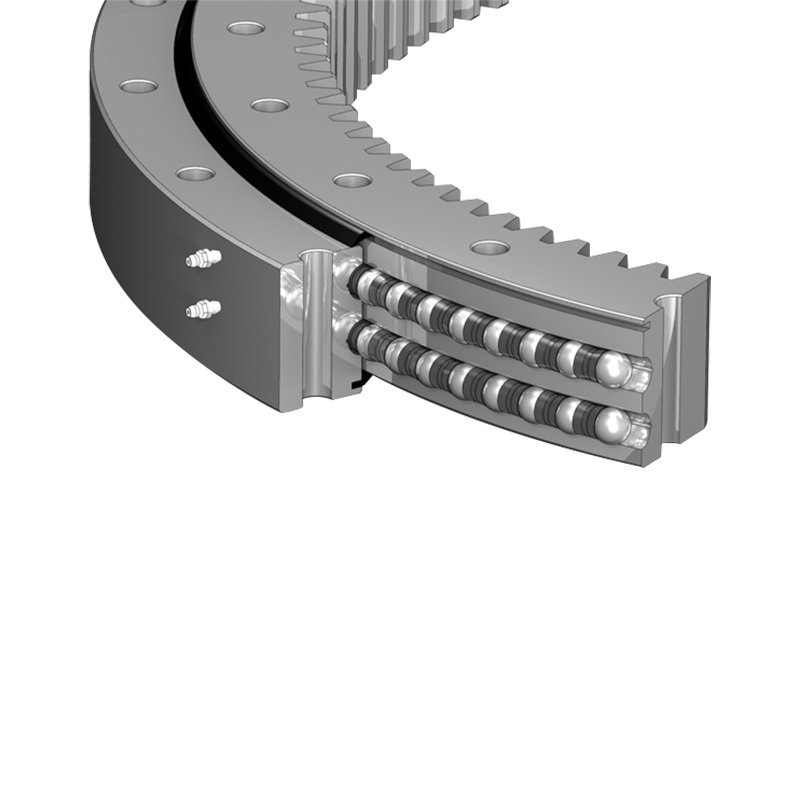
Your equipment manual specifies a separate grease for the gear teeth, and the interval is usually shorter than for the raceway. Apply gear grease sparingly but often — over-packing the gear cavity can increase resistance and accelerate tooth wear. The lubrication channels and fitting locations also vary by design; for example, on single-row ball slewing bearings, the grease fittings are typically arranged evenly around both raceways. For a deeper look at how seal and lubrication choices affect specific configurations, see our article on selecting the right lubrication and sealing for cross-roller bearings.
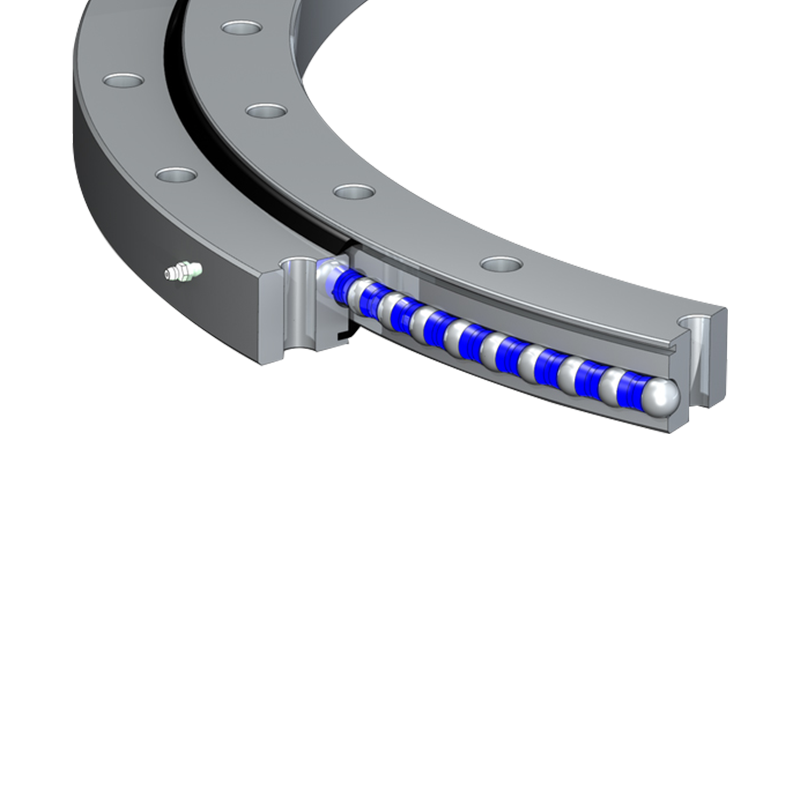 Custom Single-Row Ball Slewing Bearing Manufacturers, Suppliers, FactoryJiangsu Manchen Transmission Technology Co., Ltd is custom Single-Row Ball Slewing Bearing Manufacturers, suppliers & factory in China. T...View Product →
How to Perform Effective Greasing (Step-by-Step)
Correct greasing is about more than pumping grease until you see it. Follow this proven procedure for best results:
- Clean the fittings: Wipe each grease nipple before attaching the gun to prevent introducing dirt into the raceway.
- Rotate the bearing: Slowly rotate the slewing ring through its full travel while greasing, if possible, to distribute the new grease evenly.
- Grease each fitting: Work around the entire circumference, applying grease to every fitting. Do not concentrate on only one side, as this can create unequal pressure.
- Watch for purging: Pump new grease until fresh grease exits from the seals. This is called "purging" — it ensures the old, contaminated grease is pushed out, carrying abrasive particles with it.
- Inspect the purged grease: Rub a small amount of the purged grease between your fingers. If you feel sand-like grit or see metallic particles, the bearing may already be damaged and needs closer inspection.
The purging process is your best non-intrusive diagnostic tool — it tells you about the internal condition of the bearing without opening it. Different bearing families have slightly different grease pathways; for instance, a detailed maintenance guide for single-row cross-roller slewing bearings is available if you work with those units.
Systematic Inspection — What to Look For and How Often
Inspections are your second line of defense. We recommend a visual check at least once per week and a more detailed inspection monthly. The goal is to identify early signals before they become failures. During each inspection, focus on the seal condition, raceway exposure (if accessible), mounting bolt appearance, gear teeth state, and any unusual noise or vibration during rotation.
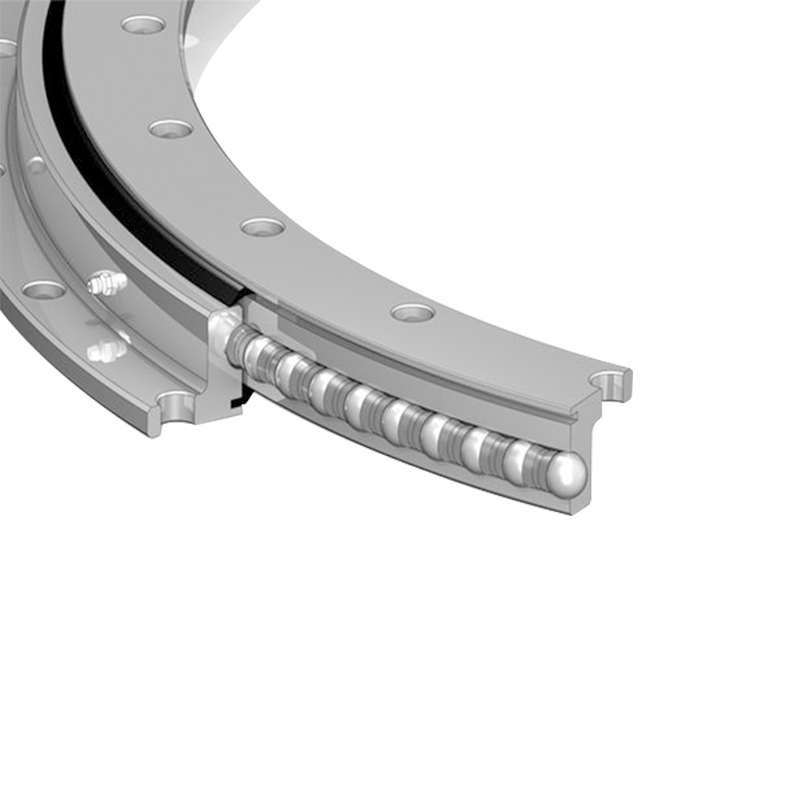
Rust stains, pitting, or discoloration on exposed raceway surfaces are immediate warning signs. Grease leaking from a specific area often points to a damaged seal located near that region. In precision-sensitive applications, such as robots and medical equipment built on single-row cross-roller slewing bearings, even a slight increase in clearance can degrade positioning accuracy. Regular inspection allows you to catch these changes early.
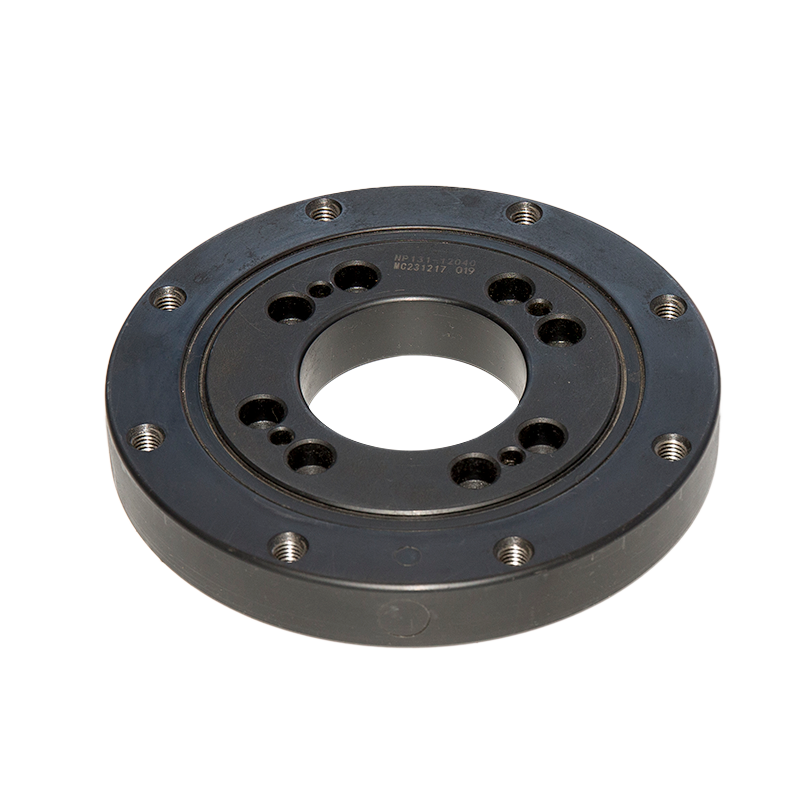 Custom Single Row Cross-Roller Slewing Bearing Manufacturers, Suppliers, FactoryJiangsu Manchen Transmission Technology Co., Ltd is custom Single Row Cross-Roller Slewing Bearing Manufacturers, suppliers & factory in ...View Product →
Torque Checks on Mounting Bolts
Loosening of mounting bolts is one of the most dangerous yet preventable failure causes. Vibration and cyclic loads gradually reduce the preload of each bolt. If left unchecked, the bearing can shift or separate from its mounting structure, causing irreparable damage to both the bearing and the equipment.
As a rule of thumb, perform the first torque re-check after the first 100 hours of operation on new machines. After that, include a bolt torque verification in your monthly inspection schedule. Always use a calibrated torque wrench and follow the manufacturer's specified torque values — do not guess based on feel. Tighten bolts in the correct sequence, typically alternating across the diameter to ensure even preload.
Seal Inspection and Contamination Control
The seal is the first defense against contamination, and contamination is the leading cause of raceway wear. Dust, moisture, and sand that bypass the seal act as grinding paste inside the bearing. Symptoms of seal damage include obvious grease leakage, increased rotational resistance, and a change in operating noise.
Inspect the seal lip for hardening, cracking, or tearing. If the equipment operates in a dusty or wet environment, increase seal inspection frequency. Replacing a worn seal is inexpensive compared to the cost of repairing a contaminated raceway. Always replace the seal if you notice purged grease tracing a path through the lip — that is a sign it is no longer seating correctly.
Recognizing Early Warning Signs of Failure
Knowing what to listen for and feel during operation can save you from catastrophic failure. The four main indicators of a developing problem are:
- Unusual noise: Clicking, grinding, or rumbling sounds during rotation.
- Increased torque: The bearing becomes harder to rotate, requiring more force.
- Loss of rigidity: Play or looseness in the structure, often observed as swinging at the end of a boom.
- Metallic particles in grease: Found during purging or inspection.
What the Symptoms Are Telling You
Different symptoms point to different root causes, and knowing the difference guides your response. The table below summarizes the diagnostic logic we use in the field.
| Symptom | Likely Root Cause | Immediate Action |
|---|---|---|
| Noise + increased torque | Insufficient lubrication or raceway damage | Purge with fresh grease; if noise persists, inspect raceway |
| Measurable clearance increase | Severe raceway or rolling element wear | Measure accurately; prepare for repair or replacement |
| Metallic particles in purged grease | Spalling or flaking of raceway or gear teeth | Sample grease for analysis; stop operation if heavy |
| Boom-end sway on crane equipment | Bearing clearance or bolt loosening | Check bolts first; then measure structural deflection |
Always respond to any suspected fault by first topping up lubrication and taking a grease sample for analysis. This non-destructive step often reveals whether the issue is surface contamination or actual material fatigue.
When to Repair vs. Replace a Slewing Ring Bearing
Not every damaged bearing requires a full replacement — and knowing the difference can save you over half of the cost. A bearing that has been properly maintained can often be rebuilt through re-grinding raceways and installing new rolling elements. We estimate that restoration is typically less than half the cost of a new bearing, provided the damage is caught early.
The decision hinges on timing. If the bearing exhibits only increased noise or slight clearance that lubrication still resolves, it is a candidate for repair. However, if structural cracks, severe spalling, or raceway deformation are present, replacement is the only safe option. The worst-case scenario is operating a damaged bearing until failure, which turns a repairable situation into a full structural repair. If you are dealing with a heavily loaded machine, consider that three-row roller slewing bearings for heavy-duty applications have different service limits than smaller bearings, and their repair decision should be based on measured data, not just appearance.
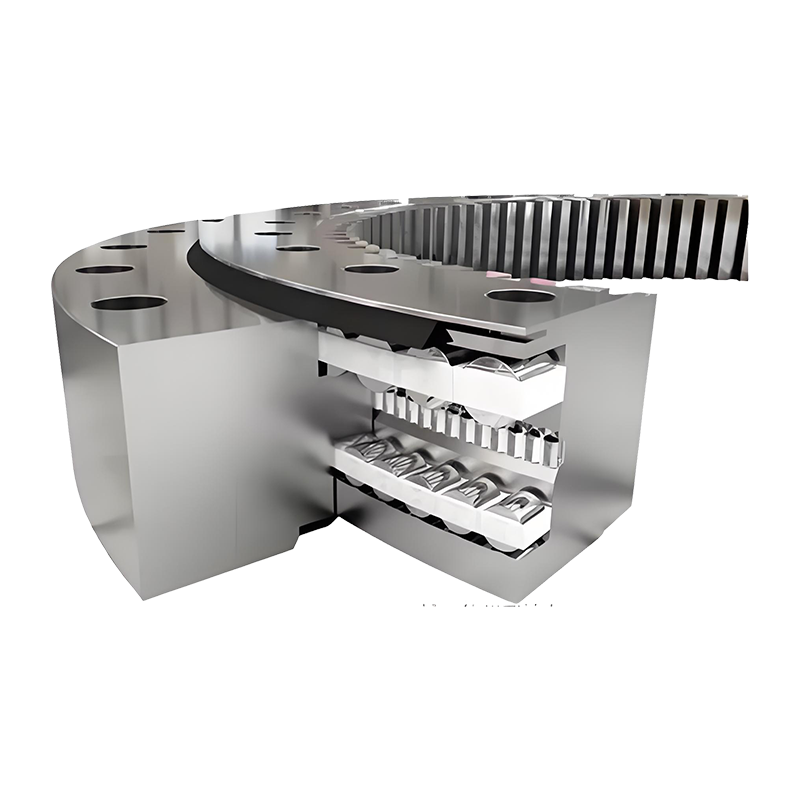 Custom Three-Row Roller Slewing Bearing (13 Series) Manufacturers, Suppliers, FaJiangsu Manchen Transmission Technology Co., Ltd is custom Three-Row Roller Slewing Bearing (13 Series) Manufacturers, suppliers & factor...View Product →
Building a Maintenance Schedule That Works
All this advice needs a practical container. We recommend a tiered maintenance calendar that fits most industrial operations:
| Frequency | Tasks |
|---|---|
| Per shift / daily | Visual check, listen for abnormal noise, observe grease leaks |
| Weekly / every 100 hours | Raceway greasing (based on profile), gear grease application, wipe down seals |
| Monthly / every 500 hours | Bolt torque re-check, detailed seal inspection, purging inspection, grease sample |
| Quarterly / every 2000 hours | Full visual inspection, runout check, structural bolt check, review maintenance log |
For the heaviest load classes, such as maintenance tips for 13-series three-row roller bearings explain, the inspection interval should be shortened even when the equipment appears to run smoothly. The most critical habit you can build is documentation. Record every greasing quantity, every torque value, and every unusual observation. A good maintenance log gives you trend data — for example, a gradual increase in grease temperature or purged particle count — that allows you to predict failures before they happen.
Conclusion — Maintenance Is an Investment, Not an Expense
We opened this guide with the statistic that over 96% of slewing ring bearing failures are preventable. That number is not just theory — it reflects the reality that most failures are caused by lubrication gaps, contamination, overloading, and improper mounting, all of which are within your control. By implementing a structured maintenance program covering lubrication, inspection, torque management, seal protection, and documentation, you turn your slewing ring bearing into a predictable, long-life component rather than an unpredictable liability.
The first step is simple: schedule your next greasing session, verify your bolt torque, and start a maintenance log today. If you need application-specific guidance on grease selection, inspection intervals, or you are evaluating repair options, contact our team — we are happy to share our engineering experience.
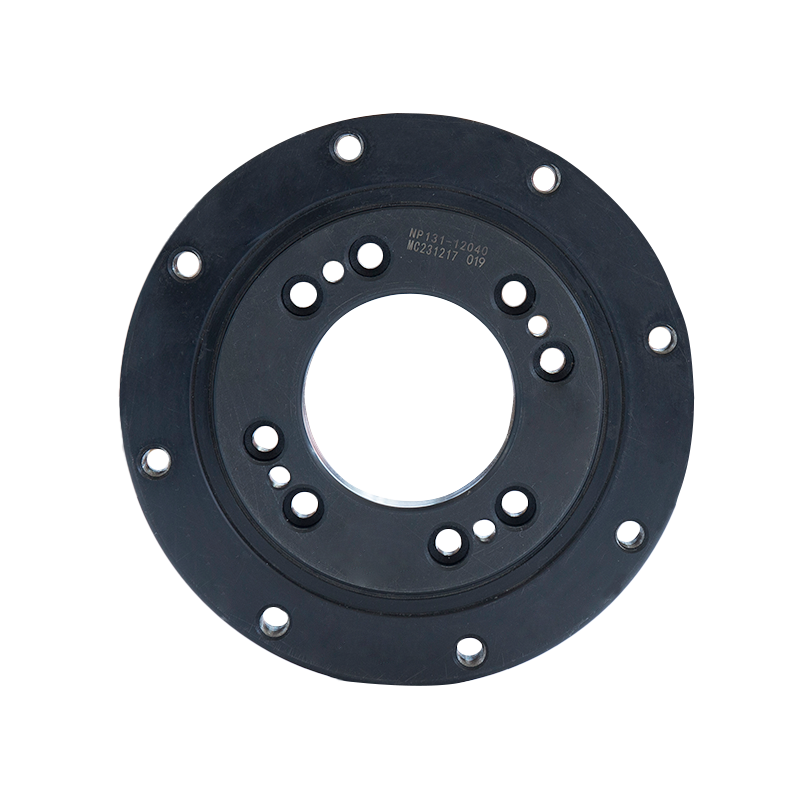



Jiangsu Manchen Transmission Technology Co., Ltd. excels in creating custom, reliable, and precise slewing bearings for diverse industries, continuously innovating to meet the highest standards and seeking collaborative opportunities. Reliable and steady slewing bearings supplier in China.
Product links
Contact Us
-
Address:No. 8, Nanqiu Road, Huangtu Town, Jiangyin City,China
-
Tel:+86-13646122221
-
Phone:+86-18796936198
-
WhatsApp:+86 18796936198
-
E-mail:hedy@slewingbearingcn.com
-
E-mail:ma@slewingbearingcn.com
-
E-mail:vena@slewingbearingcn.com
