

 EN
EN  English
 русский
 Español
 عربى
عربى

News
 Home / News / Industry news / Hydraulic Slewing Drive: A Practical Guide to Selection, Maintenance, and Applications
 Hydraulic Slewing Drive: A Practical Guide to Selection, Maintenance, and Applications
 2026.08.13
 Industry news
On a 20-ton excavator, the upper structure does not swing on a simple axle. It rotates on a hydraulic slewing drive, a compact assembly that combines a hydraulic motor, a gear reduction stage, and a slewing bearing into one load-carrying unit. When this drive fails, the machine stops completely, so selecting and maintaining it correctly has a direct impact on uptime and operating costs.
Content
- 1 What Is a Hydraulic Slewing Drive?
- 2 How It Works: From Hydraulic Pressure to Controlled Rotation
- 3 Practical Selection Criteria for Hydraulic Slewing Drives
- 4 Industrial Applications of Hydraulic Slewing Drives
- 5 Lubrication, Sealing, and Maintenance
- 6 Built-In Reliability: Customization and Manufacturing Quality
What Is a Hydraulic Slewing Drive?
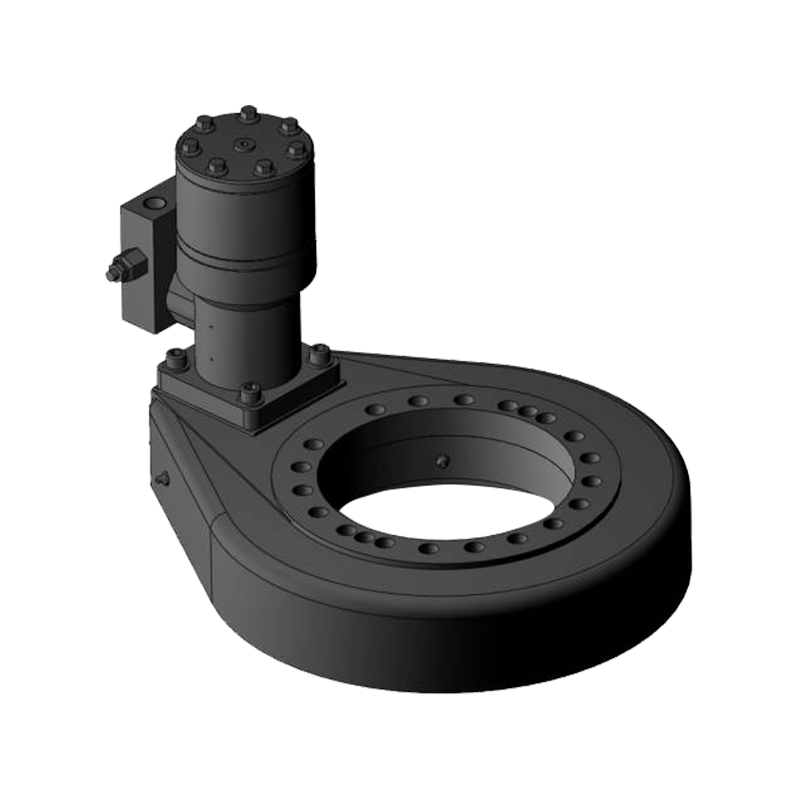
A hydraulic slewing drive is a geared rotating transmission driven by pressurized hydraulic oil. It receives flow from a hydraulic pump, converts that flow into mechanical torque, and reduces speed through a gear train before rotating the connected structure. Unlike electric slew drives, the hydraulic version keeps the motor small relative to the output torque, which makes it easier to package inside a tight machine layout.
A typical hydraulic slewing drive consists of:
- A hydraulic motor, often a radial piston or orbit motor, which produces torque based on system pressure.
- A spring-applied hydraulic-release brake that holds the load when control valves are in neutral.
- A planetary or worm gear stage that multiplies motor torque and lowers output speed.
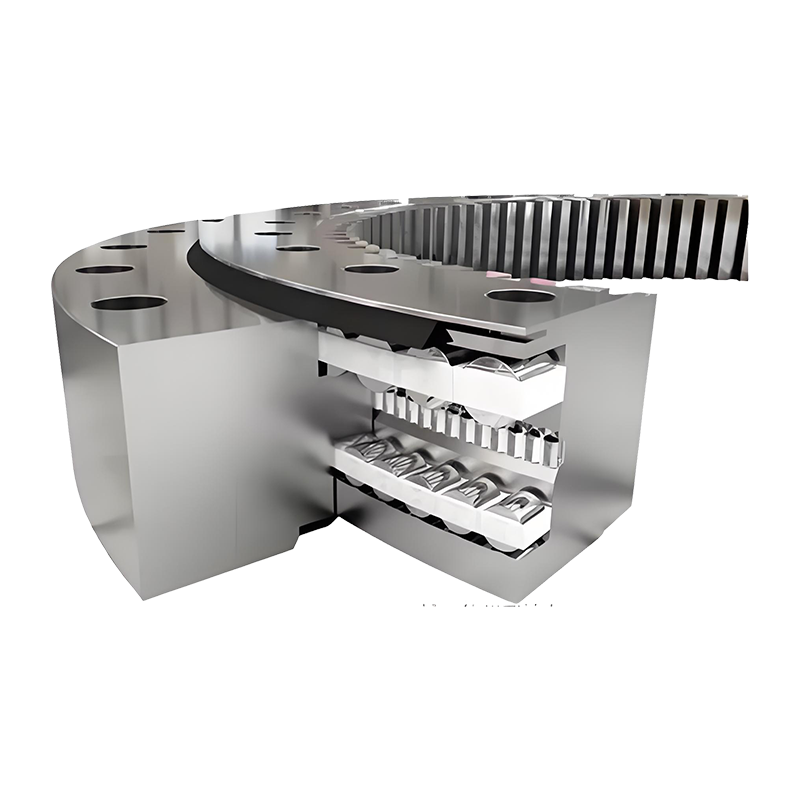
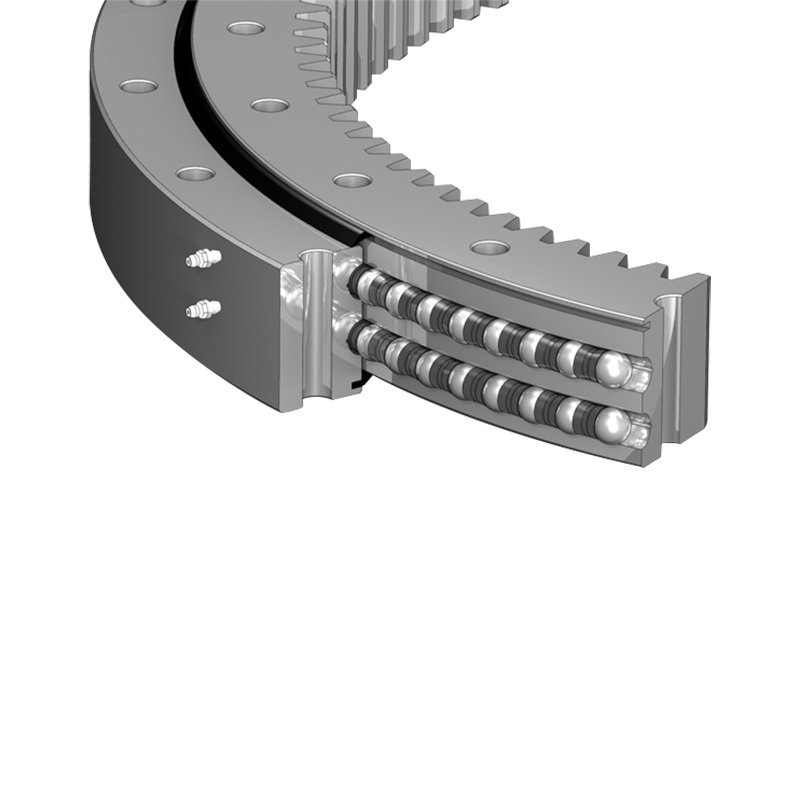
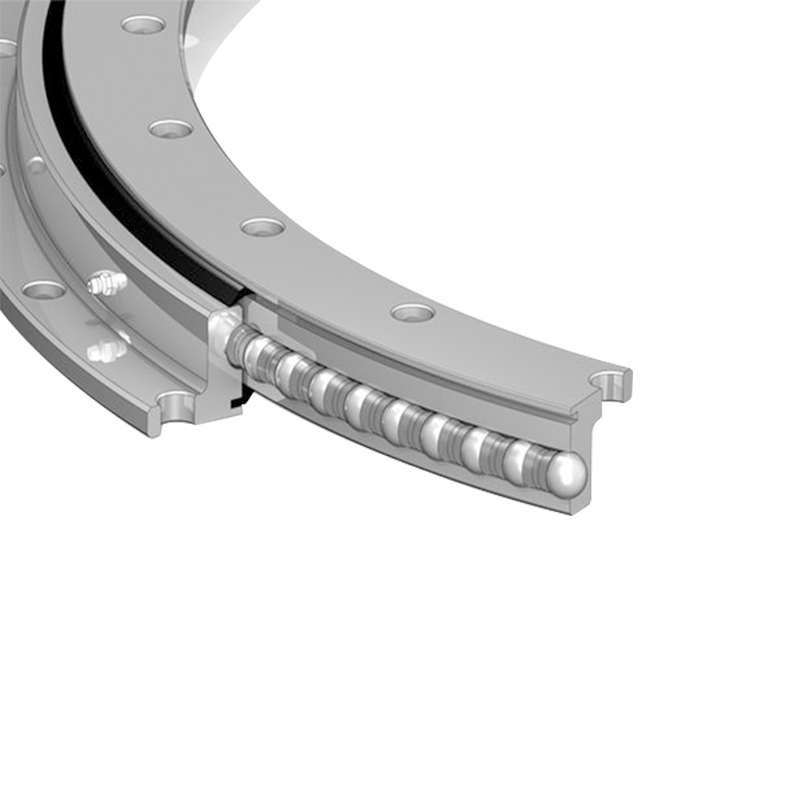
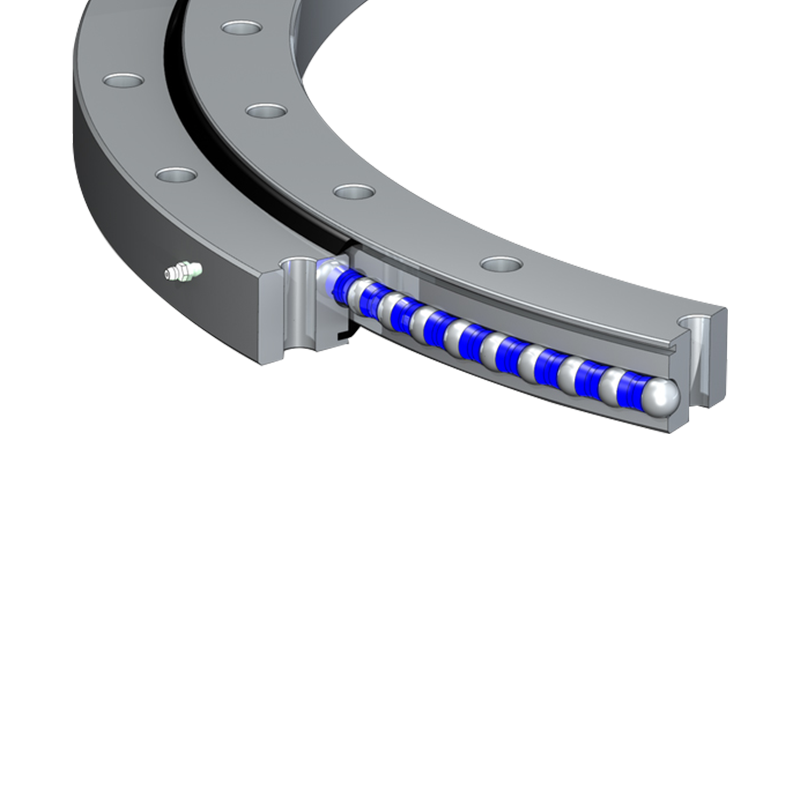
- A slewing ring bearing, usually with internal or external teeth, that carries axial, radial, and tilting loads.
- Sealing elements, grease points, and hydraulic port connections that keep the interior protected from water, dust, and pressure spikes.
Each component matters. In particular, the slewing bearing and gear teeth define the upper load limit, while the motor and brake define how safely the machine starts and stops.
How It Works: From Hydraulic Pressure to Controlled Rotation
Understanding the working principle helps you specify a drive instead of just buying a catalogue number.
The Hydraulic Motor and Brake
System pressure creates torque, while oil flow creates speed. The motor converts that pressure into rotary force, and the valve controls the direction. The brake is usually a multidisc wet brake that releases when hydraulic pressure is applied. In applications such as cranes or aerial lifts, this brake is the last line of defense against a falling load. Its torque rating should match or exceed the maximum loading moment of the machine.
The Gear Reduction and Slewing Bearing
The motor output shaft turns the drive pinion or gearbox input. The gear reduction stage increases torque by a factor equal to the gear ratio, often between 10:1 and 100:1. This high torque drives the slewing bearing ring, which is bolted to the rotating platform and also acts as a structural element. The raceway of the bearing is hardened and ground to provide low friction and predictable life under cyclic loads. If the heat treatment depth or material grade is inconsistent, fatigue cracks can develop and spread silently until the bearing seizes.
Practical Selection Criteria for Hydraulic Slewing Drives
Start with the load profile, not with the largest available drive. Calculate how much weight rotates, at what radius, at what angular acceleration, and how many cycles per hour the machine runs. Then add environmental loads such as wind, slope, snow, or process forces. The table below summarises the main parameters engineers need to review.
| Parameter | What to check | Why it matters |
|---|---|---|
| Slewing torque | Starting and working torque at rated pressure | Must overcome gravity, friction, and inertia without stalling. |
| Tilting moment | Equivalent dynamic load on the bearing | Prevents raceway fatigue and sudden cracking. |
| Gear ratio | True ratio between motor speed and output speed | Sets the balance between speed and torque. |
| Backlash | Arc-minute tolerance at the output gear | Controls positioning accuracy and vibration. |
| Sealing class | IP rating and seal material | Protects against water, dust, and pressure washdown. |
| Temperature range | Grease and hydraulic oil viscosity limits | Avoids seal hardening and oil starvation. |
Load and torque capacity
The required torque includes friction torque, acceleration torque, and load torque. For mobile equipment, a safety factor of 1.25 is a common starting point; for continuously operating industrial machines, many integrators use 1.5 or higher. Always check the torque curve at the actual system pressure, because a hydraulic pump set too low will not deliver the rated moment.
Backlash and positioning accuracy
Backlash appears as angular play between the motor input and the output ring. Hoisting applications can tolerate moderate backlash, but radar trackers, robots, and indexing tables need low backlash. In a hydraulic drive, backlash is usually governed by the gear stage, particularly when the output gear meshes with the bearing teeth. Specify the acceptable arc-minute value in the RFQ, and verify it on the test report.
Operating environment and duty cycle
A drive installed on a ship sees high humidity, salt spray, and rapid temperature changes. A drive in a solar field operates in a dry but fluctuating temperature range. Define the IP rating, seal material, and corrosion protection before selecting hardware. The wrong seal can allow water ingress that destroys the bearing within a few months, even if the drive is oversized.
Industrial Applications of Hydraulic Slewing Drives
Because of their compact power density and high holding torque, hydraulic slewing drives appear in applications that need reliable rotation under heavy load:
- Excavators and cranes: swing drive for the upper structure.
- Aerial work platforms: rotating boom and basket.
- Solar trackers: horizontal drives for single-axis and dual-axis tracking.
- Wind turbines: yaw orientation and blade pitch.
- Harbor and offshore equipment: slewing cranes and deck equipment.
- Mobile machinery: turret rotation on road-rail and utility vehicles.
In construction and mining, the swing drive must support the entire upper frame while the machine works on uneven ground. This is one of the most demanding heavy-duty rotation applications found in industry. The same drive concept also appears in much smaller form in medical imaging tables and compact robots, where precision and low noise outweigh brute torque.
Lubrication, Sealing, and Maintenance
A hydraulic slewing drive crosses two worlds: a high-pressure hydraulic circuit and a grease-lubricated gear and bearing assembly. Keeping those worlds separated is the most important maintenance task.
- Monitor the hydraulic oil level and contamination level; oil with more than ISO 18/16/13 contamination can score the motor and pump.
- Check the hydraulic swivel area for leaks around the motor flange and the brake housing.
- Re-grease the slewing bearing according to the manufacturer's interval, rotating the drive while adding grease.
- Inspect mounting bolts for loosening after the first 100 hours and then periodically.
- Listen for clicking or grinding during rotation, which often points to raceway damage or lack of grease.
Pay attention to lubrication and sealing requirements for slewing drives to avoid common failure modes. A small oil film near the output seal is a warning sign, not a cosmetic issue. If ignored, the seal can fail completely and allow water into the bearing. In many cases, a simple reseal job turns into a full drive replacement when maintenance is delayed.
Built-In Reliability: Customization and Manufacturing Quality
Buying a hydraulic slewing drive is not just about the gearbox. The manufacturer's control over the bearing raceway and gear tooth quality ultimately determines how long the drive survives. At Manchen, the design team works from the bearing outward, because commercial bearings cannot always meet the tilting moment and backlash demands of a compact hydraulic drive. The factory uses digital production monitoring to track heat treatment parameters and raceway grinding in real time, which gives a higher level of traceability than manual inspection alone.
For vertical mounting positions, a vertical internal gear slewing drive is a practical starting point when the hydraulic motor flange must stay inside the structure and space is limited.
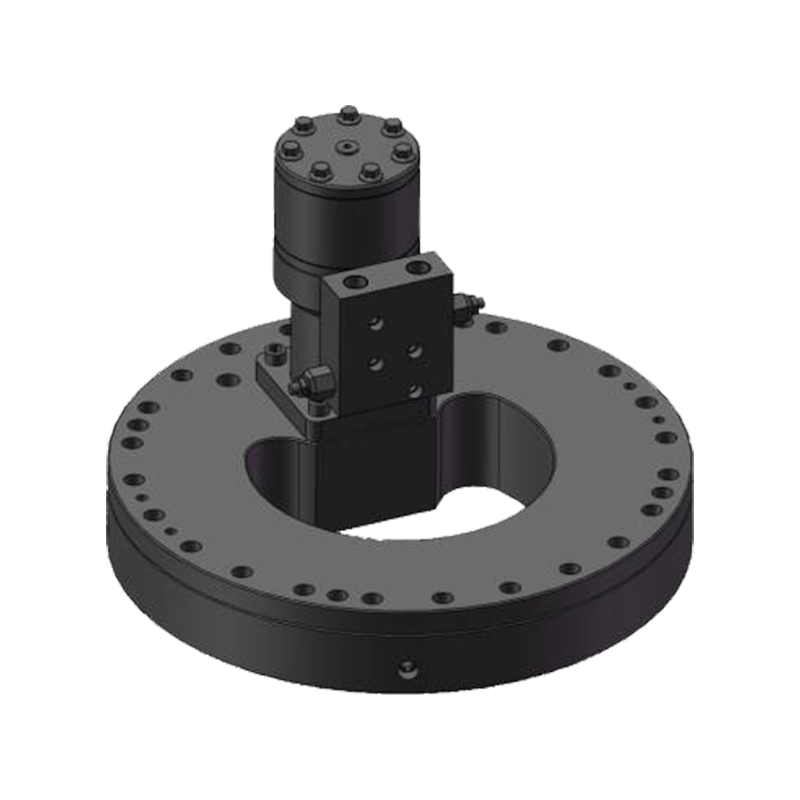 Custom Vertical Internal Gear Slewing Drives Manufacturers, Suppliers, FactoryJiangsu Manchen Transmission Technology Co., Ltd is custom Vertical Internal Gear Slewing Drives Manufacturers, suppliers & factory in Ch...View Product →
For low-profile horizontal installations such as solar trackers and positioning tables, the horizontal slewing drive range offers a sealed and compact envelope with minimum maintenance access.
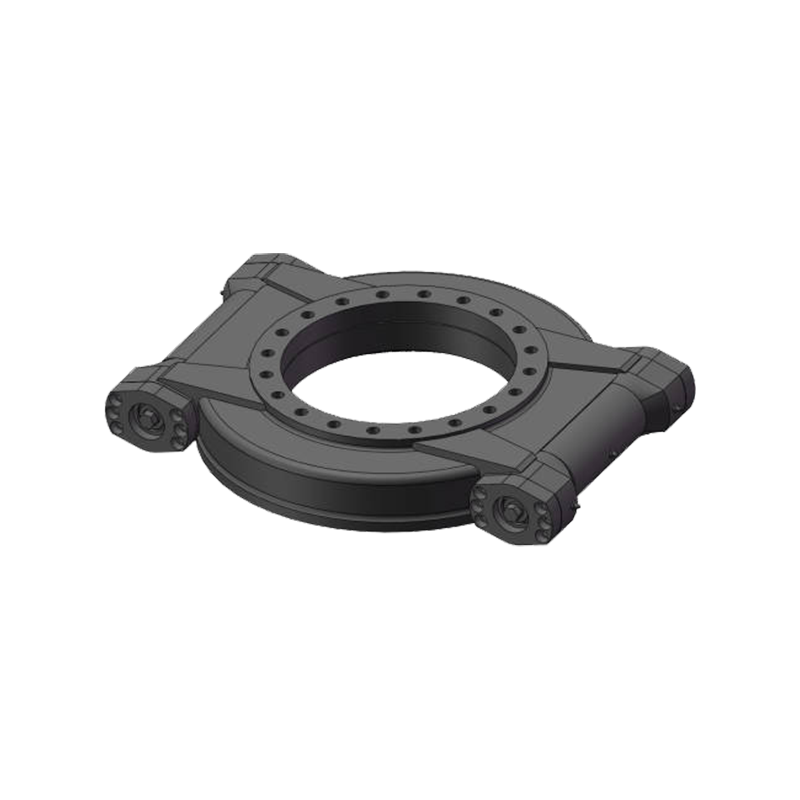 Custom Horizontal Slewing Drives Manufacturers, Suppliers, FactoryJiangsu Manchen Transmission Technology Co., Ltd is custom Horizontal Slewing Drives Manufacturers, suppliers & factory in China. Manchen...View Product →
When automation equipment needs cables, hoses, or sensors to pass through the rotation centre, hollow rotary platforms simplify the design and reduce the risk of cable chafing.
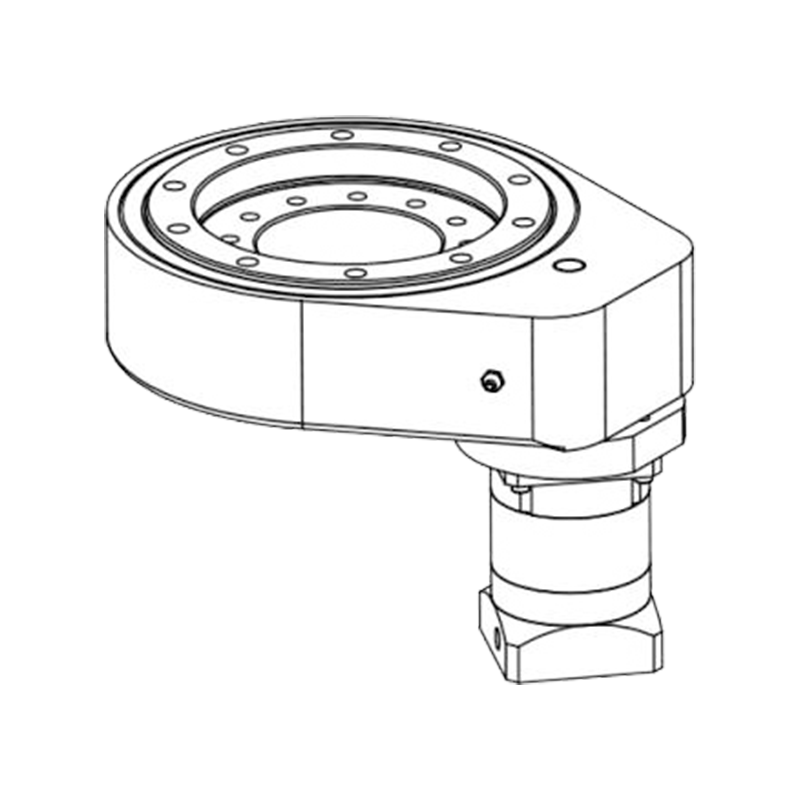 Custom Hollow Rotary Platforms Manufacturers, Suppliers, FactoryJiangsu Manchen Transmission Technology Co., Ltd is custom Hollow Rotary Platforms Manufacturers, suppliers & factory in China. Manchen H...View Product →
Regardless of which configuration you choose, ask the supplier for load-life curves, backlash values, and a seal specification that matches your real environment. A responsive manufacturer will adapt flange geometry, shaft size, port orientation, and mounting hole patterns to suit your chosen hydraulic motor. That flexibility is what turns a standard drive into a reliable machine component.
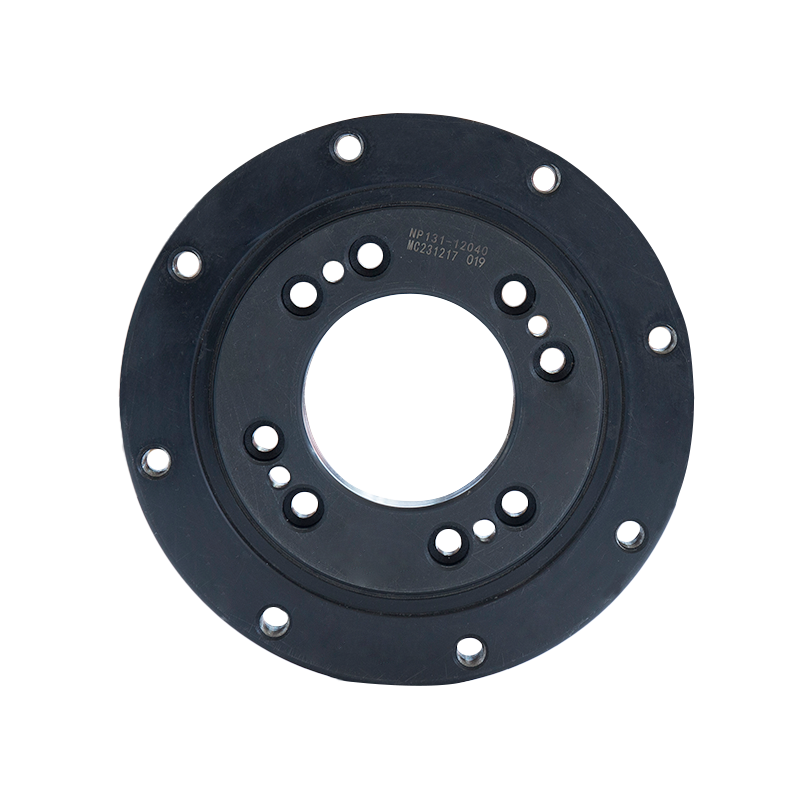




Jiangsu Manchen Transmission Technology Co., Ltd. excels in creating custom, reliable, and precise slewing bearings for diverse industries, continuously innovating to meet the highest standards and seeking collaborative opportunities. Reliable and steady slewing bearings supplier in China.
Product links
Contact Us
-
Address:No. 8, Nanqiu Road, Huangtu Town, Jiangyin City,China
-
Tel:+86-13646122221
-
Phone:+86-18796936198
-
WhatsApp:+86 18796936198
-
E-mail:hedy@slewingbearingcn.com
-
E-mail:ma@slewingbearingcn.com
-
E-mail:vena@slewingbearingcn.com
