

 EN
EN  English
 русский
 Español
 عربى
عربى

News
 Home / News / Industry news / What are the Features and Applications of Double-Row Equal-Diameter Four-Point Contact Ball Slewing Bearings?
 What are the Features and Applications of Double-Row Equal-Diameter Four-Point Contact Ball Slewing Bearings?
 2026.04.02
 Industry news
Content
- 1 Introduction to Double-Row Equal-Diameter Four-Point Contact Ball Slewing Bearings
- 2 Structural Features
- 3 Load Capacity and Performance Characteristics
- 4 Material and Manufacturing Considerations
- 5 Applications and Suitable Scenarios
- 6 Comparison with Other Slewing Bearings
- 7 Maintenance and Operational Tips
- 8 Conclusion
Introduction to Double-Row Equal-Diameter Four-Point Contact Ball Slewing Bearings
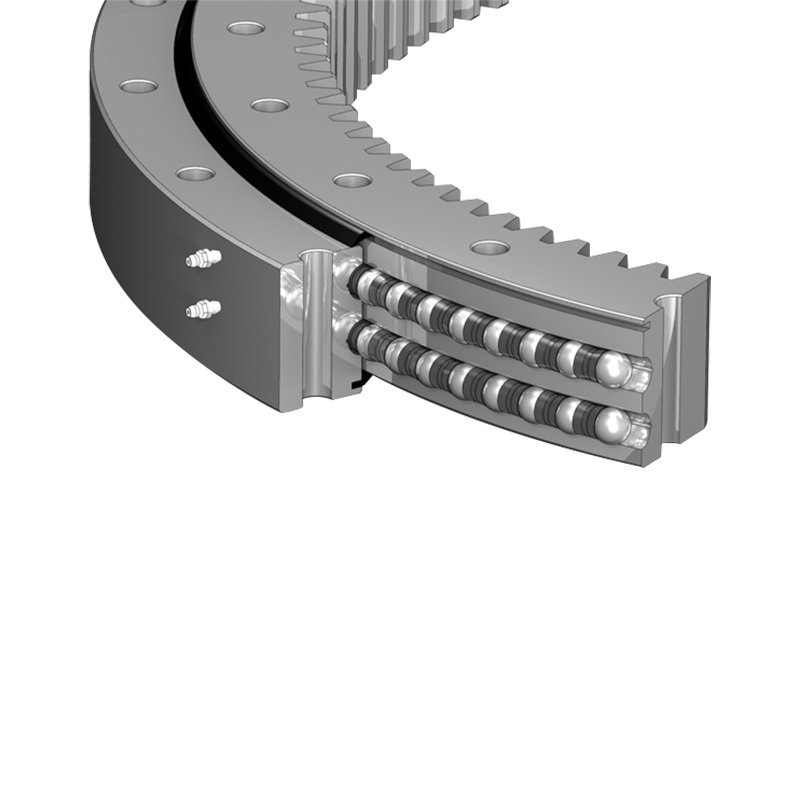
Double-row equal-diameter four-point contact ball slewing bearings are advanced rotational components designed to handle complex load conditions in heavy machinery. Unlike single-row bearings, these bearings have two rows of balls with equal diameter, allowing them to simultaneously support axial, radial, and tilting moments with high stability and precision. They are commonly used in cranes, excavators, wind turbines, and industrial turntables.
The combination of high load capacity, durability, and structural compactness makes these bearings essential in engineering applications where reliable rotation and minimal maintenance are critical. Understanding their technical characteristics and suitable scenarios is vital for engineers and operators.
Structural Features
Double-Row Ball Arrangement
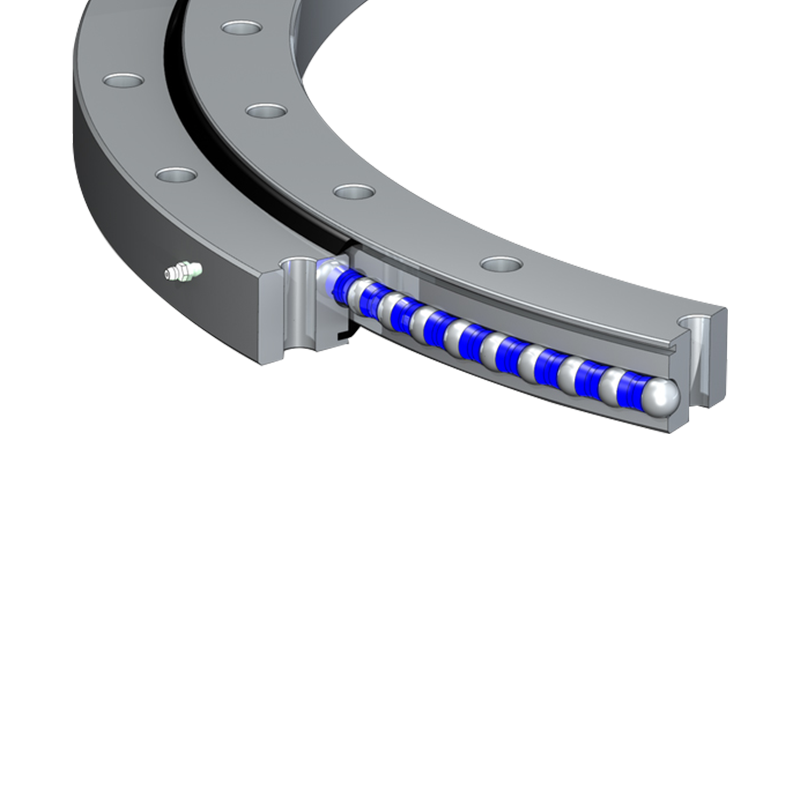
These bearings feature two concentric rows of balls, each with equal diameter, arranged in a way that ensures four points of contact per ball with the raceways. This geometry enhances load distribution and enables the bearing to handle axial loads in both directions while accommodating radial forces and tilting moments.
Raceway Design
The inner and outer rings of the bearing have precisely machined raceways, allowing smooth movement of the balls. The equal-diameter design simplifies the manufacturing process and provides consistent performance under variable loads. Additionally, integrated lubrication channels ensure optimal performance and reduce wear.
Sealing and Maintenance
High-quality seals prevent contamination from dust and moisture, which is crucial for outdoor and industrial applications. The design minimizes the need for frequent maintenance while maintaining operational reliability. Proper lubrication intervals extend the service life and reduce operational costs.
Load Capacity and Performance Characteristics
Axial and Radial Load Handling
Double-row equal-diameter four-point contact ball bearings are capable of handling substantial axial loads in both directions due to the double-row configuration. They also support radial loads efficiently, making them versatile for applications requiring multidirectional load accommodation.
Tilting Moment Resistance
The four-point contact geometry allows these bearings to resist tilting moments effectively. This is especially useful in heavy-duty machinery like cranes and excavators, where the load may shift dynamically during operation.
High Rotational Accuracy
Precision machining and balanced ball distribution ensure smooth rotation and minimal vibration. High rotational accuracy is critical for applications such as wind turbines and industrial turntables where consistent motion is required for efficiency and safety.
Material and Manufacturing Considerations
Steel Quality and Hardening
These bearings are typically made from high-grade alloy steel, which is heat-treated to achieve optimal hardness and toughness. Proper material selection ensures durability, fatigue resistance, and longevity under heavy loads.
Precision Machining
The raceways and balls are manufactured to tight tolerances, ensuring uniform contact and consistent performance. Advanced CNC machining and grinding processes improve surface finish and reduce friction, leading to higher efficiency and reduced wear.
Lubrication Systems
Integrated grease or oil channels are often included to provide consistent lubrication to all contact points. This reduces maintenance intervals, prevents overheating, and prolongs the service life of the bearing under demanding conditions.
Applications and Suitable Scenarios
Cranes and Heavy Machinery
In construction and port operations, these bearings are widely used in tower cranes, mobile cranes, and large excavators. They handle the combined axial, radial, and tilting loads generated during lifting and rotational operations, providing stability and longevity.
Wind Turbines
Wind turbines require bearings that can support large tilting moments and dynamic loads caused by wind pressure. Double-row four-point contact bearings provide the necessary stiffness and rotational accuracy for efficient and safe turbine operation.
Industrial Turntables and Robotics
In automated manufacturing and assembly lines, these bearings enable smooth rotation of heavy platforms and robotic arms. Their high precision and load capacity ensure minimal downtime and consistent performance in industrial environments.
Comparison with Other Slewing Bearings
| Type | Single-Row Four-Point Contact | Double-Row Equal-Diameter | Cross-Roller |
| Axial Load | Moderate | High | Very High |
| Radial Load | Moderate | High | High |
| Tilting Moment | Moderate | High | Very High |
| Rotational Accuracy | Good | Excellent | High |
Maintenance and Operational Tips
Lubrication Schedule
Regularly check and replenish grease or oil to all contact points. Proper lubrication ensures smooth operation, reduces friction, and prevents premature wear of balls and raceways.
Inspection and Replacement
Perform routine inspections for ball wear, raceway damage, and seal integrity. Replace worn components promptly to avoid operational failures and maintain rotational accuracy.
Conclusion
Double-row equal-diameter four-point contact ball slewing bearings combine high load capacity, precise rotation, and durability, making them suitable for cranes, wind turbines, industrial turntables, and heavy machinery. Their design allows efficient load distribution, resistance to tilting moments, and minimal maintenance requirements.
By understanding their structural features, performance characteristics, and applicable scenarios, engineers can select the optimal bearing type to enhance machinery performance, operational safety, and longevity.

Jiangsu Manchen Transmission Technology Co., Ltd. excels in creating custom, reliable, and precise slewing bearings for diverse industries, continuously innovating to meet the highest standards and seeking collaborative opportunities. Reliable and steady slewing bearings supplier in China.
Product links
Contact Us
-
Address:No. 8, Nanqiu Road, Huangtu Town, Jiangyin City,China
-
Tel:+86-13646122221
-
Phone:+86-18796936198
-
WhatsApp:+86 18796936198
-
E-mail:hedy@slewingbearingcn.com
-
E-mail:ma@slewingbearingcn.com
-
E-mail:vena@slewingbearingcn.com
