

 EN
 English
 русский
 Español
 عربى

News
 Home / News / Industry news / Slewing Cranes Explained: Bearings and Drives That Keep Heavy Loads Turning
Slewing Cranes Explained: Bearings and Drives That Keep Heavy Loads Turning
 2026.11.11
 Industry news
Watch a crane lift a container off a quay and swing it across to a waiting ship, and you are watching one bearing assembly do most of the quiet work. The hoist raises the load and the boom or trolley positions it, but it is the slewing motion — the slow, controlled rotation of the upper structure around a vertical axis — that turns a lifting machine into a machine that can place a load almost anywhere inside its working radius. Everything above that rotation depends on two components: the slewing ring that carries the load, and the drive that turns it.
Having spent years designing and manufacturing these components for crane builders and equipment integrators, we have learned that most rotation problems are decided long before the first grease cartridge is emptied. They are decided at the specification stage, when someone either matched the bearing to the real duty or guessed at it.
Content
- 1 What Makes a Crane a "Slewing" Crane
- 2 The Slewing Ring: One Bearing, Three Loads
- 3 Slewing Drives: Torque With Control
- 4 Matching the Bearing Type to the Crane's Duty
- 5 Load Cases That Decide the Design
- 6 A Selection Checklist Worth Following
- 7 Installation and Long-Term Care
- 8 Getting the Rotation Right the First Time
What Makes a Crane a "Slewing" Crane
Strictly speaking, a slewing crane is any crane whose upper works rotate relative to its base. That single characteristic covers a very wide family of machines:
- Tower cranes, where the whole jib assembly slews above the mast.
- Mobile and truck-mounted cranes, where the superstructure turns on a live ring above the chassis.
- Portal and shipyard slewing cranes, which combine a travelling gantry with a rotating boom.
- Deck cranes, jib cranes and utility cranes used for lifting personnel or material.
- Material handlers and timber cranes with grab or grapple attachments.
By contrast, an overhead travelling crane usually moves its bridge and trolley along straight rails instead of rotating. Yard cranes with a slewing boom sit somewhere in between, and they are a good reminder that the rotation interface is often the smallest part of the machine yet the one carrying the most concentrated load.
The Slewing Ring: One Bearing, Three Loads
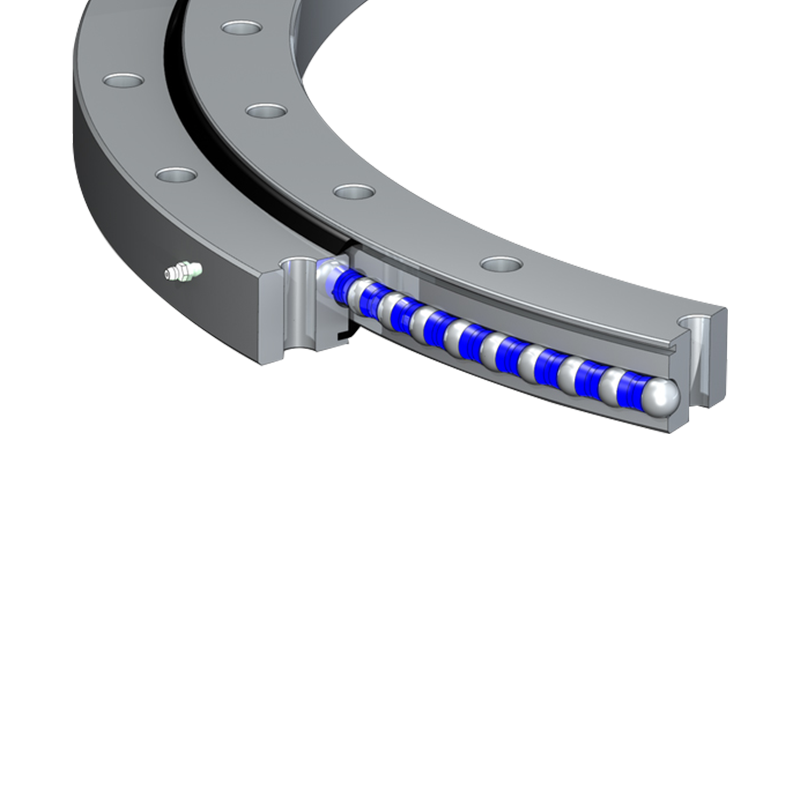
A crane slewing ring does the job that would otherwise need several bearings and a structural frame. In a single ring it carries axial load from the weight of the boom and the lifted load, radial load from side pull and wind, and a tilting moment produced by the load multiplied by its distance from the centre of rotation. That third component is usually the decisive one on a crane, because working radius acts as a lever arm on everything the bearing holds.
Most crane rings also integrate the gear teeth — external, internal or none at all — so the same component both supports and drives the rotation. Raceways are through-hardened or induction-hardened, seals keep grit and water out of the rolling contact, and lubrication grooves or ports decide how easily the ring can be serviced in later life. If you want a deeper walkthrough of how the load path works inside these rings, our note on how slewing bearings carry crane loads goes into more detail.
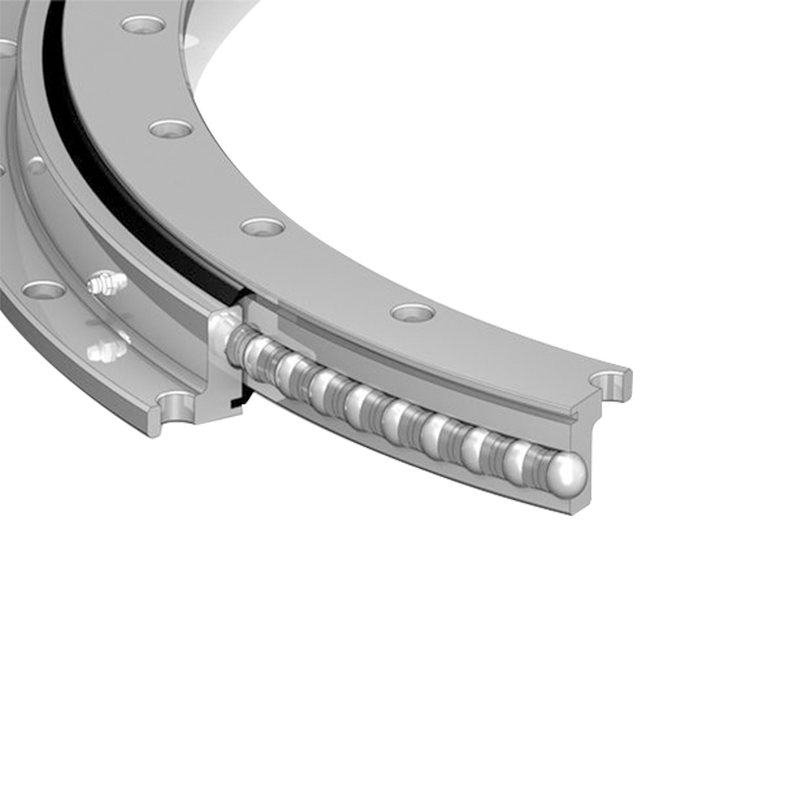
Where a crane needs very tight positioning or a stiff boom tip — deck cranes working containers, for example — a crossed roller arrangement is often the better answer than balls, because the rollers resist moment with noticeably less deflection.
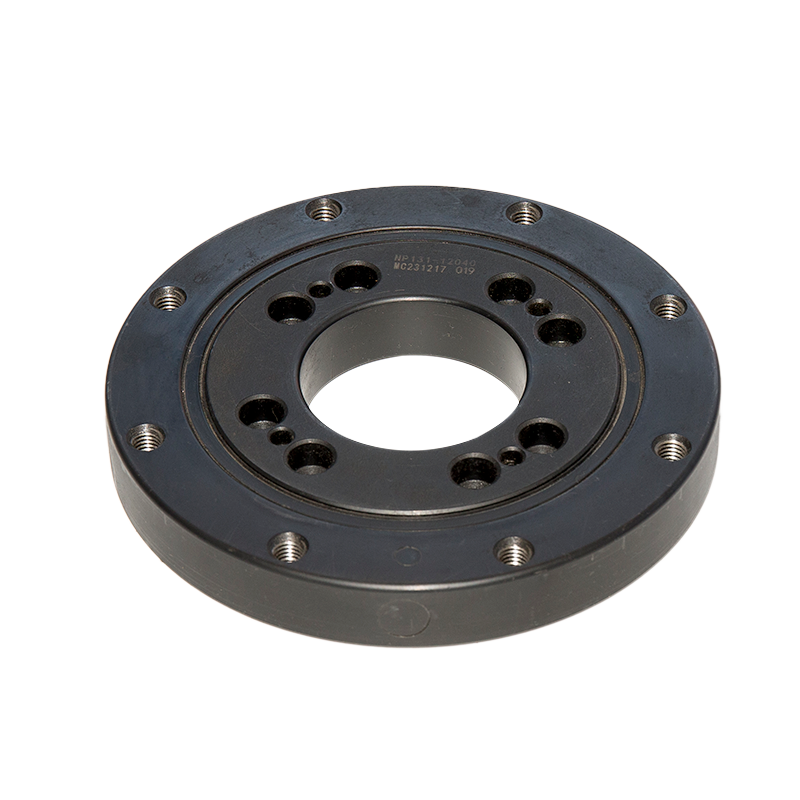 Single Row Cross-Roller Slewing BearingFor cranes needing tight positioning and low deflection, this single-row crossed-roller bearing offers high load capacity and smooth rotation.View Product →
Slewing Drives: Torque With Control
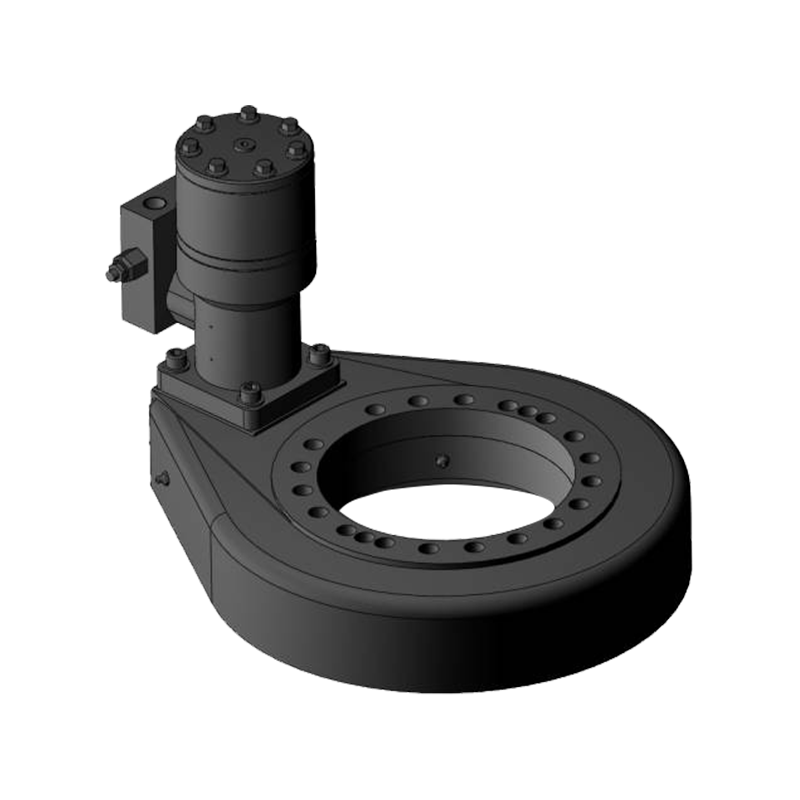
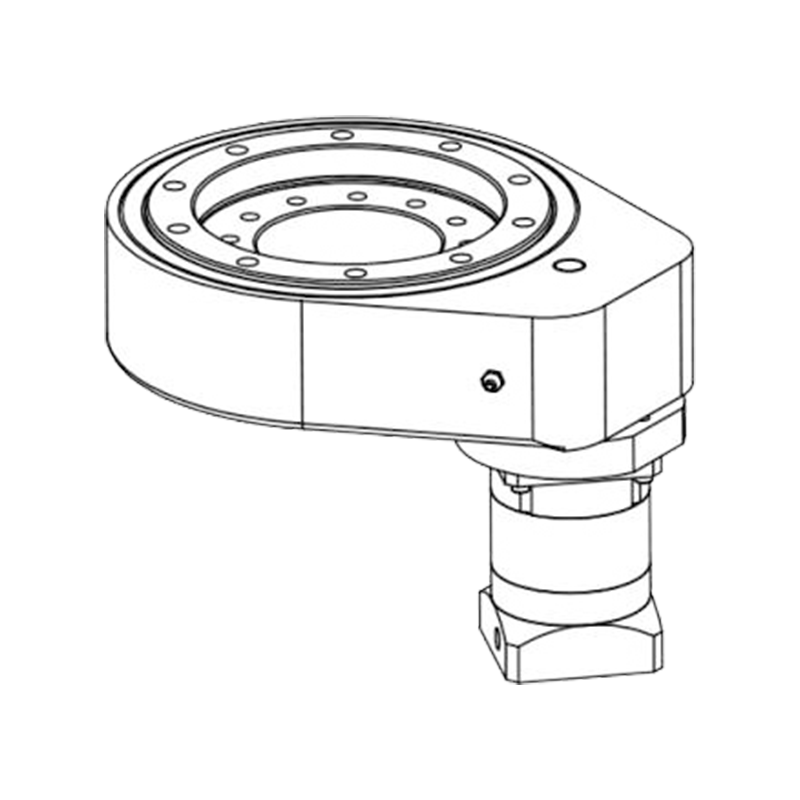
Not every crane needs a separate ring and gearbox. A slewing drive packages the bearing, the gear set and the housing into one sealed unit, which simplifies the mounting interface enormously and gives designers a compact way to achieve high reduction ratios. The trade-off is that the drive must be selected against torque and holding requirements rather than pure bearing capacity.
On truck-mounted cranes, aerial work platforms and utility equipment, the ability to hold a position without a brake — self-locking behaviour from a worm gear stage, for instance — is often as valuable as raw output torque. Enclosed drives also tolerate dust, wash-down and outdoor storage better than exposed ring gears. Our article on vertical slewing drives in cranes and excavators covers how the gear ratio, housing stiffness and sealing choices interact in practice.
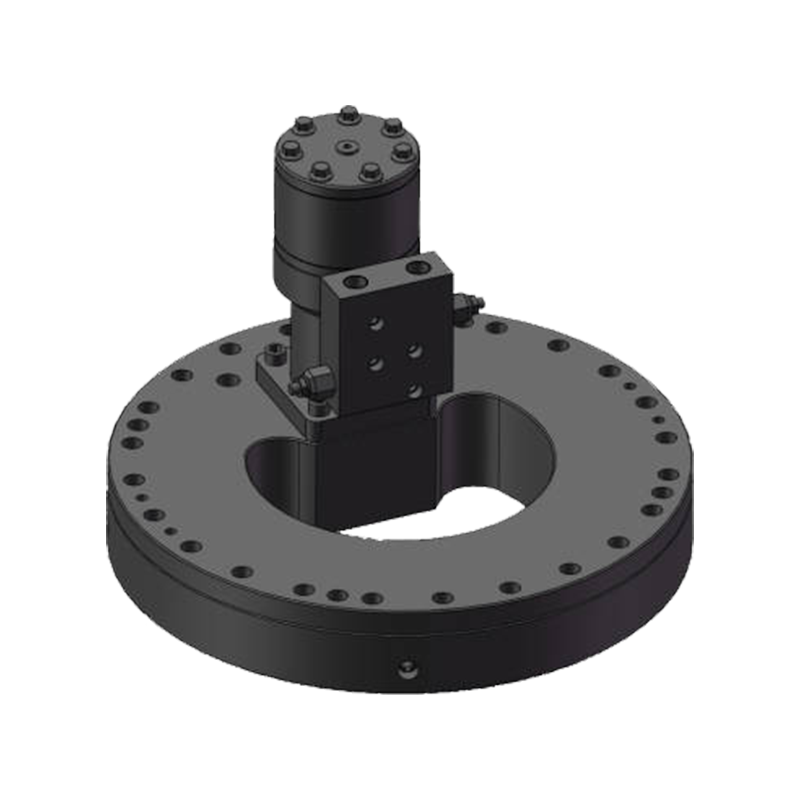 Vertical Internal Gear Self-Locking Slewing DriveFor truck cranes and aerial platforms, this vertical internal-gear drive offers self-locking position holding and stable torque transmission.View Product →
Matching the Bearing Type to the Crane's Duty
There is no universal best slewing solution. What matters is how the load arrives, how often it arrives, and how much space the structure allows around the ring. The comparison below is the one we most often walk customers through.
| Type | Typical crane use | Load character | Strength |
|---|---|---|---|
| Single-row four-point contact ball | Jib cranes, small tower cranes, davits | Light to medium axial, radial and moment | Compact, low profile, economical |
| Double-row equal-diameter ball | Medium mobile cranes, deck cranes | Higher moment in a similar envelope | Stiffer under reversing moment |
| L-type single-row ball | Equipment with tight axial height | Medium loads, restricted section | Thin section, simple mounting face |
| Single-row crossed roller | Precision deck cranes, positioning gear | Alternating moment, high stiffness demand | Minimal deflection, accurate placement |
| Three-row roller (13 series) | Portal cranes, ship loaders, heavy mobile cranes | Very high axial, moment and shock loads | Separate roller rows share the load, long service life |
| Vertical internal gear slewing drive | Truck cranes, aerial platforms, utility cranes | Torque demand with holding requirement | Integrated gearing plus bearing, sealed unit |
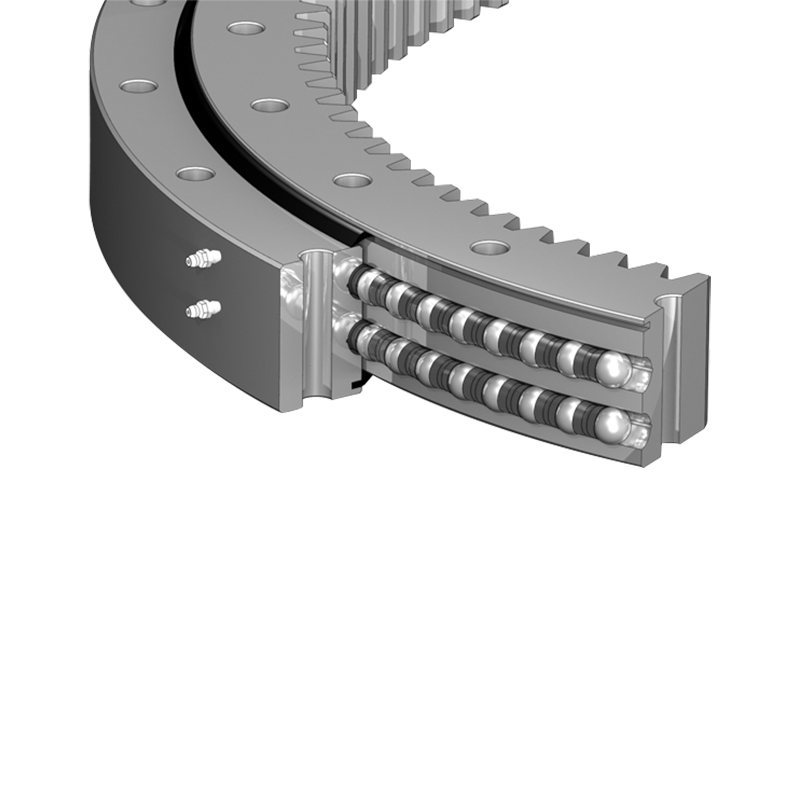
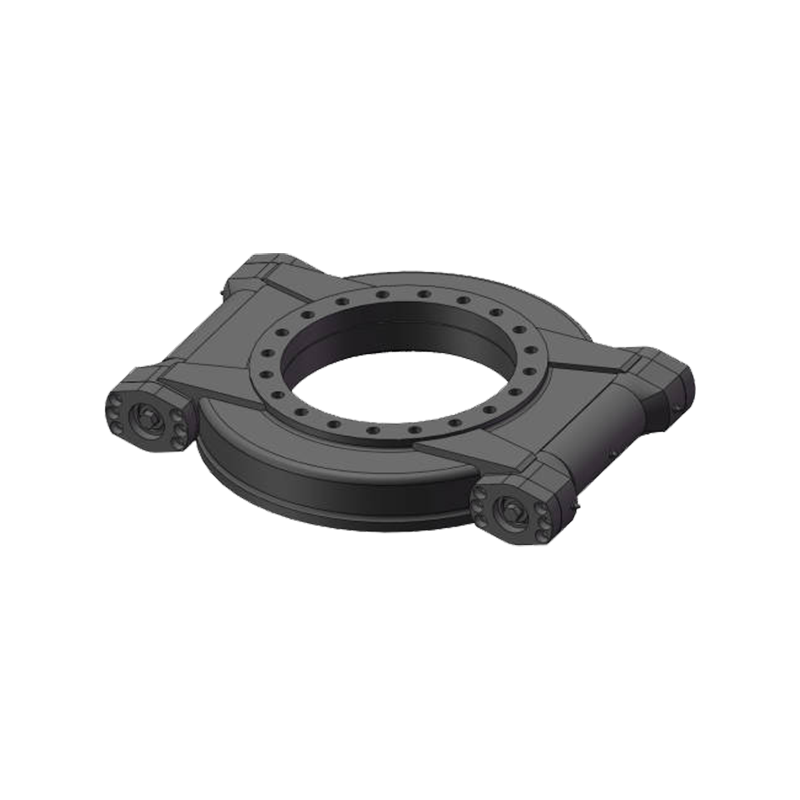
For heavy portals, ship loaders and larger mobile machines, the three-row roller design is usually where the conversation ends up, because splitting axial, radial and moment duties across separate roller rows keeps contact stresses manageable as the machine grows.
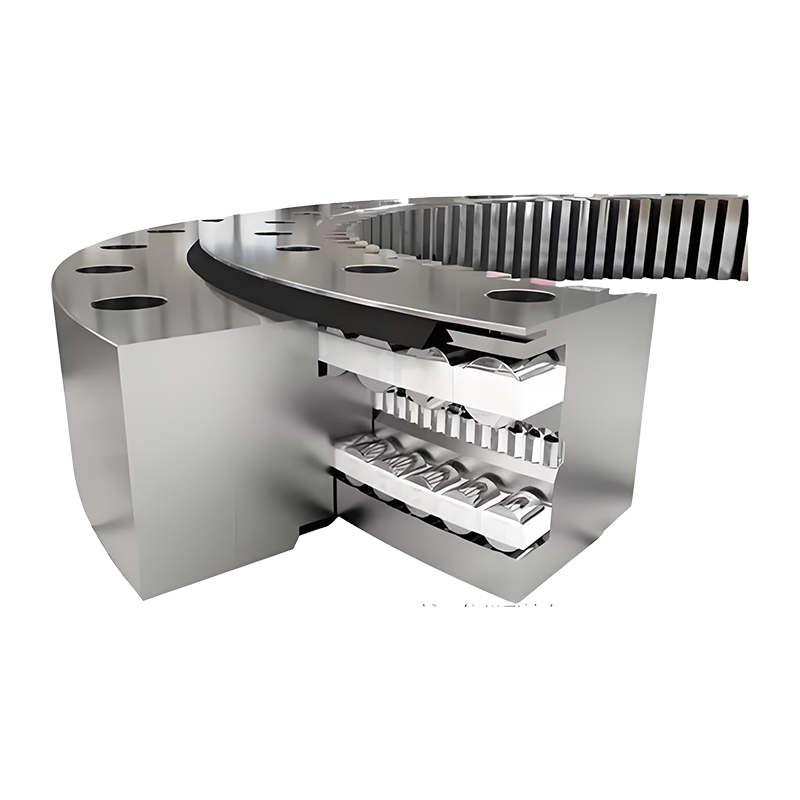 Three-Row Roller Slewing Bearing 13 SeriesFor heavy portals and larger machines, this three-row roller bearing separates axial, radial and moment loads to manage contact stress.View Product →
Load Cases That Decide the Design
Static and dynamic loads are not the same
A bearing that holds a parked crane with the boom extended is experiencing a static case, and the allowable load is generous. The same crane lifting and slewing simultaneously produces a dynamic case with a fraction of that capacity available. Quoting one number for both is one of the most common sources of premature failure.
Shock, side pull and reversing duty
Grabs releasing, loads swinging on the hook, wind gusts on a long boom and uneven slewing stops all add load paths that a pure lifting calculation misses. Reversing duty also matters: a ring that only ever turns ten degrees each way will wear a narrow band of raceway, so the specification should account for slewing range as well as total revolutions.
Environment and maintenance access
Ports, quarries and offshore decks bring salt, grit and moisture. Sealing, surface protection and the position of grease nipples are design decisions, not afterthoughts, because a bearing that cannot be relubricated easily will not be relubricated.
A Selection Checklist Worth Following
- Define the maximum working load and the maximum radius at which it occurs.
- Calculate the tilting moment, axial and radial loads for every relevant combination, not just the worst single lift.
- Estimate duty cycle: lifts per hour, slewing angle, operating hours per year.
- Apply the appropriate service factor for the application class and shock level.
- Check the mounting structure — flatness, bolt grade, bolt preload and stiffness of the supporting flange.
- Agree lubrication method, relubrication interval and inspection access before drawings are released.
Walking through those six points on paper takes an afternoon. Skipping them can take a crane out of service for weeks.
Installation and Long-Term Care
Even a correctly sized ring will underperform if the mounting face is out of flatness or the bolts are not tensioned in the right sequence. Machined mounting surfaces, clean threads and a calibrated torque procedure protect the raceway from being distorted by the structure it sits on. Gear mesh should be checked with marking compound rather than by ear, and backlash measured at several points around the ring.
- Relubricate at the interval set by the duty cycle, not by the calendar alone.
- Inspect seals at every service and replace them before water ingress shows up as grease discolouration.
- Track backlash and rotational resistance over time; changes are early warning signs.
- Check bolt tension after the first weeks of operation and periodically thereafter.
Getting the Rotation Right the First Time
We build slewing rings and slewing drives in Jiangyin, Jiangsu, for customers across port machinery, mobile cranes, construction equipment and automated systems. Our production is organised around precision, light weight and automation, with production data monitored as parts move through the shop, and we are glad to sit down with a load case and a drawing rather than simply quote a part number. If you are specifying the rotation for a new crane or replacing a ring that has not lasted as long as it should, sending us the load data is the fastest way to start.
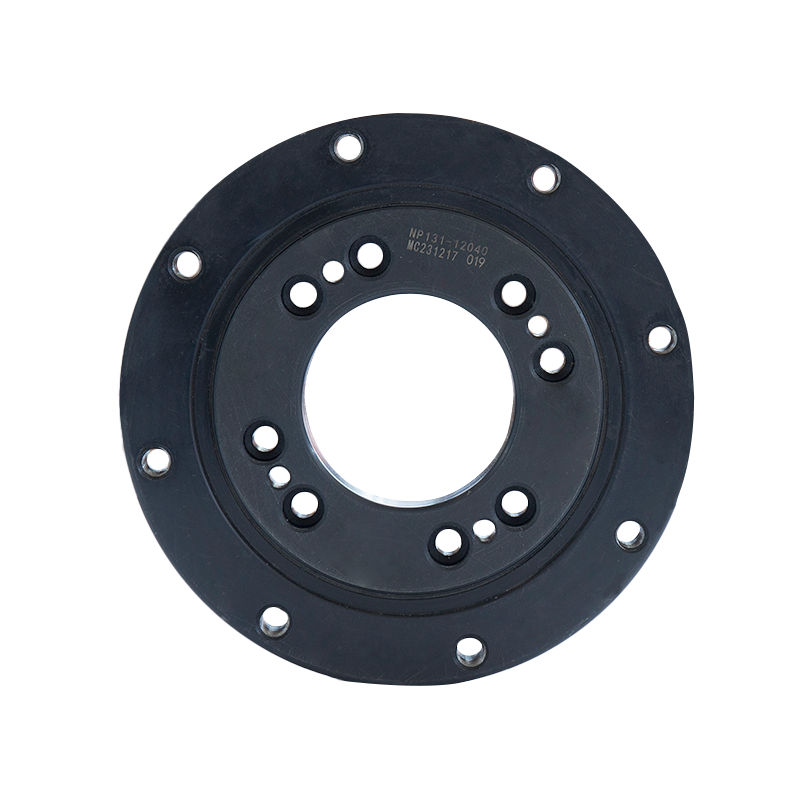

Jiangsu Manchen Transmission Technology Co., Ltd. excels in creating custom, reliable, and precise slewing bearings for diverse industries, continuously innovating to meet the highest standards and seeking collaborative opportunities. Reliable and steady slewing bearings supplier in China.
Product links
Contact Us
-
Address:No. 8, Nanqiu Road, Huangtu Town, Jiangyin City,China
-
Tel:+86-13646122221
-
Phone:+86-18796936198
-
WhatsApp:+86 18796936198
-
E-mail:hedy@slewingbearingcn.com
-
E-mail:ma@slewingbearingcn.com
-
E-mail:vena@slewingbearingcn.com
