

 EN
EN  English
 русский
 Español
 عربى
عربى

News

Single-Row Ball Slewing Bearing Design and Applications
 2026.03.05
 Industry news
Content
Single-Row Ball Slewing Bearing: Key Answer and Core Function
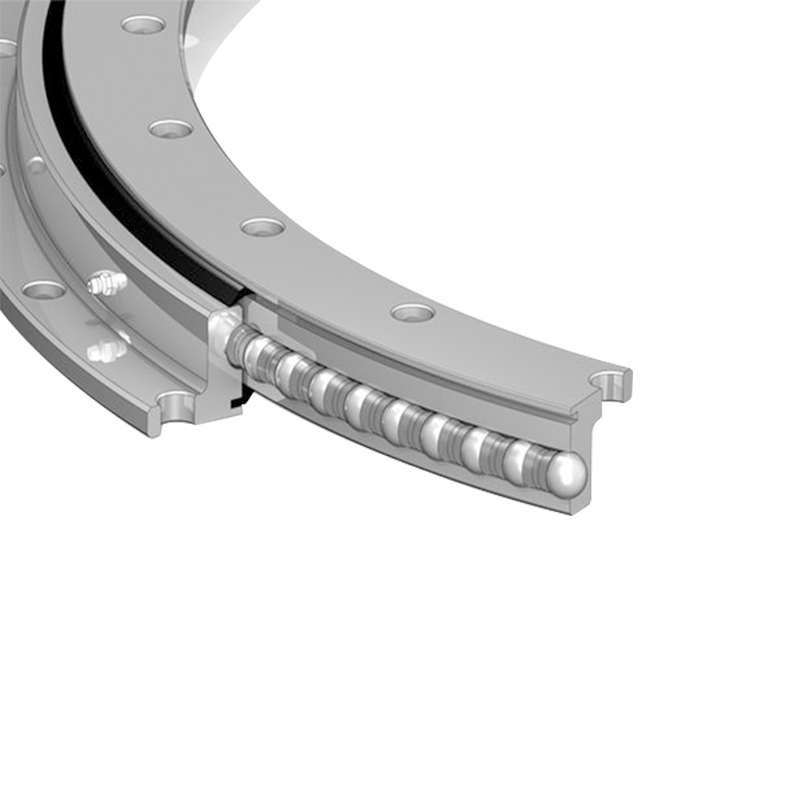
A single-row ball slewing bearing is a rotational bearing designed to support axial loads, radial loads, and overturning moments simultaneously. It uses a single row of precision steel balls between inner and outer rings to enable smooth rotation while maintaining structural stability in large equipment.
Because of its integrated design, a single-row ball slewing bearing often replaces multiple traditional bearing arrangements. It functions as both a structural connection and a rotational support component. This combination allows equipment manufacturers to simplify mechanical structures, reduce assembly space, and improve load distribution.
In practical engineering applications, these bearings are widely used in cranes, excavators, rotating platforms, wind turbines, and industrial robots. Depending on the diameter and material strength, slewing bearings can support loads ranging from several tons to hundreds of tons while maintaining precise rotational movement.
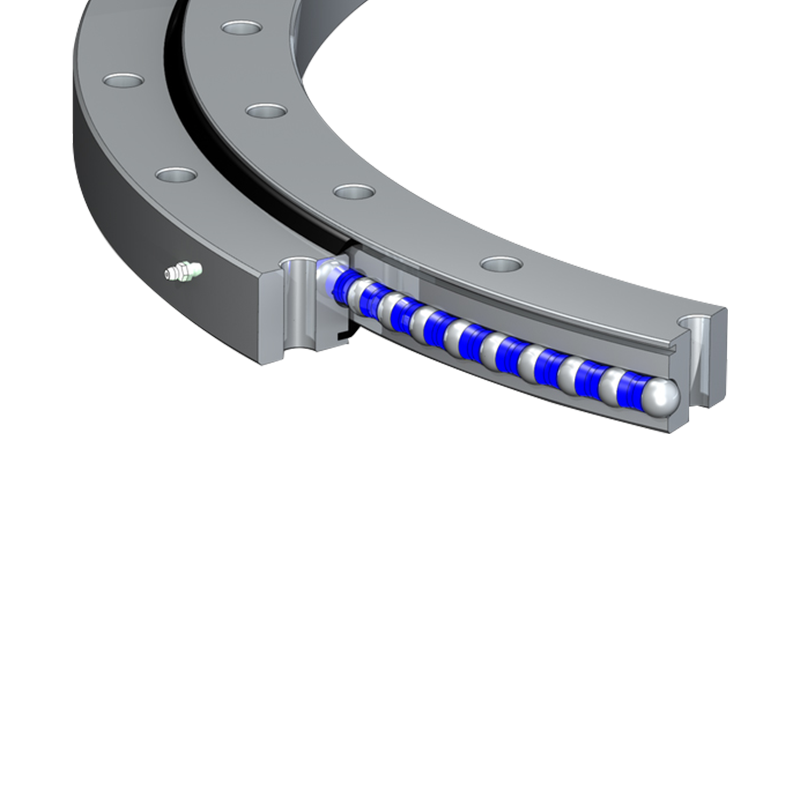
Structural Design and Working Principle
The structural layout of a single-row ball slewing bearing consists of an inner ring, an outer ring, rolling balls, a cage or spacer, sealing elements, and lubrication channels. The rolling elements circulate within raceways machined into both rings, allowing the bearing to rotate smoothly even under combined loads.
Unlike standard deep groove bearings, slewing bearings typically have larger diameters and thinner cross sections. This geometry allows them to support rotational platforms or structural frames while minimizing weight and installation height.
Key structural components
- Inner ring and outer ring with hardened raceways
- Precision steel balls acting as rolling elements
- Spacing elements or cages to maintain ball separation
- Sealing systems to prevent contamination
- Lubrication channels for grease distribution
This configuration enables the bearing to rotate with minimal friction while distributing loads across multiple rolling elements. Proper lubrication ensures stable operation and reduces wear on the raceway surfaces.
Load Capacity and Performance Characteristics
Single-row ball slewing bearings are designed to handle complex load conditions. In rotating machinery, they typically support axial forces generated by structural weight, radial forces created by lateral movement, and overturning moments caused by off-center loads.
In medium-sized construction equipment, for example, slewing bearings with outer diameters between 500 mm and 1500 mm may support axial loads exceeding 100 kN to 500 kN. These values vary depending on ball diameter, raceway hardness, and contact geometry.
| Load Type | Function | Typical Source |
|---|---|---|
| Axial Load | Supports vertical forces | Equipment weight or structural load |
| Radial Load | Stabilizes lateral forces | Wind pressure or mechanical movement |
| Overturning Moment | Maintains rotational balance | Offset loads or rotating booms |
Because the rolling balls distribute forces across multiple contact points, the bearing can maintain stable rotation even when subjected to complex load combinations.
Typical Equipment Applications
Single-row ball slewing bearings are commonly used in equipment that requires controlled rotational movement under heavy loads. Their ability to support multiple load types simultaneously makes them suitable for both mobile machinery and stationary rotating structures.
- Excavators and construction machinery
- Tower cranes and mobile lifting equipment
- Wind turbine yaw systems
- Rotating industrial platforms
- Material handling machinery
For example, in a typical excavator, the slewing bearing enables the upper structure of the machine to rotate 360 degrees relative to the undercarriage. This rotational capability allows operators to reposition loads without moving the entire machine, significantly improving operational efficiency.
Maintenance and Service Life Considerations
Proper maintenance plays an essential role in extending the service life of a single-row ball slewing bearing. Because these bearings often operate in demanding environments such as construction sites or offshore platforms, contamination and insufficient lubrication can accelerate wear.
Recommended maintenance practices
- Regular lubrication with appropriate grease
- Inspection of bolt connections and mounting surfaces
- Monitoring for abnormal noise or vibration
- Checking seal condition to prevent dust or water ingress
Under normal operating conditions and with proper maintenance, many slewing bearings can achieve operational lifetimes exceeding 20,000 to 30,000 working hours. However, actual lifespan depends heavily on load conditions, operating speed, and environmental factors.
By selecting appropriate bearing specifications and maintaining a consistent lubrication schedule, equipment operators can significantly improve reliability and reduce unexpected downtime in rotating machinery systems.

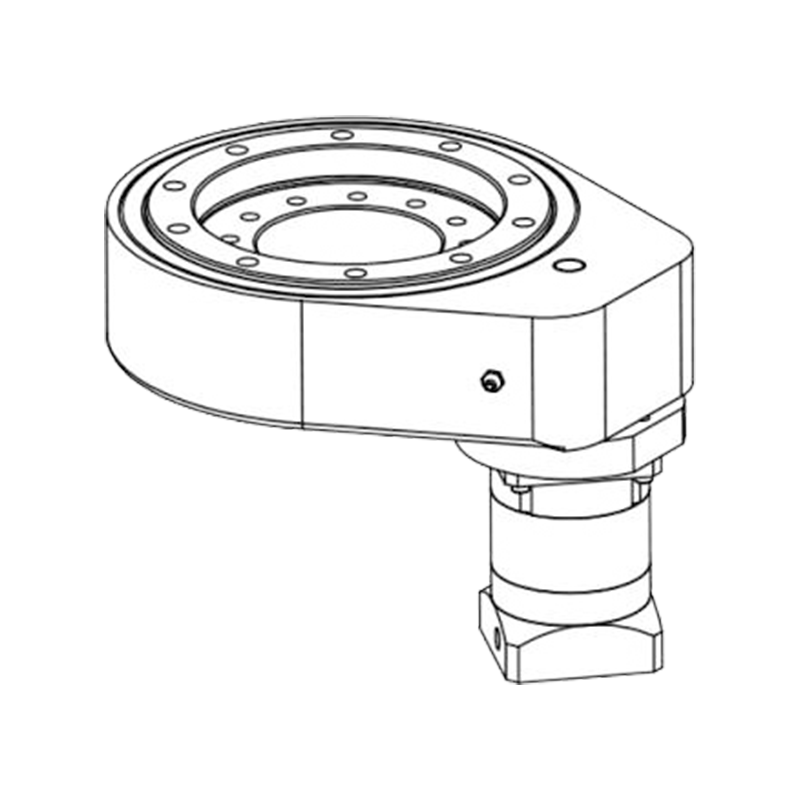

Jiangsu Manchen Transmission Technology Co., Ltd. excels in creating custom, reliable, and precise slewing bearings for diverse industries, continuously innovating to meet the highest standards and seeking collaborative opportunities. Reliable and steady slewing bearings supplier in China.
Product links
Contact Us
-
Address:No. 8, Nanqiu Road, Huangtu Town, Jiangyin City,China
-
Tel:+86-13646122221
-
Phone:+86-18796936198
-
WhatsApp:+86 18796936198
-
E-mail:hedy@slewingbearingcn.com
-
E-mail:ma@slewingbearingcn.com
-
E-mail:vena@slewingbearingcn.com
