

 EN
EN  English
 русский
 Español
 عربى
عربى

News
 Home / News / Industry news / Excavator Slewing Ring Bearing: Types, Selection, and Maintenance Guide
 Excavator Slewing Ring Bearing: Types, Selection, and Maintenance Guide
 2026.09.21
 Industry news
Few components carry as much responsibility as the excavator slewing ring bearing. Positioned between the undercarriage and the upper frame, it supports the full weight of the cab, boom, arm, and attachment while allowing the superstructure to rotate smoothly through 360 degrees. In our years of manufacturing slewing rings for construction and earthmoving machinery, we have seen how a small bearing issue can shut down an entire fleet. Understanding this component is the first step towards fewer breakdowns and lower operating costs.
Content
What Is an Excavator Slewing Ring Bearing?
An excavator slewing ring bearing, often called a swing bearing or turntable bearing, is a large-diameter rolling element bearing mounted horizontally between the excavator body and the undercarriage. It transfers axial loads, radial loads, and tilting moments from the upper structure to the lower tracks, and it provides a low-friction rotational interface for precise swinging of the working attachment.
A typical unit consists of an inner ring and an outer ring, one bolted to the upper frame, the other to the undercarriage. Between the rings, hardened steel balls or rollers sit in precision-ground raceways. Depending on the application, the bearing may also have internal gear teeth for the swing drive, seals to retain lubricant, and mounting holes. Because it is bolted rather than shrink-fitted, the bearing can be inspected and replaced without removing the whole rotating assembly.
Types of Excavator Slewing Ring Bearings
Excavator swing bearings are not all the same. The ideal design depends on machine size, digging forces, duty cycle, and required rotational speed. We regularly produce four main configurations for excavators.
| Bearing type | Rolling elements | Typical excavator class | Key benefit |
|---|---|---|---|
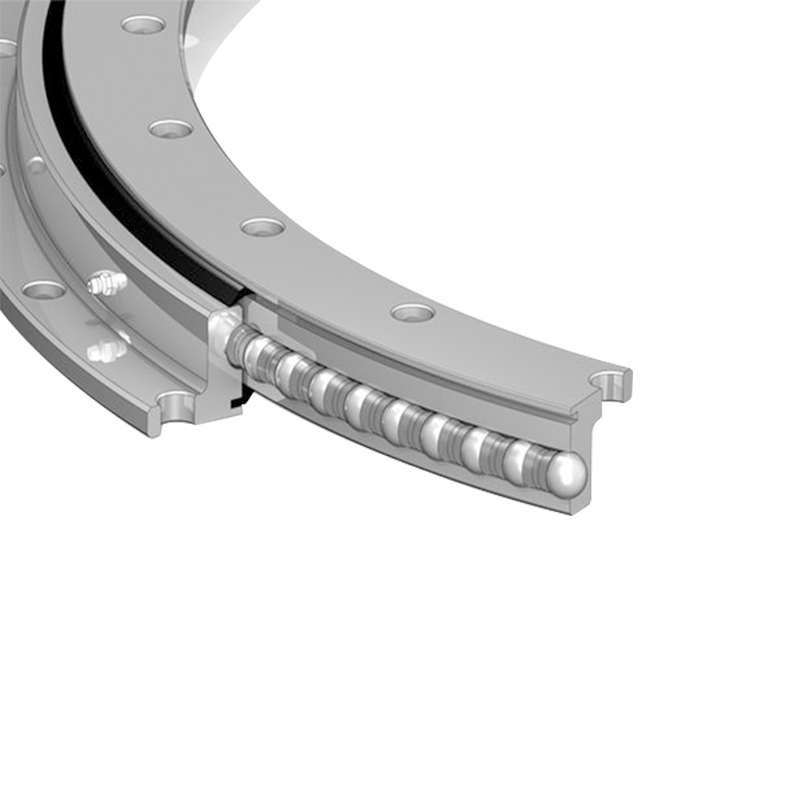
| Single-row ball | Steel balls in one raceway | Mini to mid-size | Smooth rotation, fast swing, low cost |
| Single-row crossed roller | Cylindrical rollers at 90 degrees | Mid-size | High rigidity, compact cross-section |
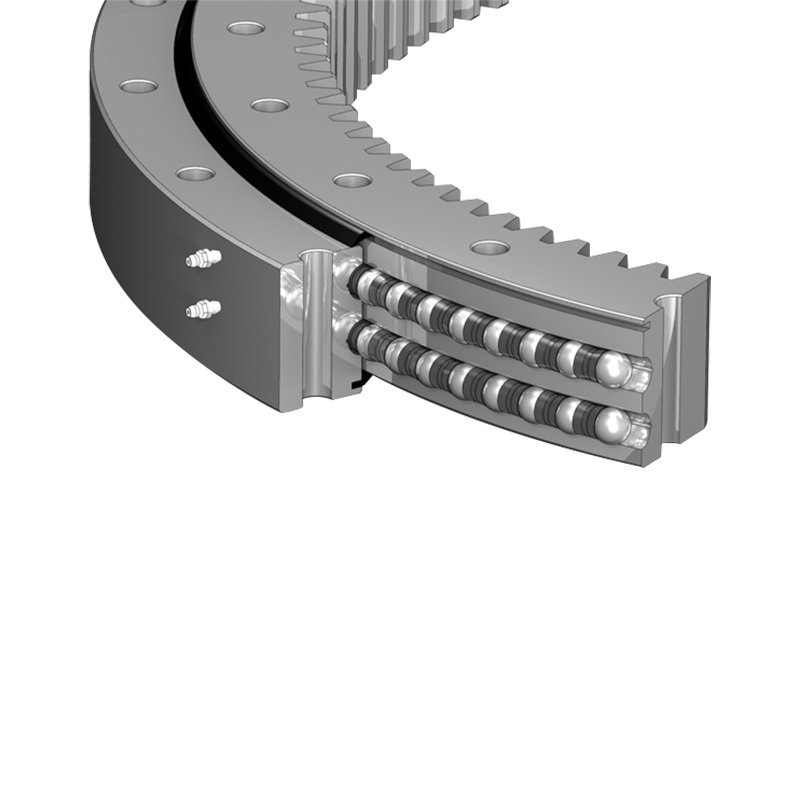
| Double-row ball | Two rows of balls | Mid-size | Higher load capacity with smooth motion |
| Three-row roller | Three independent roller rows | Large and heavy-duty | Maximum load and moment capacity |
Single-Row Ball Slewing Bearings
Single-row ball slewing rings are the most common choice for small and mid-range excavators. One row of steel balls contacts the raceway at four points, giving good stability while keeping weight low and rotation smooth. This design is easier to seal against dust and debris on job sites.
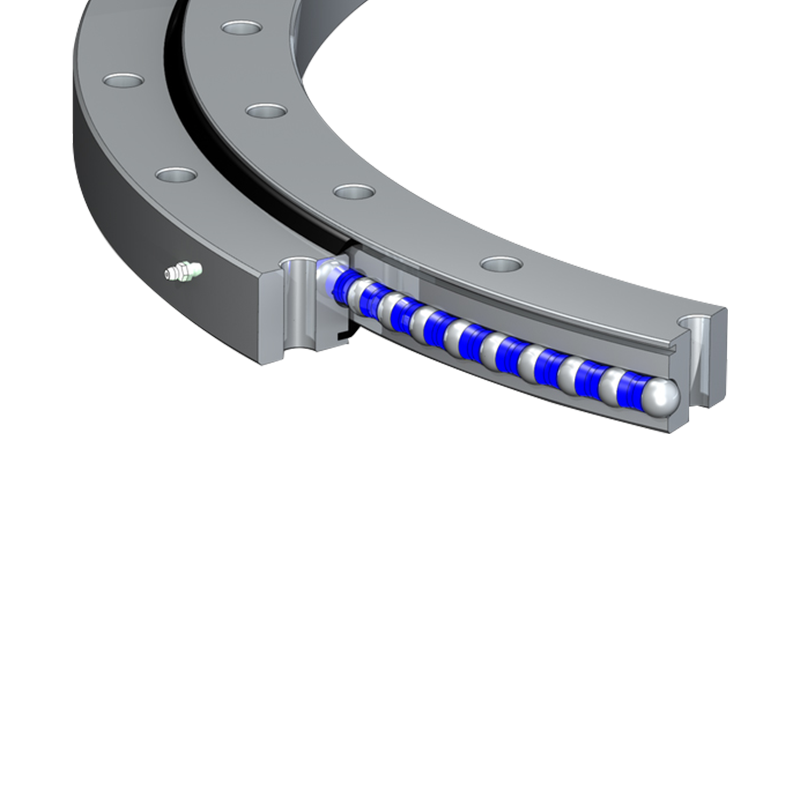 Single-Row Ball Slewing Bearing for Compact ExcavatorsThis compact bearing uses one row of steel balls with four-point contact, offering smooth rotation and stable load support for small to mid-range excavators. Its sealing options help resist dust and moisture on job sites.View Product →
Single-Row Crossed Roller Slewing Bearings
When an excavator needs high rigidity without a large increase in overall height, a single-row crossed roller slewing bearing is a practical alternative. Cylindrical rollers are arranged with their axes crossing at right angles, so one row handles both axial and radial loads together. The line contact also improves load distribution in tough ground conditions.
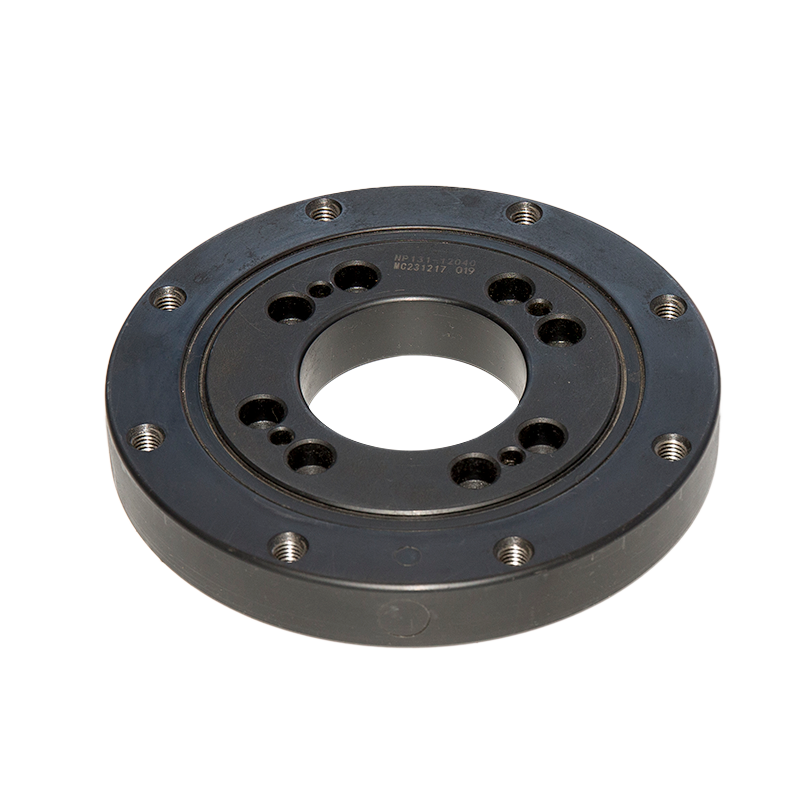 Single-Row Cross-Roller Slewing Bearing for Rigid ApplicationsWith cylindrical rollers arranged at right angles, this bearing handles combined axial and radial loads in one row. It provides high rigidity without adding much height, making it suitable for excavators in tough ground conditions.View Product →
Three-Row Roller Slewing Bearings
For large excavators and demanding jobs such as quarrying, demolition, and heavy foundation work, three-row roller slewing bearings are the preferred solution. Three separate roller rows are dedicated to one load direction each, giving the highest load and moment capacity of the common designs plus excellent impact resistance. The longer service life usually offsets the higher initial cost.
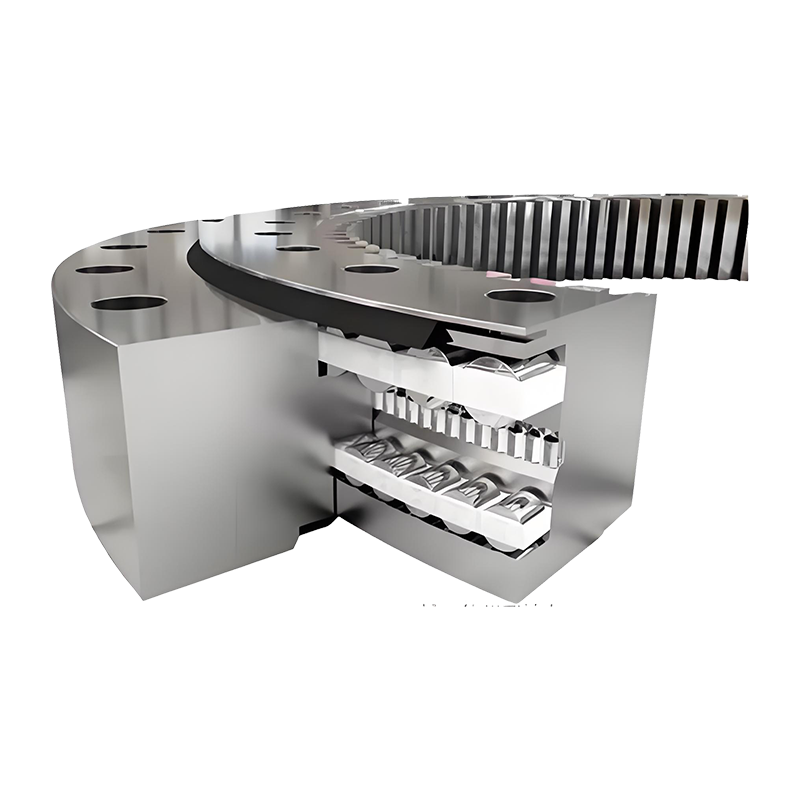 Three-Row Roller Slewing Bearing (13 Series) for Heavy ExcavatorsThe 13 Series uses three dedicated roller rows to distribute axial and radial loads separately, delivering high load and moment capacity with excellent impact resistance. This makes it ideal for quarrying, demolition, and heavy foundation work.View Product →
Materials and Manufacturing Considerations
Excavator slewing ring bearings face heavy axial loads, shock loads, and constant oscillation. Raceways must resist plastic deformation and wear over tens of thousands of cycles. Typical ring materials include high-carbon steels such as 50Mn and alloy steels such as 42CrMo. After machining, the raceways are induction-hardened or through-hardened and then ground to tight tolerances. The core remains tough while the surface resists rolling contact fatigue.
In our factory in Jiangsu, we combine this material expertise with digital production monitoring. Every heat-treatment batch is recorded, every critical dimension is checked, and gear quality is verified before a bearing is cleared for shipment. We do this because an excavator swing bearing is the interface that decides whether an operator feels confident or constantly worried.
For a broader look at design principles in heavy industry, see our article on slewing ring design for heavy industry.
Common Wear Signs and Failure Modes
It is not always obvious that an excavator slewing ring bearing is failing. The first signs are often subtle and slow to appear. Early detection is the key to avoiding expensive damage to the pinion, swing motor, and nearby structure.
- Abnormal noise: a low grinding, rumble, or clicking sound during swinging, especially under load.
- Rough or jerky rotation: the operator feels irregular resistance or a detent in the swing motion.
- Wear on gear teeth: pitting, spalling, or heavy polishing on the slewing gear profile.
- Lubricant leakage: grease escaping past seals may indicate seal wear or damaged raceways.
- Metal particles in grease: shiny or magnetic debris in a grease sample means active wear.
- Increased axial clearance: noticeable rocking between the upper frame and undercarriage.
If any of these signs appear, inspect the bearing and measure axial and radial play before further operation. Waiting until the bearing seizes can turn a scheduled repair into an emergency replacement.
Maintenance Essentials: Lubrication, Seals, and Inspection
An excavator slewing ring bearing does not demand complex servicing, but it does demand consistency. The two most important practices are correct lubrication and regular inspection of seals and fasteners.
Lubrication is usually delivered through a centrally located grease fitting or a distribution system. The grease must withstand heavy loads and weather extremes. Too much grease can be as harmful as too little, because excessive pressure can force seals outward and accelerate wear. Follow the grease specification and intervals recommended by the manufacturer, and purge the raceway by allowing fresh grease to push out old grease and contaminants.
Seals protect the rolling elements from water, abrasive dust, and mud. Check seals whenever the machine is away from the excavation face. Clean packed material from seal lips and look for tears or hardening. Also check that all mounting bolts are torqued to specification; a loose bolt allows micro-movement and leads to fretting and bolt fatigue.
If you operate a mixed fleet or plan a replacement, it is helpful to understand how different bearing designs behave in similar machines. Our full slewing bearing and slewing drive range covers the main options available for excavators.
How to Select the Right Excavator Slewing Ring Bearing
Selecting a slewing ring bearing for an excavator goes beyond matching the old part number. The replacement or new design must be checked for the real operating loads.
- Define the working loads: include the weight of the upper structure, boom, arm, attachment, and maximum digging force at the bucket teeth. Convert these into axial load, radial load, and tilting moment for the most severe case.
- Consider the duty cycle: excavators digging hard rock see far more shock loading than those doing light grading.
- Choose the correct internal clearance: preload must balance rigidity against friction and heat.
- Specify the right gear profile if the bearing is internally geared: tooth thickness, module, pressure angle, and backlash all affect swing drive engagement.
- Evaluate seals and mounting arrangement: strong seals are essential in excavation work, and the mounting structure must be flat, rigid, and properly machined.
When in doubt, give a manufacturer your duty data instead of a part number. A bearing designed from measured loads will always outperform a generic replacement chosen by dimensions alone.
An excavator slewing ring bearing is the pivot point for every load, movement, and cycle on the machine. Understanding bearing type, wear signs, and maintenance routines gives you control over uptime and repair costs. As a manufacturer with years of experience in custom slewing rings for construction machinery, we build bearings designed to handle the real world. If you are choosing a new bearing, replacing a worn one, or just need a second opinion on a specification, talk to an engineer before you commit. A few minutes of load analysis can save months of downtime later.
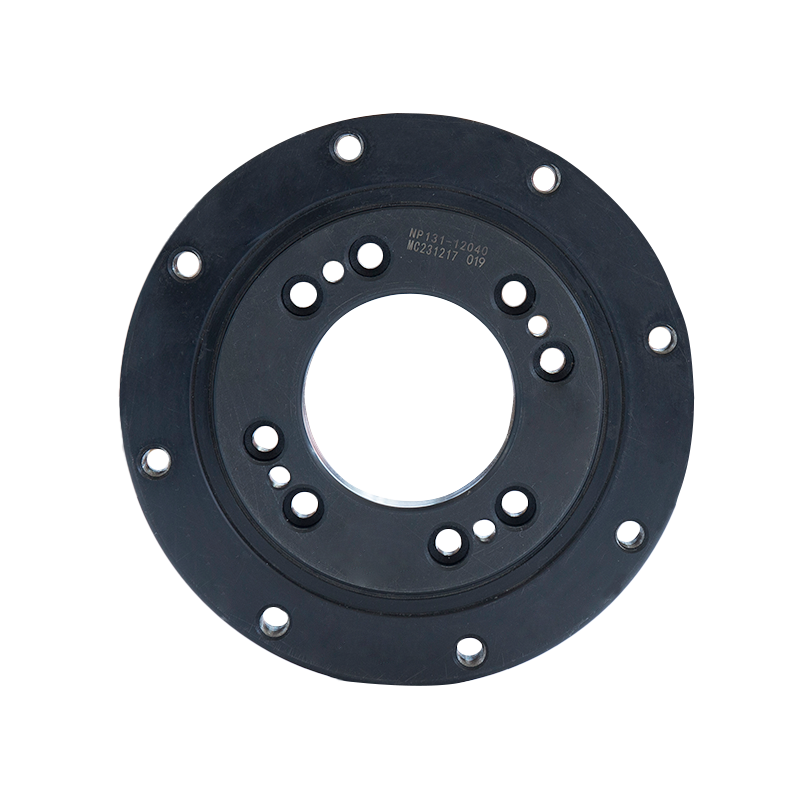



Jiangsu Manchen Transmission Technology Co., Ltd. excels in creating custom, reliable, and precise slewing bearings for diverse industries, continuously innovating to meet the highest standards and seeking collaborative opportunities. Reliable and steady slewing bearings supplier in China.
Product links
Contact Us
-
Address:No. 8, Nanqiu Road, Huangtu Town, Jiangyin City,China
-
Tel:+86-13646122221
-
Phone:+86-18796936198
-
WhatsApp:+86 18796936198
-
E-mail:hedy@slewingbearingcn.com
-
E-mail:ma@slewingbearingcn.com
-
E-mail:vena@slewingbearingcn.com
