

 EN
 English
 русский
 Español
 عربى

News
 Home / News / Industry news / Cross Roller Slewing Bearing Guide: Design, Load Capacity, and Selection
Cross Roller Slewing Bearing Guide: Design, Load Capacity, and Selection
 2026.11.19
 Industry news
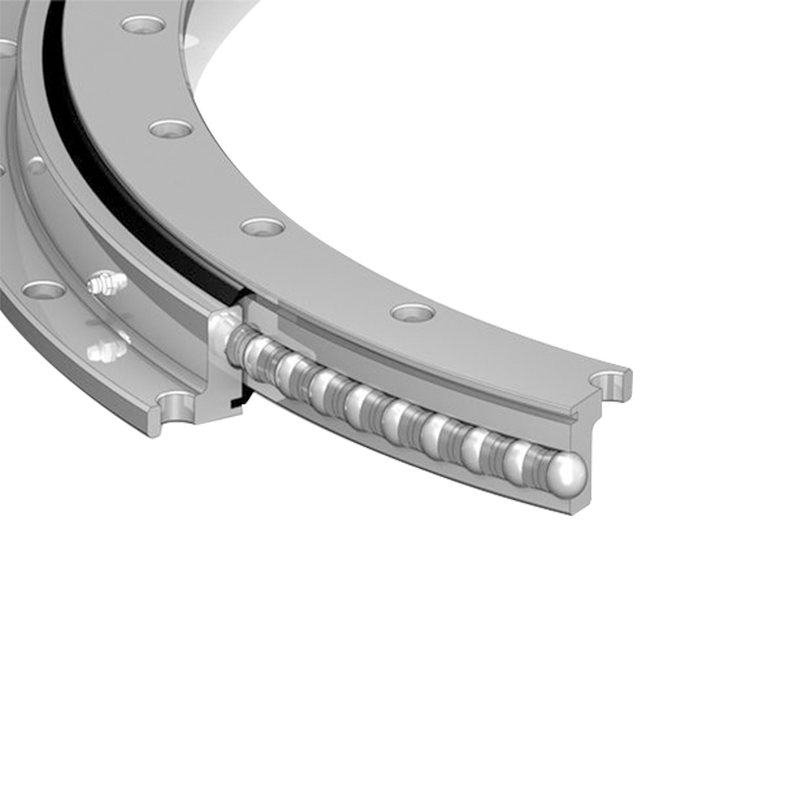
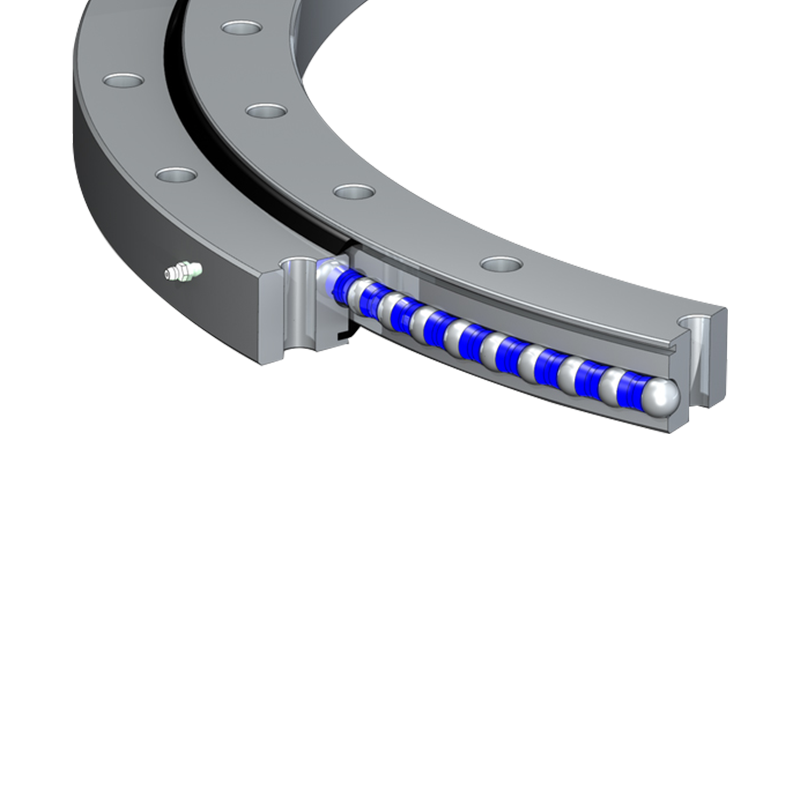
When a machine must turn a heavy load smoothly, with little tilt and predictable positioning, a cross roller slewing bearing often becomes the quiet center of the design. Instead of using balls in a groove, this bearing places cylindrical rollers in a single raceway and turns them at ninety degrees to one another. The crossed layout lets one bearing carry axial loads, radial loads, and tilting moments at the same time. That combination is why you will find these bearings in robot bases, indexing tables, medical equipment, and other places where rotation needs to feel solid rather than loose.
In our workshop, a cross roller slewing bearing is never treated as a simple commodity ring. Raceway finish, roller spacing, cage guidance, and seal protection all shape how the finished bearing feels and how long it lasts.
Content
- 1 How the Crossed Roller Layout Earns Its Keep
- 2 Where Cross Roller Slewing Bearings Are Used
- 3 Selecting the Right Cross Roller Slewing Bearing
- 4 When Cross Roller Is Not the Only Choice
- 5 Mounting and Maintenance That Protect Precision
- 6 Practical Answers for Buyers and Engineers
- 7 Let's Match the Bearing to the Motion
How the Crossed Roller Layout Earns Its Keep
A cross roller slewing bearing uses cylindrical rollers arranged alternately along the raceway. Because neighboring rollers sit at right angles, the contact pattern spreads load in two directions. The result is high stiffness for a relatively compact section height. Adjusting preload or axial clearance during assembly can further tune the bearing for either free rotation or a tighter, more rigid feel.
This design is not automatically better for every project. If the application is light, fast, and cost-sensitive, a single-row ball slewing bearing may be the more practical choice. If the duty is extremely heavy and the load path needs a different balance, a three-row roller design can make more sense. The table below gives an early-stage comparison, but the final decision should still come from the actual load case.
| Feature | Cross roller slewing bearing | Single-row ball slewing bearing | What it means in practice |
|---|---|---|---|
| Rolling contact | Cylindrical rollers crossed at 90 degrees | Balls in a four-point or similar groove | Roller contact usually gives higher stiffness for the same envelope. |
| Load behavior | Handles axial, radial, and moment loads together | Handles combined loads but with more elastic deflection | Cross roller suits precise positioning under load. |
| Stiffness | High, especially when preload is controlled | Moderate | Less tilt can mean better gear mesh and tool accuracy. |
| Speed and friction | Generally lower speed, higher friction than ball designs | Better for faster, lighter rotation | Match the bearing to the motion profile, not just the load. |
| Typical fit | Robot bases, rotary tables, medical equipment, positioning axes | Lighter cranes, conveyors, small turntables, cost-sensitive units | Use the simplest bearing that reliably meets the duty. |
Where Cross Roller Slewing Bearings Are Used
Cross roller slewing bearings tend to appear where a rotating joint must stay stiff while carrying an offset load. In industrial robots, that might be the base or wrist axis. In medical equipment, it may be a patient positioning frame or imaging platform where smooth, backlash-free movement matters. Construction and port machinery use them in attachments and turntables where shock loads are part of daily life. Environmental equipment and photovoltaic trackers also benefit when the design needs a compact ring with controlled rotation.
We usually start with three questions: What is the maximum axial load, radial load, and tilting moment? How often does the joint move, and at what speed? What mounting surface and bolt pattern are available? The answers often narrow the choice faster than a catalog page.
Selecting the Right Cross Roller Slewing Bearing
Selection is a conversation between the bearing and the structure around it. A bearing that is strong enough on paper can still perform poorly if the mounting flange is flexible, the bolts are not preloaded correctly, or the seal is asked to survive washdown chemicals it was never meant to see. Our single-row cross roller slewing bearing design and maintenance guide walks through these details in more depth.
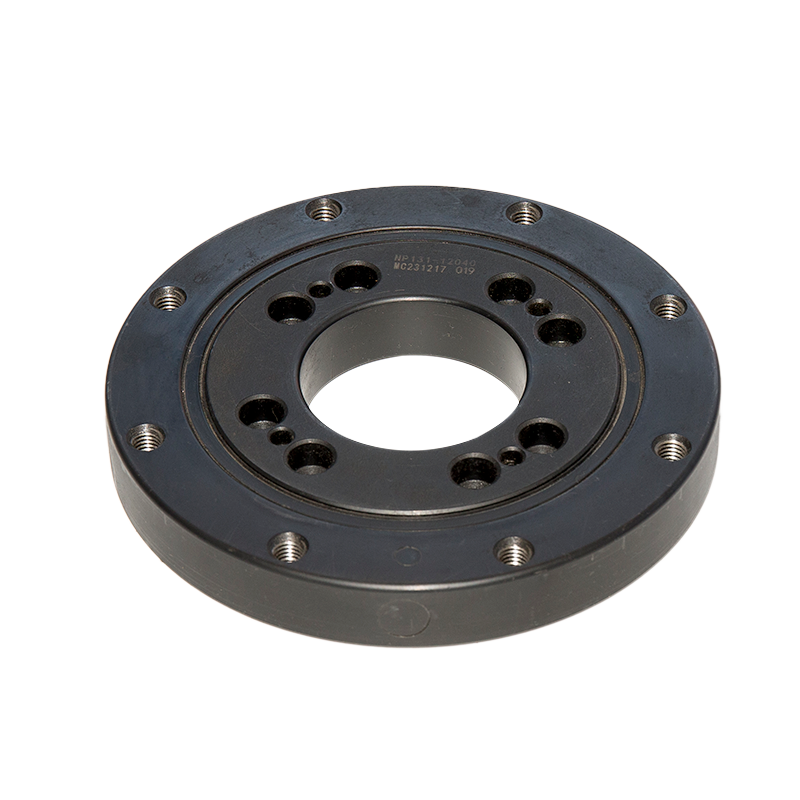 Single-Row Cross-Roller Slewing BearingSingle-row crossed-roller design for high load capacity and smooth rotation; review mounting, sealing, and maintenance details for reliable integration.View Product →
- Define every load case, including static parking loads, dynamic working loads, shock loads, and the tilting moment created by overhung weight.
- Check the available envelope: inner diameter, outer diameter, height, gear module, and the space needed for seals and lubrication ports.
- Decide the clearance or preload target. Too much clearance can allow tilt and gear misalignment; too much preload can raise friction and heat.
- Confirm the mounting interface. Flatness, stiffness, bolt grade, and torque all affect how the raceway shares the load.
- Review the environment. Dust, water, temperature, and cleaning agents determine seal type, grease choice, and surface protection.
A good supplier will ask for the load curve and mounting drawing, not just the bearing number. That is how a cross roller slewing bearing becomes a reliable part of the machine instead of a replacement item that fails early.
When Cross Roller Is Not the Only Choice
There are times when a cross roller bearing is more precision than the application can use. A lighter turntable may run well on a single-row ball slewing bearing, with lower friction and a friendlier budget. A very heavy machine with high axial loads and a large tilting moment may be better served by a three-row roller slewing bearing, where the load is shared across separate roller rows. The key is to compare the whole system: bearing cost, mounting cost, gear cost, maintenance access, and downtime risk.
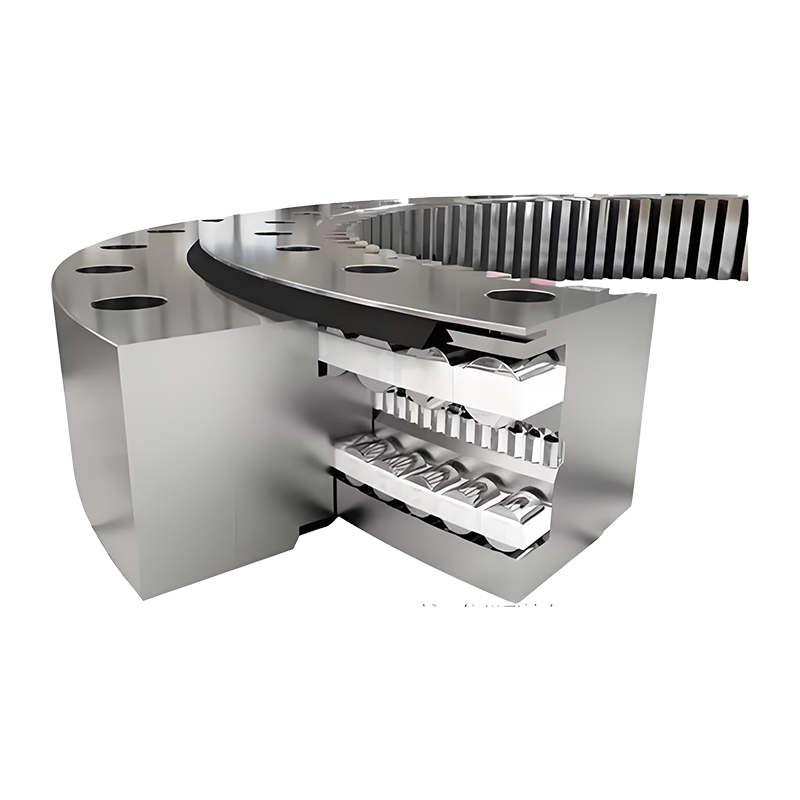 13-Series Three-Row Roller Slewing BearingHeavy-duty 13-series bearing with separate roller rows for axial and radial loads; a practical option when axial load and moment capacity dominate.View Product →
For heavy-duty rotation, our 13-series three-row roller slewing bearing is one option we review with customers when the load path calls for a different structure. It is not a replacement for every cross roller application, but it can be the more sensible choice when axial load and moment capacity dominate the design.
Mounting and Maintenance That Protect Precision
Most early failures we see are not caused by the bearing alone. They come from installation details that were easy to overlook. A mounting surface that is not flat can distort the ring. Uneven bolt torque can tilt the raceway. A damaged seal can let abrasive dust into the grease. These problems often show up as noise, backlash, or a tight spot long before the bearing reaches its calculated life.
- Clean and inspect both mounting faces before assembly; remove burrs and verify flatness.
- Use the specified bolt grade and tighten in a cross pattern to the recommended torque.
- Apply the correct grease quantity and confirm that the lubrication path is clear.
- Protect the seal during handling and check that the lip runs against a clean surface.
- Record initial backlash or starting torque so later inspections have a baseline.
- During service, look for grease discoloration, water ingress, loose bolts, and changes in rotational feel.
For a cross roller slewing bearing, small changes in rotational feel can be meaningful. If the joint suddenly becomes tighter or develops a periodic catch, stop and inspect before the raceway is damaged. A planned inspection is almost always cheaper than an unplanned crane or robot downtime event.
Practical Answers for Buyers and Engineers
Can a cross roller slewing bearing replace a ball slewing ring?
Sometimes, but not by exchanging part numbers alone. The cross roller bearing may need a different mounting stiffness, clearance, and lubrication plan. Check the load case and the available height before assuming a direct swap.
How much clearance should I expect?
That depends on the application. A positioning axis may call for controlled preload, while a larger structural joint may need a small clearance to avoid binding. The drawing and the supplier's test method should state the target clearly.
What shortens service life most often?
Poor sealing, incorrect mounting, and lubrication neglect are common culprits. Overloading is also possible, but many bearings fail early because the surrounding structure was not stiff or flat enough to let the raceway carry load evenly.
Let's Match the Bearing to the Motion
At Jiangsu Manchen Transmission Technology, we build and supply slewing bearings for industrial robot, medical equipment, construction machinery, port machinery, environmental equipment, and photovoltaic applications. Our approach is practical: understand the load, check the mounting, choose the right structure, and make sure the seal and lubrication suit the working environment. If you are comparing a cross roller slewing bearing with a ball or three-row option, send us the load data and mounting drawing. We will help you find the rotation that fits the machine, not just the catalog.

Jiangsu Manchen Transmission Technology Co., Ltd. excels in creating custom, reliable, and precise slewing bearings for diverse industries, continuously innovating to meet the highest standards and seeking collaborative opportunities. Reliable and steady slewing bearings supplier in China.
Product links
Contact Us
-
Address:No. 8, Nanqiu Road, Huangtu Town, Jiangyin City,China
-
Tel:+86-13646122221
-
Phone:+86-18796936198
-
WhatsApp:+86 18796936198
-
E-mail:hedy@slewingbearingcn.com
-
E-mail:ma@slewingbearingcn.com
-
E-mail:vena@slewingbearingcn.com
