

 EN
EN  English
 русский
 Español
 عربى
عربى

News
 Home / News / Industry news / Crawler Crane Parts and Functions: A Practical Guide for Buyers and Operators
 Crawler Crane Parts and Functions: A Practical Guide for Buyers and Operators
 2026.09.09
 Industry news
A crawler crane is expected to lift thousands of tons over a working week, travel across unimproved ground, and keep placing loads within centimeters of their target. That level of consistency comes not from the engine or the cab alone, but from a set of specialized parts, each with a defined function. Whether you operate, maintain, or procure components for this type of machinery, understanding crawler crane parts and functions is the foundation for sound decisions. This guide explains the five functional systems, describes what each major component does, and highlights the parts most likely to influence your next maintenance or purchase decision.
Content
A crawler crane works as five coordinated systems
Every crawler crane, regardless of size, is built around five functional systems. The travel system moves the machine on continuous tracks. The boom system provides lifting height and reach. The hoist system raises and lowers the load. The swing system rotates the superstructure. The counterweight system keeps the arrangement stable when the load is suspended.
These systems do not operate in isolation. The hoist cannot lift more than the boom can transfer to the undercarriage. The swing cannot rotate unless the slewing bearing can handle the overturning moment. The undercarriage cannot run smoothly unless the rollers, idlers, and sprockets are in good condition. For operators, the practical outcome is simple: a fault in one system usually shows up as a symptom in another.
| System | Primary function | Critical components |
|---|---|---|
| Travel | Moves the crane across job sites | Track shoes, track chains, bottom rollers, top rollers, idler, sprocket, travel motors |
| Boom | Provides lifting height and reach | Lattice boom sections, luffing cylinders, jib, connecting pins |
| Hoist | Raises and lowers the load | Hoist drum, wire rope, sheaves, hook block, brake |
| Swing | Rotates the superstructure | Slewing bearing, swing pinion, swing gearbox, swing motor |
| Counterweight | Maintains stability under load | Counterweight blocks, support tray, superlift attachment |
The slewing system: rotation under full load
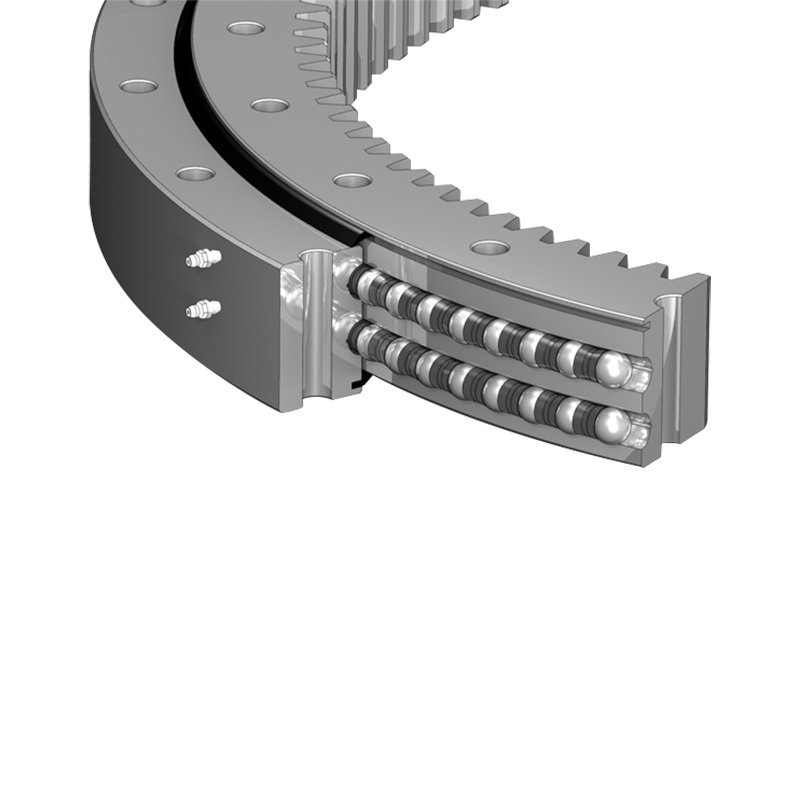
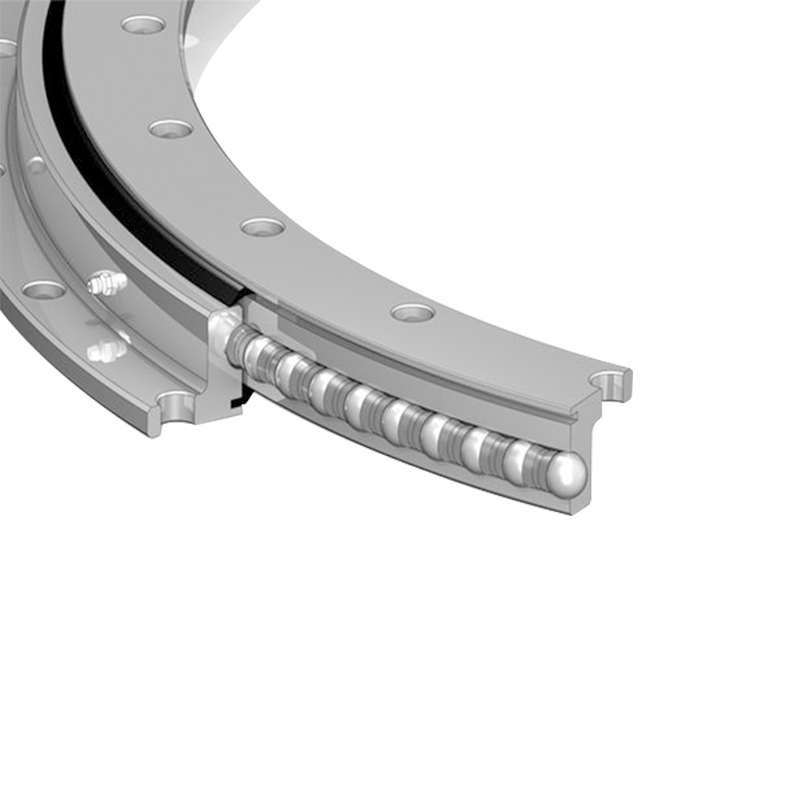
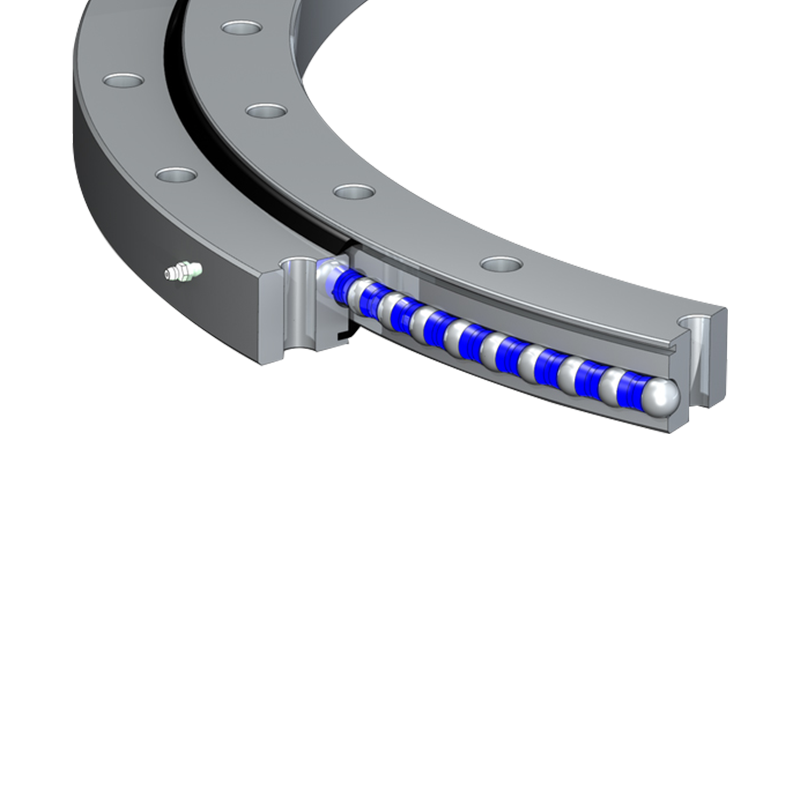
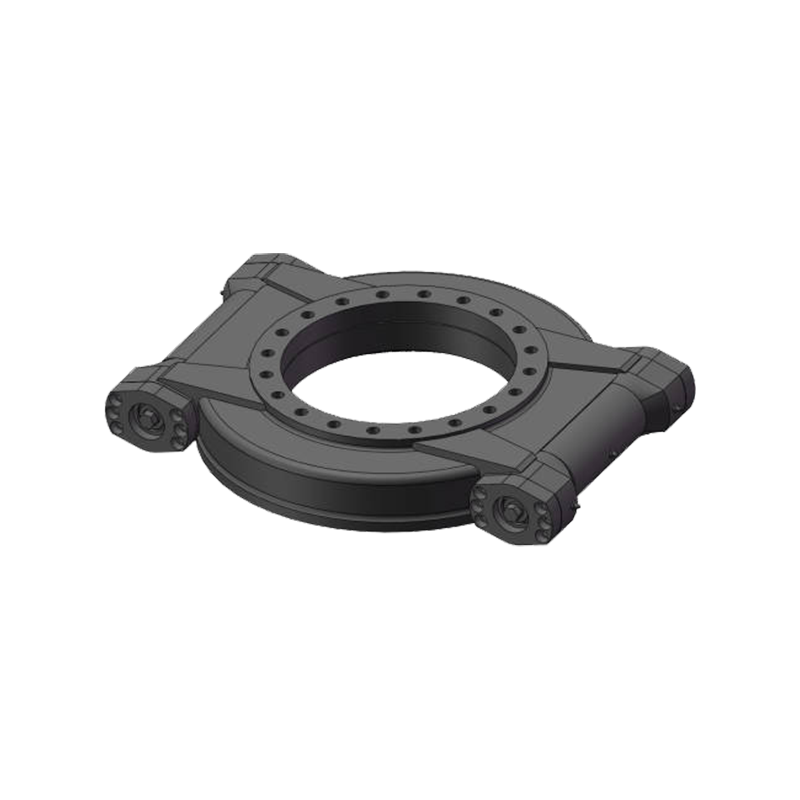
The slewing system gives a crawler crane the ability to face any direction without moving the tracks. The most heavily loaded part in that system is the slewing bearing. It is a large-diameter bearing, typically with internal or external gear teeth, that connects the upper carriage to the undercarriage. While the upper structure rotates, the slewing bearing carries three types of load at the same time: the axial load from the weight of the crane and the lifted load, the radial load generated by wind and boom angle, and the overturning moment that tries to tip the crane forward over the tracks.
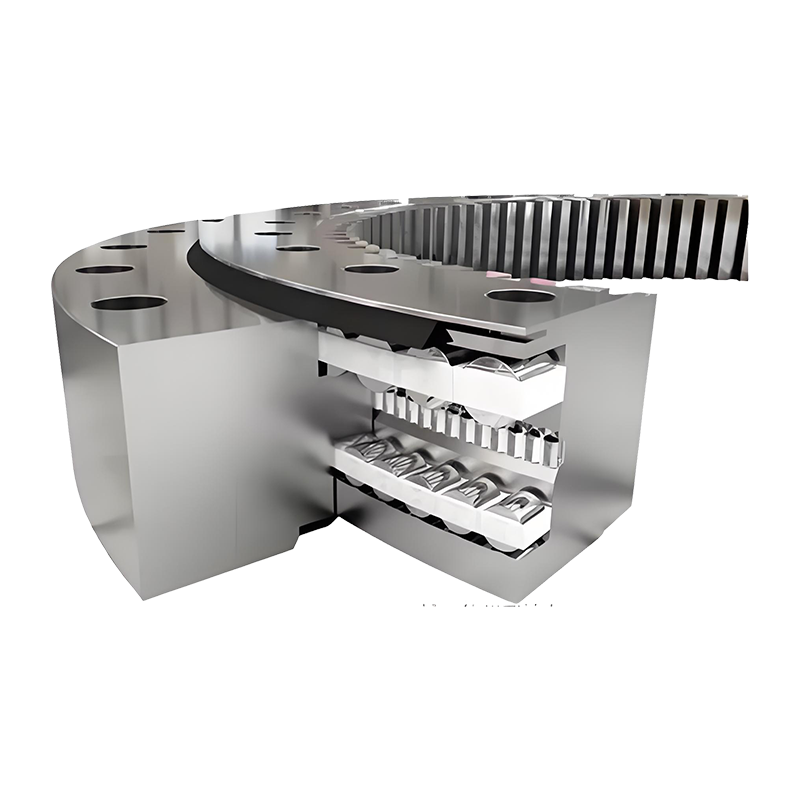 Three-Row Roller Slewing Bearing for Heavy CranesThis 13 Series bearing separates axial and radial loads into three roller rows, making it ideal for large crawler cranes with high overturning moments above 150 tons.View Product →
In large crawler cranes, the three-row roller slewing bearing is the dominant design. Its three independent rows of cylindrical rollers, two axial rows and one radial row, let the designer size each row for the forces it actually carries. That separation is why this bearing type handles the high overturning moments of cranes rated above roughly 150 tons. In mid-size cranes, a single-row cross roller bearing handles combined loads with a lower mounting height, which is an advantage when the total height of the crane is limited.
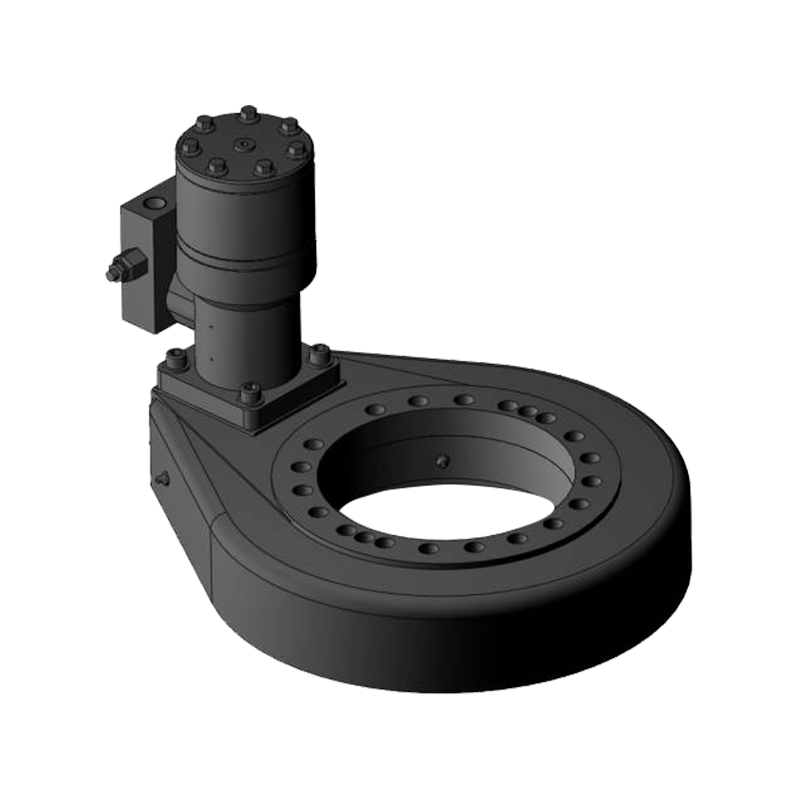
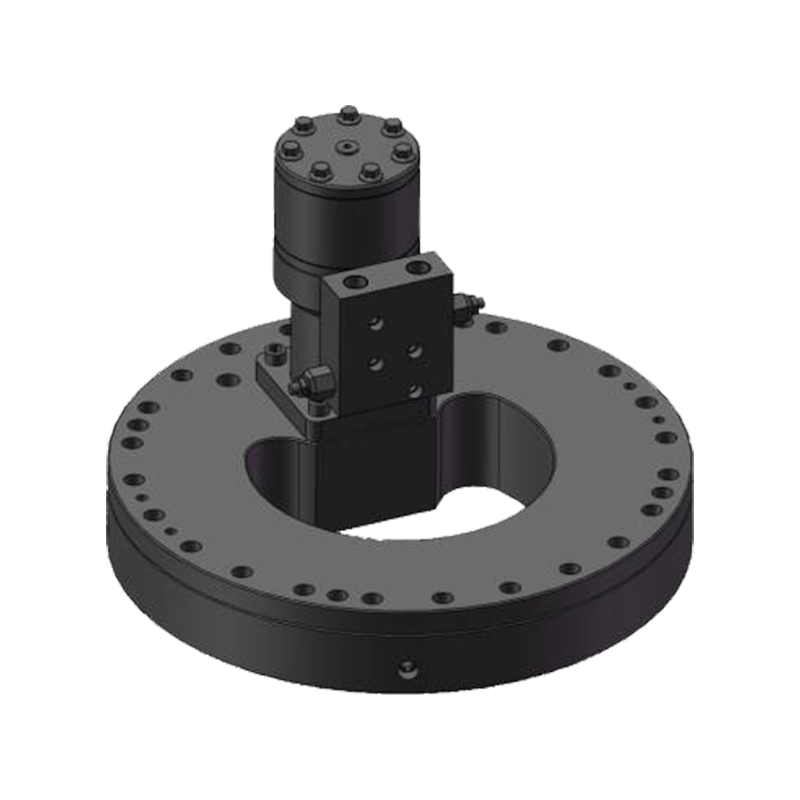
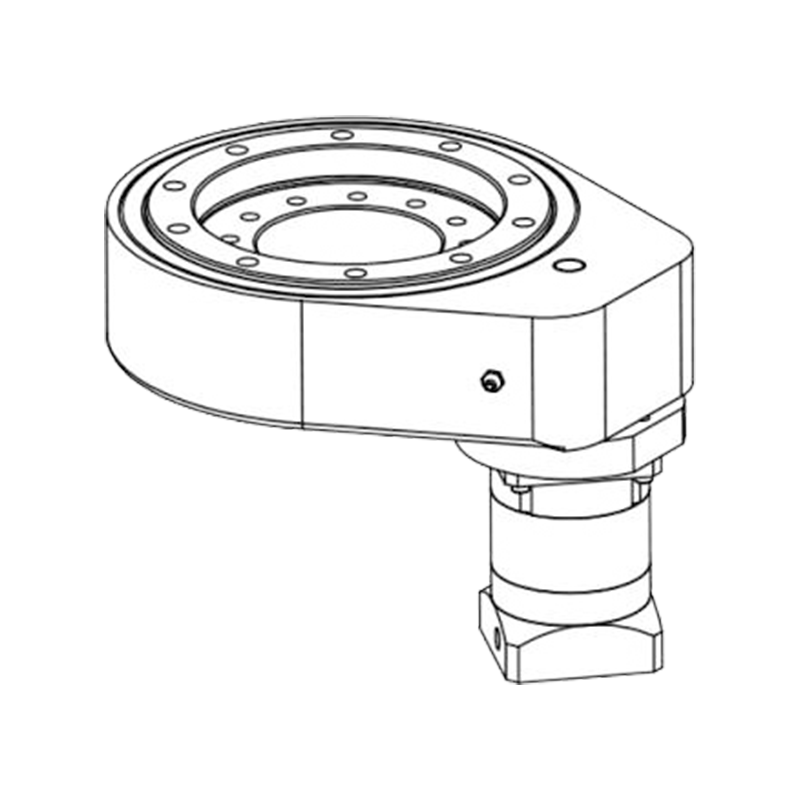
Rotation is produced by a swing pinion that meshes with the gear teeth on the bearing. Hydraulic swing motors drive the pinion, and the motor control lets the operator bring a heavy load to a controlled stop within a fraction of a degree. For a closer look at the rotation mechanics and load paths, read our slewing bearing guide for cranes and excavators.
Undercarriage parts: tracks, rollers, and frames
The undercarriage is what makes a crawler crane a crawler. Where a wheeled crane relies on tires, the crawler uses two continuous tracks, each driven by an independent hydraulic motor. This arrangement spreads the full operating weight over a large contact area, so even a heavy crane can move on soft or uneven ground.
| Part | Function |
|---|---|
| Track shoe | Provides grip and distributes ground bearing pressure |
| Track chain | Connects the track shoes and transmits the drive force |
| Bottom roller | Carries the machine weight along the rail of the track |
| Top roller | Supports the upper run of the track and helps maintain tension |
| Idler | Guides the track at the front and adjusts track tension |
| Sprocket | Drives the track from the hydraulic travel motor |
Track tension is the most common adjustment on an undercarriage. If the track is too tight, the drive train wastes power and components wear faster. If it is too loose, the track can jump off the sprocket or idler. Most manufacturers specify a sag value for the top run of the track chain, and checking it at the start of each shift prevents a large share of track-related failures.
Boom, hoist, and counterweight systems
Above the swing system sit the structures that actually carry the load. The boom is a lattice truss assembly of bolted sections. Lattice construction gives a high strength-to-weight ratio, which is why a crawler crane can lift considerably more than a wheeled crane of the same engine class: the boom itself weighs less, leaving more capacity for the load. The boom angle is changed by luffing cylinders or, on larger machines, by a gantry and boom hoist arrangement.
Hoist winches and wire rope
The hoist system consists of one or more winch drums, wire rope, sheaves, and a hook block. A hydraulic motor drives the drum through a planetary gearbox, and the brake is spring-applied with hydraulic release. This is the safety-critical component: the brake must hold the rated load even if the hydraulic supply fails.
Counterweight systems
The counterweight offsets the overturning moment created by the load at its working radius. Modern crawler cranes use a dynamic counterweight, often with a superlift attachment that adds mass behind the boom. The size and position of the counterweight determine the crane capacity chart, so it is an active part of the lifting configuration rather than a fixed mass.
Hydraulic power and control
Hydraulics drive nearly every function on a crawler crane. Track travel, boom luffing, winch rotation, and counterweight movement all receive power from hydraulic pumps. Variable-displacement pumps meter flow to each motor or cylinder, and the control system coordinates these motions so that load swing stays small and stopping distances stay short.
The rated capacity limiter is the final layer of control. Sensors monitor boom angle, load radius, and load cell data, and the system warns or stops the operator before the crane approaches its rated limit. The limiter does not add capacity; it helps the operator use the mechanical and hydraulic parts safely.
What to verify when sourcing crawler crane parts
A crawler crane is only as reliable as its least reliable component, which is why procurement should be based on engineering specifications rather than part numbers alone. For a slewing bearing, verify the raceway material and heat treatment, gear hardness, seal arrangement, and clearance class. A bearing with the right dimensions but the wrong clearance will fail under the reversing loads typical of crane duty.
Three-row roller bearings in large cranes need periodic checks of bolt torque, lubrication condition, and raceway wear. The maintenance schedule you follow often determines whether a bearing lasts 10,000 hours or 50,000 hours. Following a documented inspection routine for 13-series three-row roller bearings will cover the essentials.
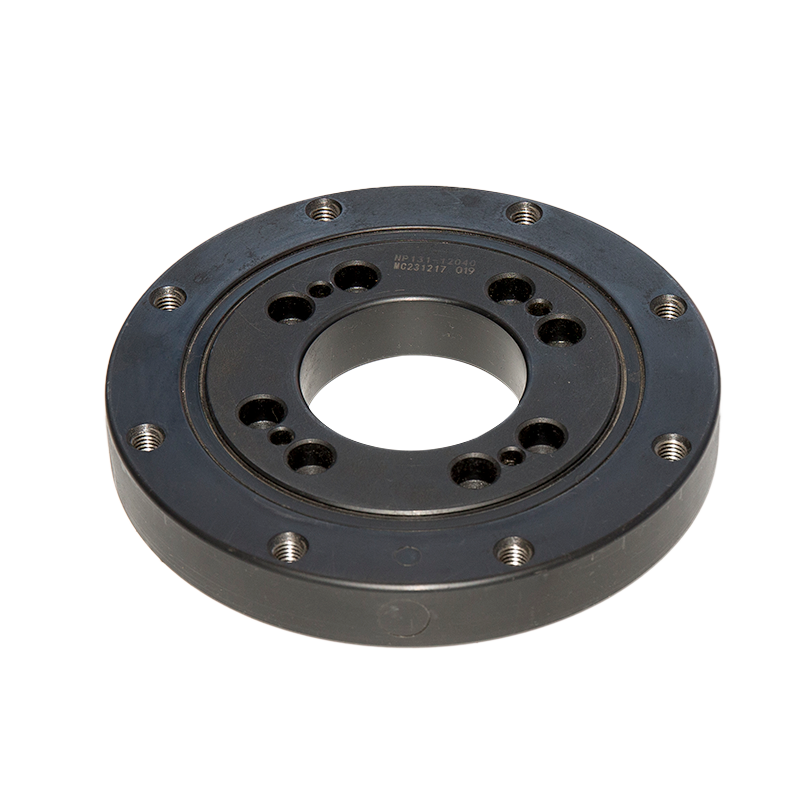 Single Row Cross-Roller Slewing Bearing for Mid-Size CranesWith crossed rollers and a compact mounting height, this bearing suits medium-class crawler cranes where total crane height is limited while maintaining load capacity.View Product →
When requesting a quotation, ask for the design load spectrum rather than only the static load rating. In crane duty, the overturning moment is usually the limiting parameter. For medium-class crawler cranes, a single-row cross roller bearing delivers the required load capacity in a compact envelope. A clear specification and a transparent supplier make the slewing bearing the last part you replace, not the first.
Each crawler crane part exists to perform a specific function, and that function determines how the part should be selected, checked, and maintained. Understanding the relationships between track components, boom structure, hoist brakes, and the slewing bearing is the most effective way to extend equipment life and keep lifting operations safe.


Jiangsu Manchen Transmission Technology Co., Ltd. excels in creating custom, reliable, and precise slewing bearings for diverse industries, continuously innovating to meet the highest standards and seeking collaborative opportunities. Reliable and steady slewing bearings supplier in China.
Product links
Contact Us
-
Address:No. 8, Nanqiu Road, Huangtu Town, Jiangyin City,China
-
Tel:+86-13646122221
-
Phone:+86-18796936198
-
WhatsApp:+86 18796936198
-
E-mail:hedy@slewingbearingcn.com
-
E-mail:ma@slewingbearingcn.com
-
E-mail:vena@slewingbearingcn.com
