

 EN
 English
 русский
 Español
 عربى

News
 Home / News / Industry news / Crane Slewing Bearing Guide: Design, Selection, and Practical Maintenance
Crane Slewing Bearing Guide: Design, Selection, and Practical Maintenance
 2026.10.28
 Industry news
A crane slewing bearing sits at the heart of every smooth swing. It is the large, slow-turning bearing that carries the boom, jib, counterweight, and lifted load while allowing the upper structure to rotate through 360 degrees. For crane owners and engineers, the bearing is not just a component; it is a structural joint, a load path, and a maintenance item that affects safety, uptime, and operating cost. This guide explains how these bearings work in crane service, which designs are common, how to select one, and what practical checks keep them running.
Content
What a Crane Slewing Bearing Does
In a mobile crane, tower crane, or pedestal crane, the slewing bearing connects the rotating upper works to the fixed base. It must support axial loads from weight, radial loads from horizontal forces, and substantial tilting moments as the boom radius changes. The raceway and rolling elements distribute those loads; the gear teeth, when present, transmit slewing torque. A seal protects the raceway and grease from dust, water, and debris. The mounting structure and bolts are part of the load path too. A bearing that is correctly rated but bolted to a flexible or uneven flange can distort, wear unevenly, and fail early. For a broader walkthrough of crane applications, see this guide to slewing bearings in cranes and excavators.
Common Bearing Designs for Cranes
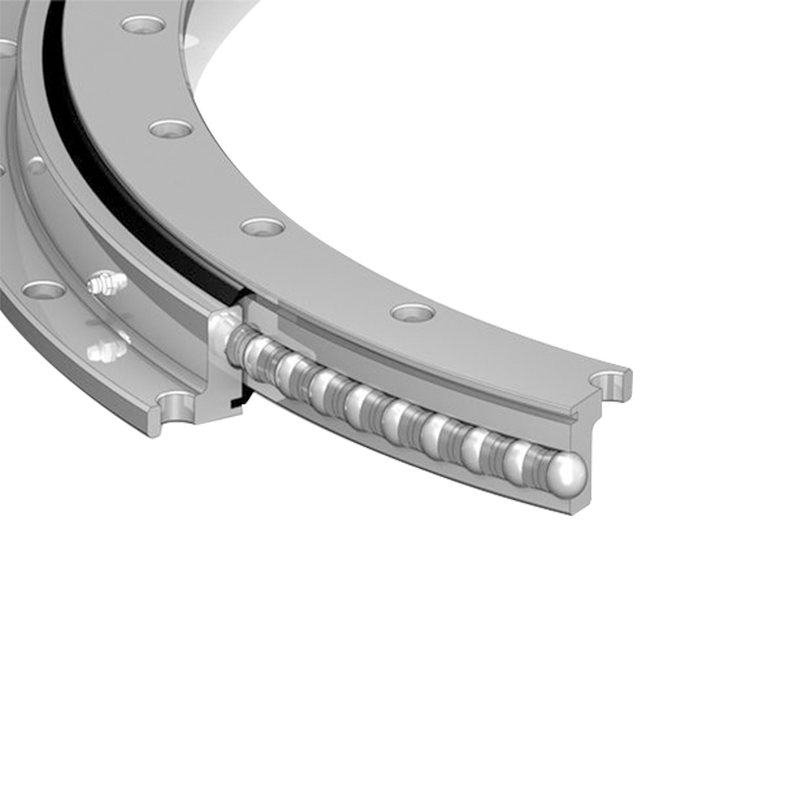
Crane duty varies from frequent light lifts to heavy-duty continuous operation, so design choice matters. Four-point contact ball bearings are compact and handle combined axial, radial, and moment loads; they are common in small and medium cranes. Cross-roller designs offer high stiffness in a compact envelope. Double-row ball bearings provide robust, cost-effective performance for many general crane applications. Three-row roller bearings, including 13-series designs, are used in heavy-duty cranes, port equipment, and large rotating structures where high load capacity and rigidity are needed. L-type single-row ball bearings suit applications where a compact, lower-profile mounting arrangement is useful. The table gives a practical comparison.
For compact and medium-duty crane sections, the single-row ball slewing bearing range is often a practical starting point.
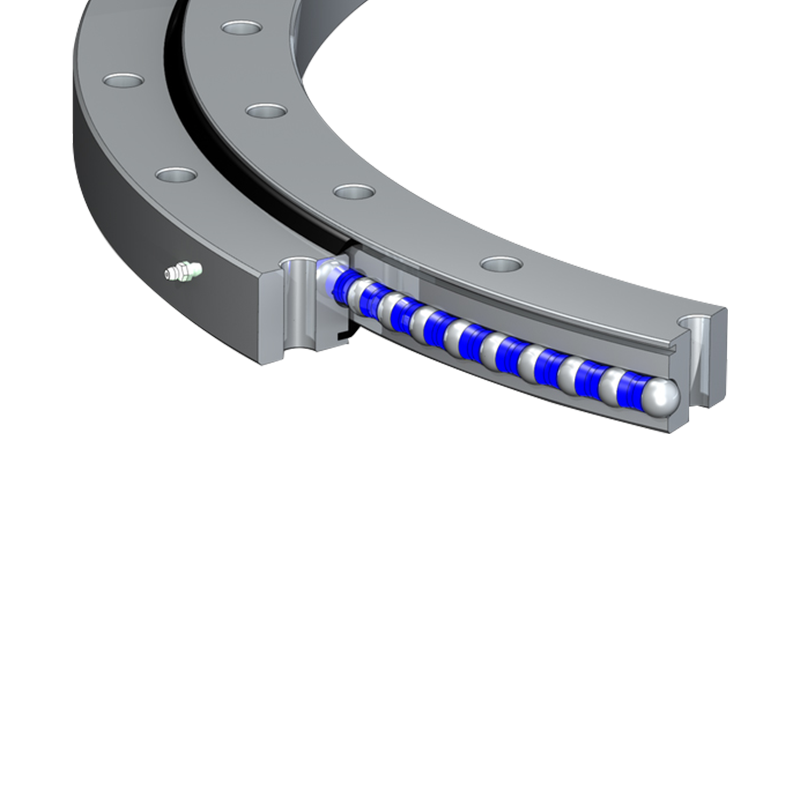 Single-Row Ball Slewing Bearing for Compact and Medium-Duty CranesCompact single-row ball design with high load capacity and sealing options, a practical starting point for medium-duty crane slewing applications.View Product →
| Design | Load behavior | Typical crane use | Practical note |
|---|---|---|---|
| Single-row four-point contact ball | Combined axial, radial, and moment loads | Small to medium mobile and tower cranes | Compact; sensitive to mounting flatness and preload |
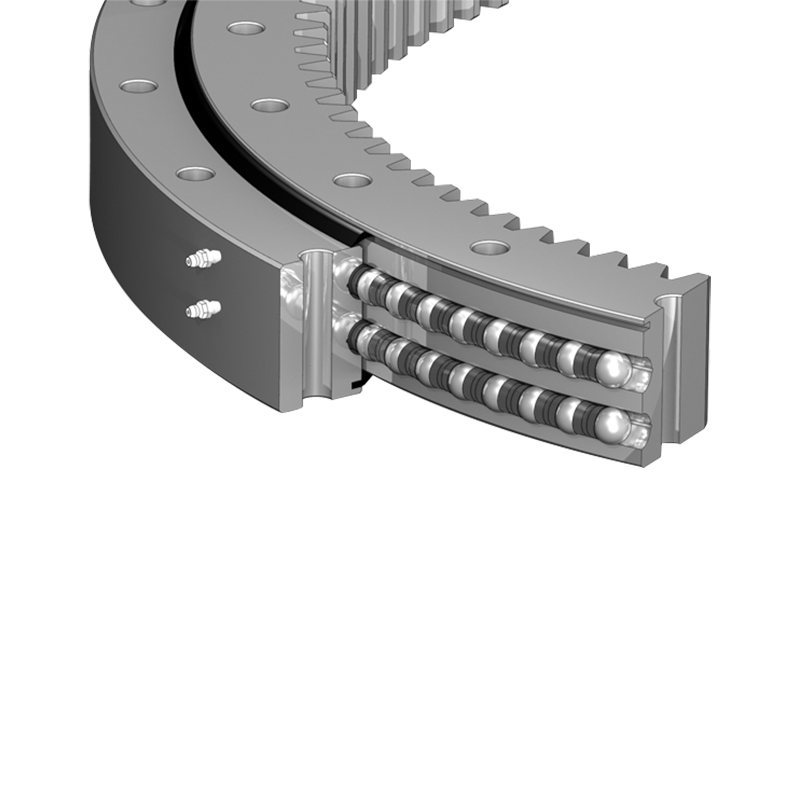
| Double-row ball | Good moment capacity with two rows of balls | General crane and rotating machinery | Cost-effective; check clearance and lubrication path |
| Single-row cross roller | High stiffness in a compact section | Precision cranes and attachments | Requires clean mounting and correct preload |
| Three-row roller (13 series) | High axial, radial, and moment capacity | Heavy-duty cranes, port cranes, offshore equipment | Robust; heavier and needs careful flange design |
| L-type single-row ball | Combined loads with a lower-profile ring | Compact cranes and specialized lifting equipment | Useful when space is tight; verify bolt access |
How to Select a Crane Slewing Bearing
Selecting a crane slewing bearing starts with the load spectrum, not just the maximum lift. Engineers should define the axial load, radial load, tilting moment, and slewing torque at each working radius, then apply the crane's duty class and dynamic factors. The bearing's static and dynamic ratings, raceway hardness, gear rating, clearance, and limiting speed all need to match the application. Mounting stiffness is equally important: the supporting structure must distribute bolt preload evenly and stay flat under load. Other questions include whether the crane needs an internal or external gear, whether a slewing drive is used, how the bearing is sealed, and how it will be lubricated and inspected in service. A good selection process ends with a drawing review, not only a catalog number.
- Review load cases at minimum and maximum working radius.
- Confirm duty class, operating hours, and expected service life.
- Check flange flatness, stiffness, bolt size, and access for tightening.
- Match gear ratio, backlash, and pinion alignment with the slewing drive.
- Agree on sealing, lubrication, inspection points, and test records.
For heavy-duty lifting equipment, the three-row roller slewing bearing 13 series is designed to carry high axial and moment loads with a rigid structure.
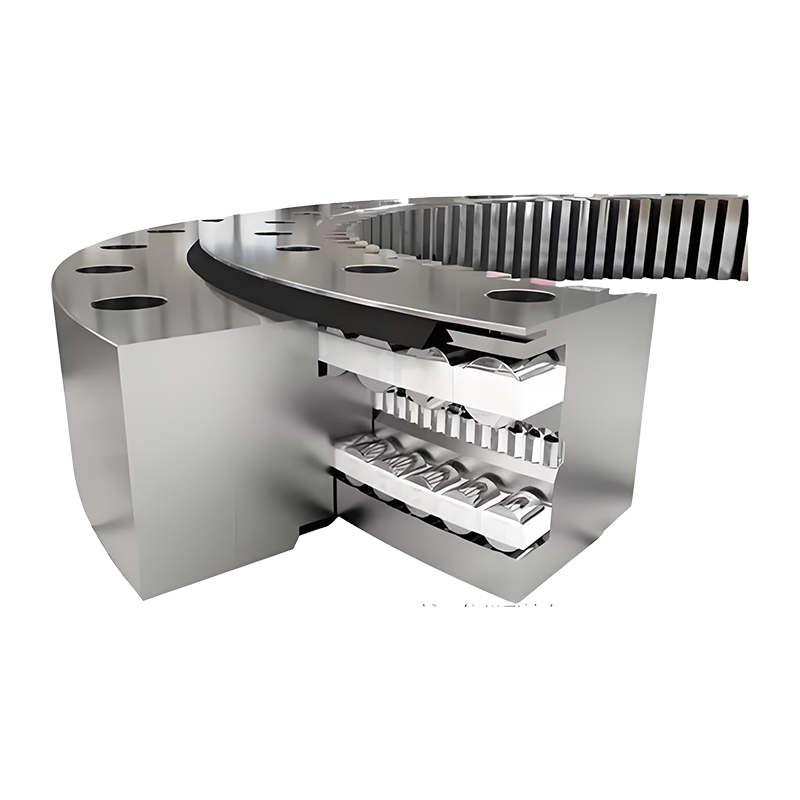 Three-Row Roller Slewing Bearing 13 Series for Heavy-Duty LiftingThree-row roller design with rigid structure for high axial and moment loads in heavy-duty cranes, excavators, and port equipment.View Product →
Installation and Mounting Checks
Installation decides whether a correctly selected bearing reaches its design life. The mounting flange should be clean, flat, and stiff enough to keep raceway distortion within the manufacturer's limits. Bolts should be tightened in the specified sequence and to the specified torque, using calibrated tools. For geared bearings, check gear mesh, backlash, and runout before commissioning. Protect the seal during lifting and alignment; a cut seal can let water and grit into the raceway within weeks. After installation, record baseline readings for clearance, gear backlash, and bolt torque. Those numbers make later inspections far more useful. If the crane has a slewing drive, confirm that the pinion alignment and lubrication are correct as well.
Lubrication and Wear Monitoring
Lubrication is the simplest maintenance task and one of the most common causes of premature failure. Grease must reach the raceway and gear teeth in the right quantity and interval. In dusty, wet, or high-duty crane service, the interval may need to be shorter than the manual suggests. Use the specified grease, clean the fittings before greasing, and rotate the crane slowly during application so grease spreads evenly. Watch for grease purging from seals: it can indicate over-greasing, seal damage, or blocked passages. Grease analysis can reveal water, dirt, and wear metals before a bearing becomes noisy. A rocking test, where the crane is slowly slewed and clearance or movement is measured, helps track wear against a baseline. Keep records of grease use, inspection findings, and operating hours so trends are visible.
Good records should include grease type and quantity, seal condition, bolt torque readings, gear backlash, raceway clearance, and any change in noise or vibration. When the same issue appears twice, compare the readings rather than relying on memory. A small rise in clearance can be normal; a sudden change after an impact, overload, or long period of standing is worth immediate attention.
Common Failure Signs and What to Check
A crane slewing bearing rarely fails without warning. Operators may notice abnormal noise, vibration, jerky slewing, or a change in gear sound. Inspectors may find contaminated grease, rust staining, loose bolts, cracked seals, gear pitting, or excessive rocking movement. Under-lubrication, overload, misalignment, moisture ingress, and loose mounting bolts are common root causes. When a problem appears, stop and investigate rather than simply adding grease. Check bolt torque, seal condition, raceway clearance, gear wear, and grease condition. If the bearing has been run with a damaged seal, the raceway may need more than a grease change. If wear exceeds the limits or the raceway shows spalling, plan a replacement before the crane returns to demanding duty.
Practical Support from Design to Service
At Jiangsu Manchen Transmission Technology, we build slewing bearings and slewing drives for demanding rotating equipment, including crane applications. Our work starts with the load case and mounting interface, then moves through design, manufacturing, inspection, and delivery. Because we produce single-row ball, double-row ball, cross-roller, three-row roller, and L-type designs, we can discuss trade-offs honestly rather than force one style into every crane. If you are reviewing a replacement, send the original drawing, load data, and photos of the mounting area; those details usually reveal more than a part number alone. A crane slewing bearing is a long-term investment, and the best result comes from good selection, careful installation, and consistent maintenance.

Jiangsu Manchen Transmission Technology Co., Ltd. excels in creating custom, reliable, and precise slewing bearings for diverse industries, continuously innovating to meet the highest standards and seeking collaborative opportunities. Reliable and steady slewing bearings supplier in China.
Product links
Contact Us
-
Address:No. 8, Nanqiu Road, Huangtu Town, Jiangyin City,China
-
Tel:+86-13646122221
-
Phone:+86-18796936198
-
WhatsApp:+86 18796936198
-
E-mail:hedy@slewingbearingcn.com
-
E-mail:ma@slewingbearingcn.com
-
E-mail:vena@slewingbearingcn.com
