

 EN
 English
 русский
 Español
 عربى

News
 Home / News / Industry news / Crane Slew Ring Guide: Types, Load Selection, Mounting and Maintenance
Crane Slew Ring Guide: Types, Load Selection, Mounting and Maintenance
 2026.10.22
 Industry news
A crane asks one component to do something no other part of the machine does: it holds the entire upper works — jib, counterweight, hoist load and all — and turns it through 360 degrees while the load swings, shocks and shifts. That component is the crane slew ring, also called a slewing ring, turntable bearing or slew gear depending on which workshop you learned the trade in. Get it right and nobody mentions it for a decade. Get it wrong and the machine stops working.
We build slewing rings for a living, and cranes are among the most demanding customers we serve. What follows is how we explain a crane slew ring to engineers and buyers who are specifying a replacement, checking a design, or simply trying to understand why the ring on their machine is complaining after four years instead of ten.
Content
What a Crane Slew Ring Actually Does
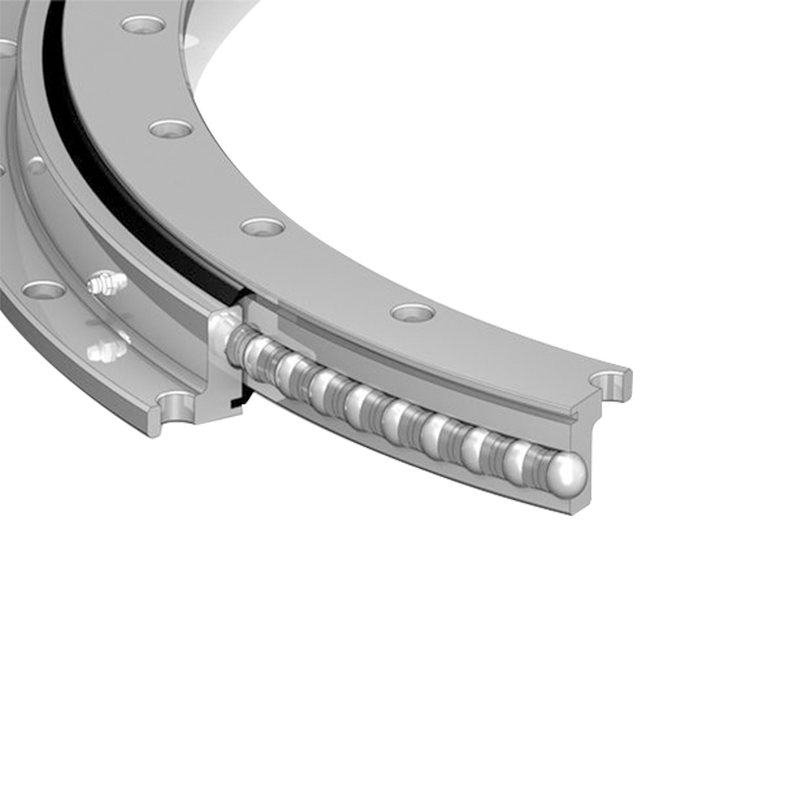
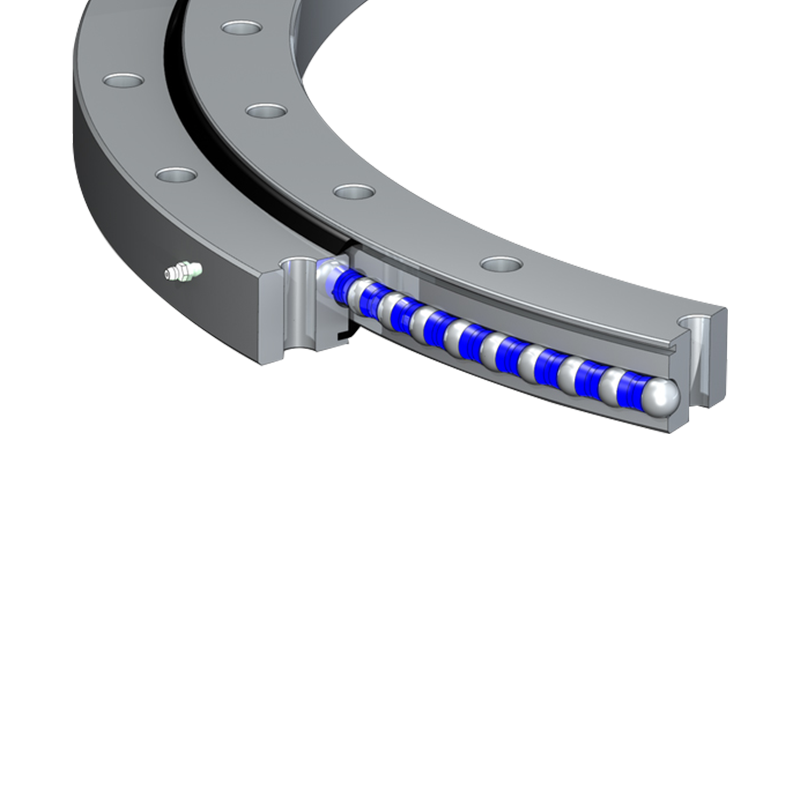
Under the surface, a crane slew ring is a large-diameter rolling-element bearing with a gear cut into one of its races. It is bolted between the undercarriage — or the pedestal, tower or base frame — and the revolving upper structure. Three jobs happen at once inside that single ring:
- It carries the axial load of the upper works plus the hook load, transmitted through the raceway.
- It carries the radial loads generated by the jib, the wind and any side pull.
- It resists the tilting moment created by a load hanging at radius, which tries to lift one side of the ring and compress the other.
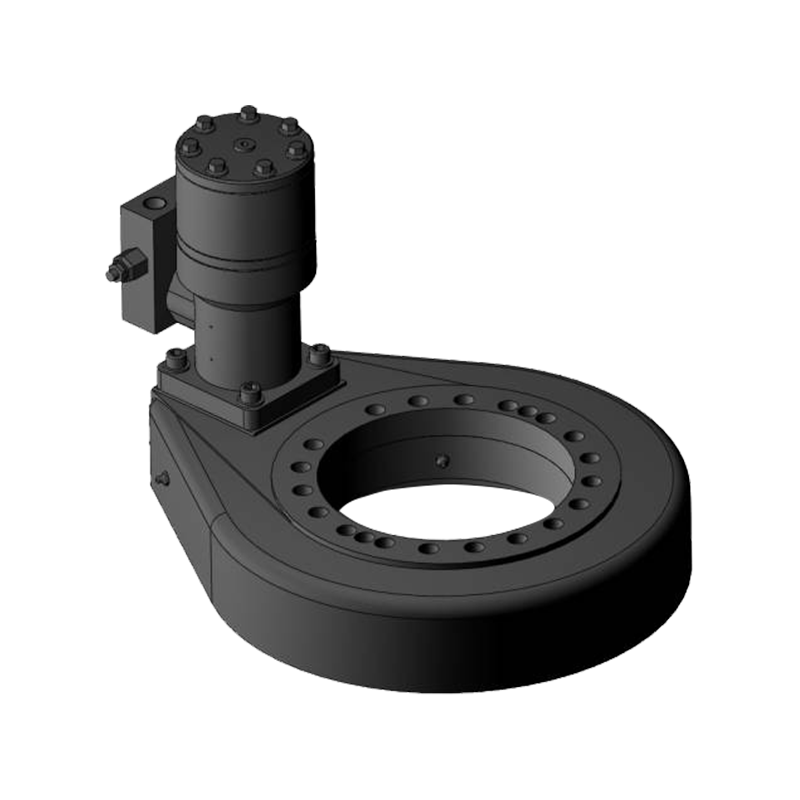
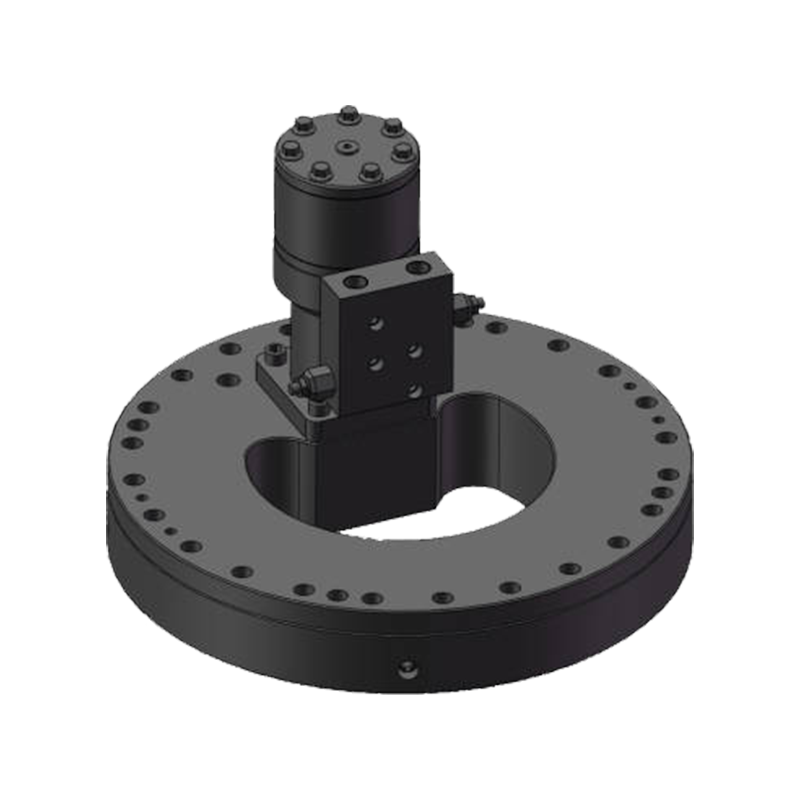
Simultaneously, the gear teeth convert slewing motor torque into rotation. The ring is therefore a bearing and a gearbox output element at the same time, which is exactly why its failure modes are so varied. For a broader refresher on behaviour in cranes and excavators, our engineers keep a longer explainer on how slewing bearings work in cranes and excavators.
The operating condition is unusual. Cranes turn slowly, and they turn back and forth rather than laps. A raceway that never completes a full revolution cannot build a proper hydrodynamic film, so it runs in boundary lubrication for most of its life. Wear concentrates in two zones: at the rear of the body opposite the jib, and directly under the jib. Anyone who has inspected a used crane ring has seen those two patches of polished, darkened raceway.
Matching the Ring Configuration to the Duty
Four configurations cover most crane applications. The choice is driven by the ratio of tilting moment to axial load, by stiffness requirements, and by how much mounting height the machine can spare.
| Configuration | How it carries load | Typical crane duty |
|---|---|---|
| Single-row four-point contact ball | One ball row contacts four points; handles axial, radial and moment together | Light to medium duty, smaller mobile and yard cranes |
| Double-row equal-diameter ball | Two ball rows share the moment, giving high stiffness at moderate height | Medium duty, tower and pedestal cranes |
| Single-row cross roller | Alternating rollers at 90 degrees; high rigidity and accurate positioning | Medium to heavy duty, precise slewing |
| Three-row roller (13 series) | Separate rows for axial, radial and moment loads; very high capacity | Heavy duty, offshore, port and large mobile cranes |
Where the tilting moment is large and the machine works continuously, the three-row roller design is usually the honest answer, because the load paths are separated and each row can be sized for its own job. Our 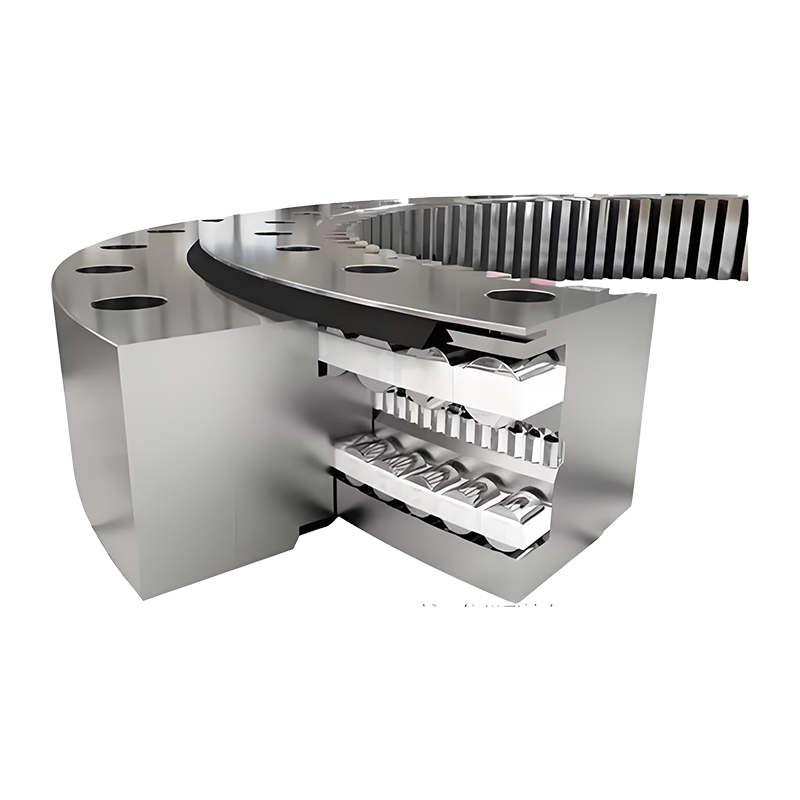 Three-Row Roller Slewing Bearing, 13 SeriesRecommended for large tilting moments and continuous crane duty, the 13 Series separates axial and radial load paths across three roller rows.View Product → is the configuration we recommend most often for that class of work.
Reading the Load Case Before You Choose Anything
Every crane ring selection starts with numbers, not with a catalogue page. The minimum set we ask for is:
- Axial load, radial load and tilting moment at each working radius, including the worst combination the machine can legally reach.
- Static and dynamic rating requirements, with the safety factor the application demands — offshore and lifting-personnel work sit at the conservative end.
- Slewing torque and tangential tooth load at the pinion, plus required gear ratio and backlash.
- Duty cycle: cycles per hour, hours per year, target life, and the share of time spent holding a load rather than turning.
- Bolt circle, hole count, bolt grade, and the strength and flatness of the structures the ring will bolt to.
Two of these are usually underestimated. The first is bolt capacity: a ring is only as strong as the joint that holds it, and a marginal bolt pattern turns a correctly rated bearing into a cracked one. The second is structure stiffness. A flange that deflects under load will rock the ring, and a rocked ring wears its raceway far faster than the catalogue life predicts. If you are weighing roller against ball designs, our note on 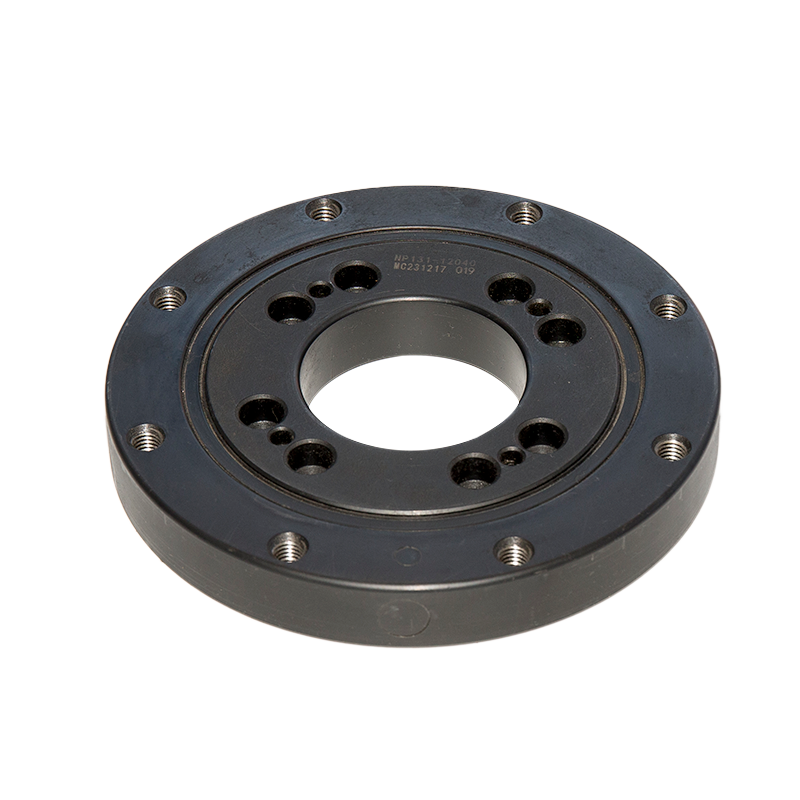 Single-Row Cross-Roller Slewing Bearing for High-Load ApplicationsThis single-row crossed-roller design is positioned for high-load, high-precision machinery, supporting horizontal or vertical installation and maintenance access in demanding environments.View Product → covers the cross roller side of that argument in detail.
Mounting Details That Decide Service Life
We have seen correctly specified rings fail early, and almost every time the cause sits in the mounting.
- Flatness and finish. Both mounting faces need machining to the flatness tolerance the bearing supplier states, not a tolerance that "looks fine." A dip under one bolt hole is enough to start a fatigue crack.
- Bolt preload. Bolts must be torqued to the specified value in the correct crosswise sequence with calibrated equipment. Under-torqued bolts let the ring lift; over-torqued bolts yield and do the same thing more quietly.
- Gear mesh. Check pinion alignment and backlash at several positions around the ring, because a ring is never perfectly round. Too tight and the teeth scuff; too loose and they hammer.
Seals deserve a mention too. A ring that loses its seal on a dusty site or a saltwater quay will lose its grease, and then its raceway, long before its rating is exhausted.
Greasing, Wear Monitoring and the Rocking Test
Maintenance on a crane slew ring is not complicated, but it is unforgiving of neglect. Grease is the cheapest component on the machine and the one most often skipped.
Grease on a schedule, and grease while turning. Pumping grease into a stationary ring fills one cavity and leaves the rest dry; rotate the upper works through a full revolution as you grease so the whole raceway and the gear teeth receive fresh material. Then watch what comes out. Grease analysis is the earliest warning available — sample from the drain or the raceway edge and look for metal particles, colour change, hardening or water contamination. A rising particle count means wear is accelerating and you have months, not days, to plan.
The rocking test is the field measurement we trust most. With the jib in a fixed position and the machine level, measure circumferential movement at the ring under a controlled push, record it, and compare with the last reading. A trend is worth far more than a single number. Backlash that grows steadily points to tooth or raceway wear; a sudden jump suggests something worse.
The uncomfortable lesson from accident investigations is that crane rings have failed at hook loads well below the machine's rated safe working load. The bearing does not know what the load chart says. It only knows what it was asked to carry, and what condition it was in when it was asked.
Repair, Re-Gear or Replace
Not every worn ring needs scrapping. Where the raceway is sound and only the gear teeth are worn, re-cutting the gear is often economical, provided the remaining tooth section still carries the tangential load. What cannot be recovered is a ring with cracks propagating from a bolt hole, or a spall that has begun to spread; those go to scrap regardless of cost. The decision usually comes down to how much life is left in the raceway, how much life the machine still needs, and how long the crane can be out of service. We would rather tell a customer to re-gear a sound ring than sell a new one that is not needed.
Where We Fit In
Jiangsu Manchen Transmission Technology has been designing and manufacturing slewing rings since 2019, from a plant in Jiangyin with machining, heat treatment and inspection kept under one roof. Our background is the same problem this article describes: matching a ring to a load case, then making sure the ring that leaves the factory is the ring that was calculated. Our standard range covers single-row ball, cross roller, double-row and three-row slewing bearings in the sizes crane work demands.
For medium-duty cranes where stiffness matters more than raw capacity, the double-row equal-diameter four-point contact design is often the practical middle ground: 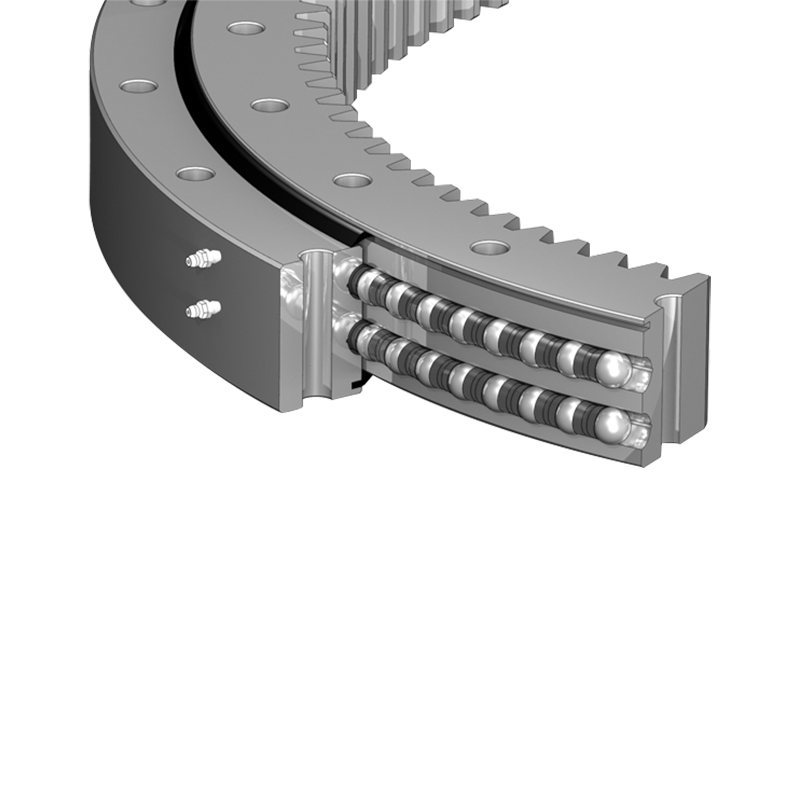 Double-Row Equal-Diameter Four-Point Contact Slewing BearingFor medium-duty cranes where stiffness matters, this double-row four-point contact design carries axial, radial, and tilting loads with high rigidity and compact installation.View Product →.
If you are specifying a crane slew ring, replacing one, or trying to work out why the current one is noisy, send us the load case and a photograph of the mounting faces. That is usually enough to tell whether the bearing is the problem at all — and quite often, it is not.
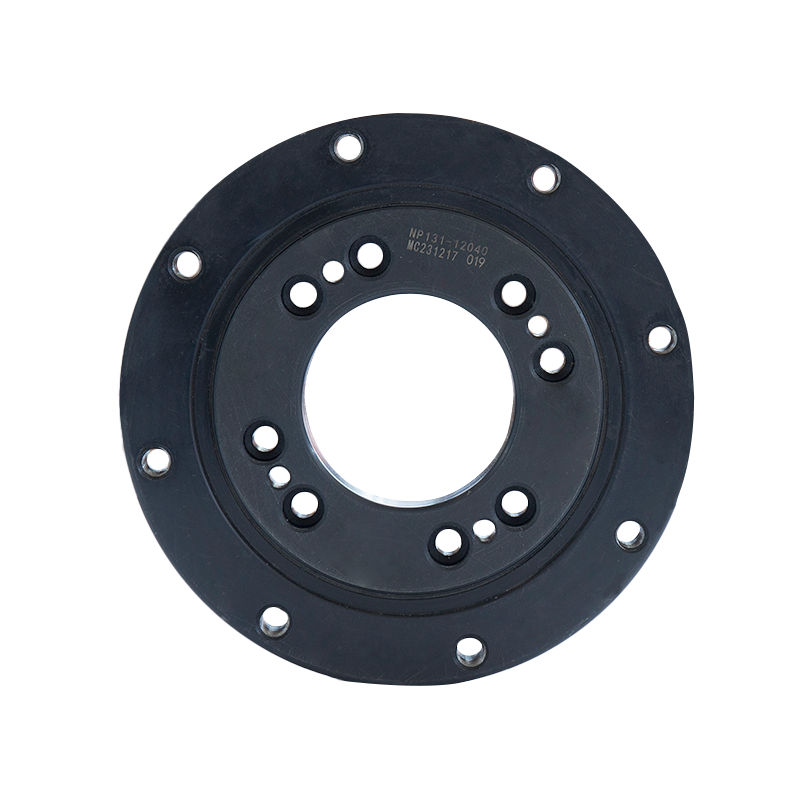

Jiangsu Manchen Transmission Technology Co., Ltd. excels in creating custom, reliable, and precise slewing bearings for diverse industries, continuously innovating to meet the highest standards and seeking collaborative opportunities. Reliable and steady slewing bearings supplier in China.
Product links
Contact Us
-
Address:No. 8, Nanqiu Road, Huangtu Town, Jiangyin City,China
-
Tel:+86-13646122221
-
Phone:+86-18796936198
-
WhatsApp:+86 18796936198
-
E-mail:hedy@slewingbearingcn.com
-
E-mail:ma@slewingbearingcn.com
-
E-mail:vena@slewingbearingcn.com
