

 EN
EN  English
 русский
 Español
 عربى
عربى

News
 Home / News / Industry news / Why Single-Row Ball Slewing Bearings Are Widely Used in Light to Medium-Duty Equipment
 Why Single-Row Ball Slewing Bearings Are Widely Used in Light to Medium-Duty Equipment
 2025.12.05
 Industry news
Content
- 1 Understanding the Role of Single-Row Ball Slewing Bearings
- 2 Key Structural Advantages Supporting Light to Medium-Duty Applications
- 3 Performance Benefits Driving Widespread Adoption
- 4 Common Applications in Light to Medium-Duty Machinery
- 5 Cost, Efficiency, and Maintenance Considerations
- 6 Comparison of Bearing Types for Moderate-Duty Use
- 7 Conclusion
Understanding the Role of Single-Row Ball Slewing Bearings
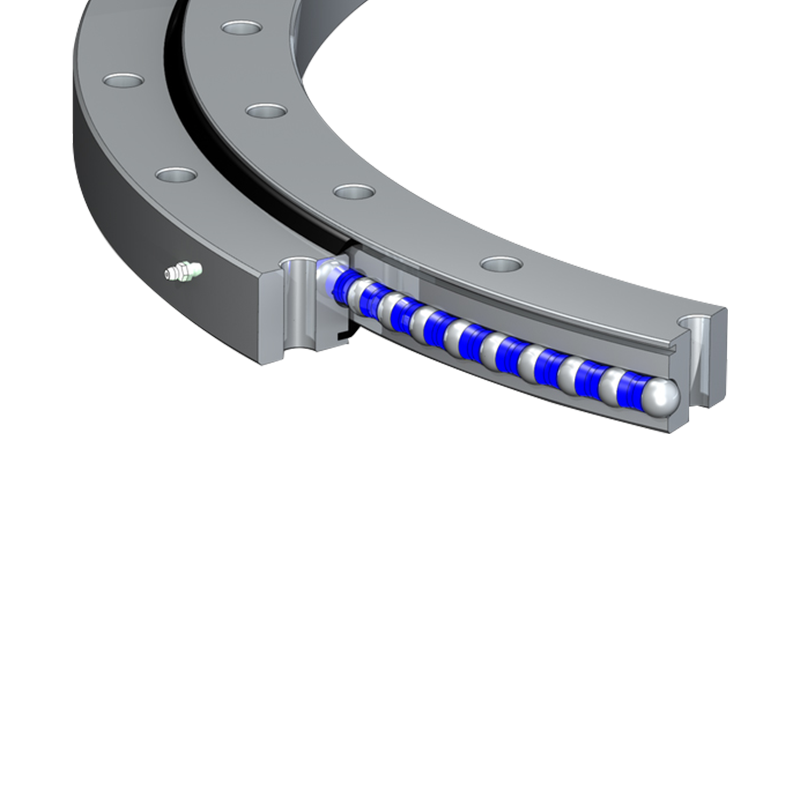
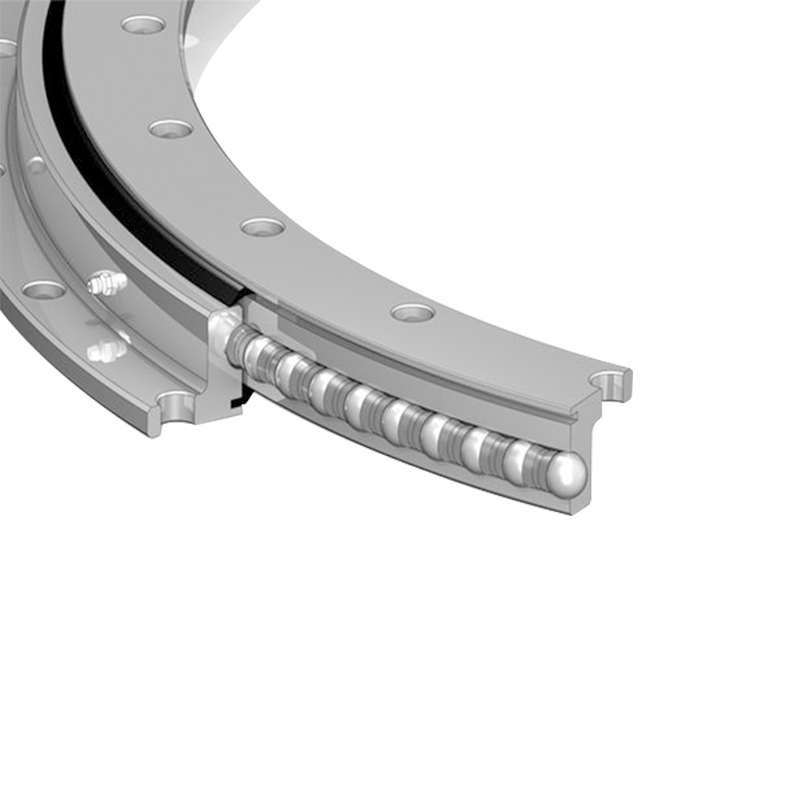
Single-row ball slewing bearings play a central role in equipment that requires smooth, controlled rotation paired with moderate load handling. Their structure consists of one row of steel balls positioned between two rings, allowing for low-friction rotational movement. This compact design supports axial, radial, and tilting moment loads, making the bearing suitable for machinery that needs stable yet flexible rotational capability without the added weight or cost of heavier-duty bearing systems.
These bearings are engineered to meet operational demands where rotation must remain precise and consistent. Because they integrate mounting holes, seals, and raceways into a single unit, they eliminate the need for multiple connection components. This makes them particularly attractive for equipment designers seeking efficient assembly and straightforward maintenance requirements.
Key Structural Advantages Supporting Light to Medium-Duty Applications
The structural features of single-row ball slewing bearings directly contribute to their popularity across light to medium-duty machinery. Their single-row design reduces complexity while providing adequate load distribution for a wide range of applications. In addition, the balls offer lower rolling resistance compared to roller-based systems, which enhances rotational accuracy and reduces energy consumption.
Core advantages include:
- Compact dimensions that support lightweight equipment designs.
- Lower friction levels, enabling smoother rotation and reduced power demand.
- Cost-effective construction suitable for moderate load environments.
- High rotational precision, essential for machinery requiring controlled movement.
Performance Benefits Driving Widespread Adoption
Single-row ball slewing bearings deliver performance characteristics that align well with equipment that does not require extreme load handling. Their lighter weight allows manufacturers to minimize overall system load, improving energy efficiency and mobility. At the same time, the design offers reliable performance in systems where speed and accuracy matter more than heavy load capacity.
These performance benefits make them a natural choice in sectors where equipment must operate efficiently under moderate stress. Their streamlined structure also results in reduced wear when compared to more complex bearings, contributing to extended service life under typical operating conditions.
Common Applications in Light to Medium-Duty Machinery
Many types of equipment rely on single-row ball slewing bearings due to their balanced combination of compact size, good rotational performance, and adequate load capacity. They are especially favored in applications where space is limited but consistent rotational alignment is essential.
Typical applications include:
- Light-duty cranes and lifting platforms requiring reliable turning capability.
- Rotary tables and indexing equipment used in manufacturing processes.
- Packaging and automated handling systems with frequent rotational movements.
- Small-scale construction machinery where stability and rotation are essential.
- Solar tracking systems requiring smooth directional adjustment.
Cost, Efficiency, and Maintenance Considerations
Another reason for the widespread use of single-row ball slewing bearings in moderate-duty equipment is their cost-performance balance. They offer robust functionality at a lower price point compared to double-row or cross-roller slewing bearings, making them an economical choice for manufacturers seeking reliable rotational solutions without unnecessary material requirements.
Maintenance is also simplified due to their straightforward structure. With proper lubrication and routine inspection, these bearings achieve long service life while maintaining consistent performance. Their design allows for easy integration into existing systems and facilitates quicker replacement when needed, reducing equipment downtime.
Comparison of Bearing Types for Moderate-Duty Use
When comparing single-row ball slewing bearings with other slewing bearing types, their suitability for moderate loads becomes clear. While roller-based designs offer superior load handling, they tend to be heavier and more expensive. Double-row designs provide higher capacity but are not required for many mid-range applications. Single-row models provide a balanced middle ground.
| Bearing Type | Load Capacity | Key Strength | Typical Use |
| Single-Row Ball | Light to Medium | Smooth rotation and compact design | General machinery, light-duty systems |
| Double-Row Ball | Medium to Heavy | Greater load distribution | Larger cranes, industrial platforms |
| Cross-Roller | High | Exceptional stiffness and precision | Robotics, heavy machinery |
Conclusion
Single-row ball slewing bearings are widely used in light to medium-duty equipment due to their compact structure, smooth rotational performance, cost efficiency, and suitability for moderate loads. Their adaptability across various applications, combined with straightforward maintenance requirements, makes them a preferred choice for manufacturers and equipment designers. As industries continue to seek efficient mechanisms for controlled rotation, these bearings remain a reliable and practical solution for a broad range of machinery.

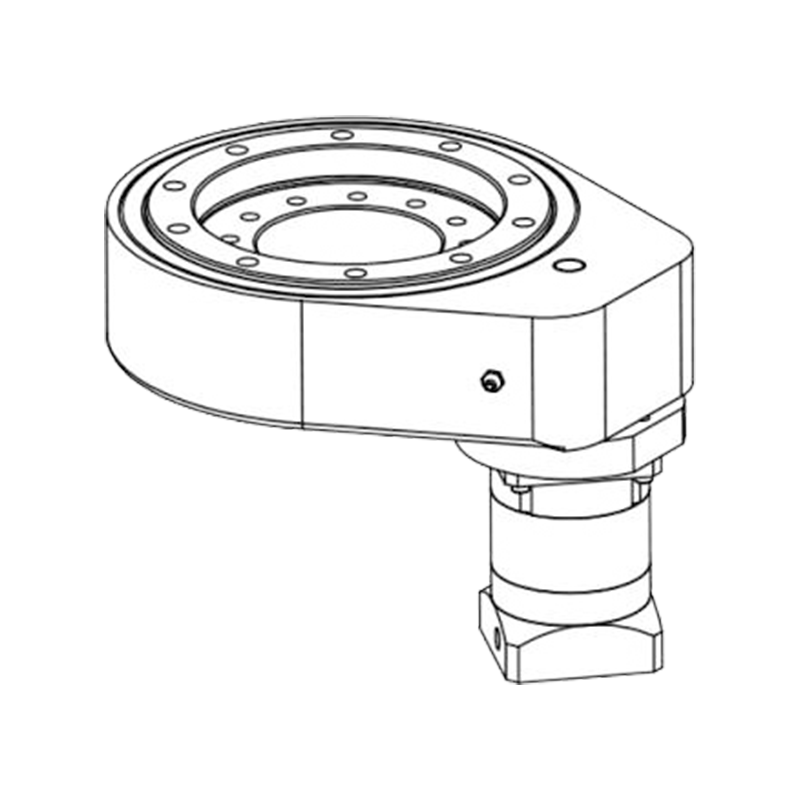

Jiangsu Manchen Transmission Technology Co., Ltd. excels in creating custom, reliable, and precise slewing bearings for diverse industries, continuously innovating to meet the highest standards and seeking collaborative opportunities. Reliable and steady slewing bearings supplier in China.
Product links
Contact Us
-
Address:No. 8, Nanqiu Road, Huangtu Town, Jiangyin City,China
-
Tel:+86-13646122221
-
Phone:+86-18796936198
-
WhatsApp:+86 18796936198
-
E-mail:hedy@slewingbearingcn.com
-
E-mail:ma@slewingbearingcn.com
-
E-mail:vena@slewingbearingcn.com
