

 EN
EN  English
 русский
 Español
 عربى
عربى

News
 Home / News / Industry news / What Makes the Three-Row Roller Slewing Bearing (13 Series) Ideal for Heavy Machinery?
 What Makes the Three-Row Roller Slewing Bearing (13 Series) Ideal for Heavy Machinery?
 2026.07.10
 Industry news
Content
- 1 Understanding the Three-Row Roller Slewing Bearing (13 Series) Design
- 2 How the Three-Row Configuration Improves Load Distribution
- 3 Precision Manufacturing for Smooth, Stable Rotation
- 4 Material Selection and Heat Treatment Processes
- 5 Safety Testing and Reliability Standards
- 6 Maintenance Practices That Extend Service Life
- 7 Key Applications in Heavy Machinery
Understanding the Three-Row Roller Slewing Bearing (13 Series) Design
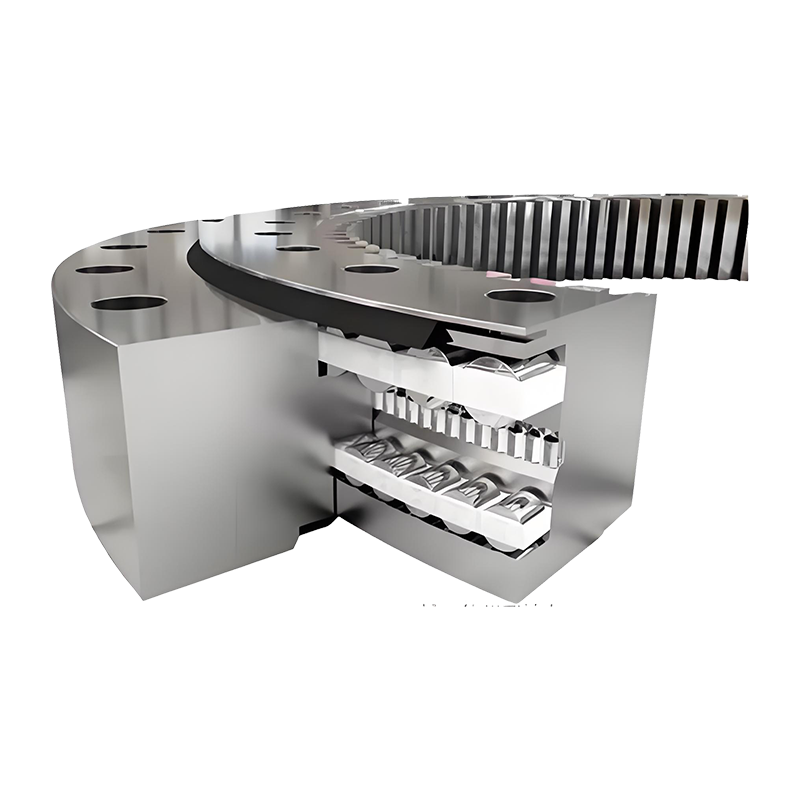
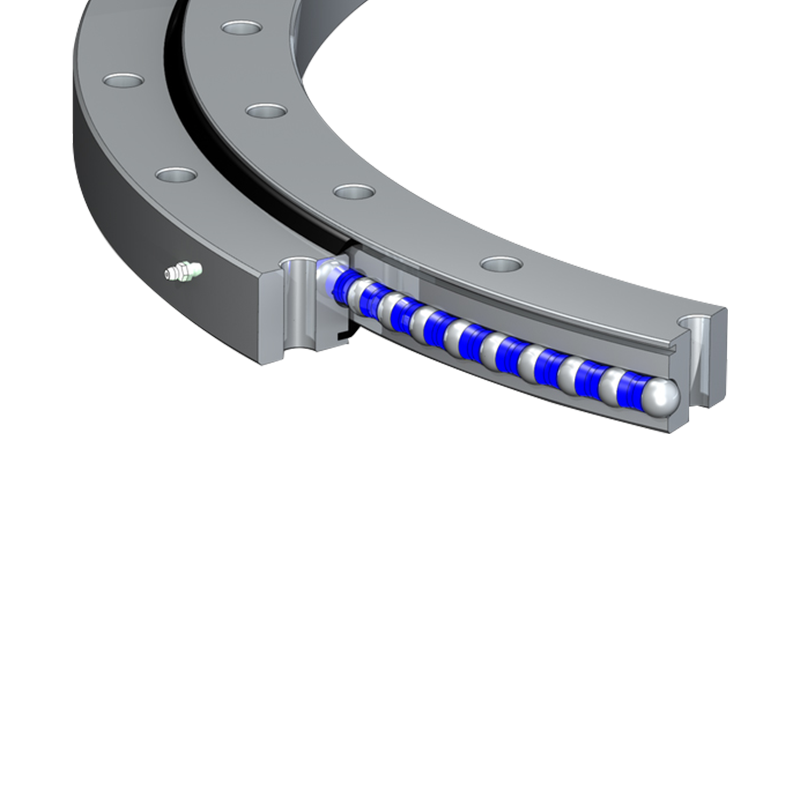
The three-row roller slewing bearing, commonly known as the 13 Series, is engineered around a distinctive three-row roller configuration that separates load-bearing responsibilities across dedicated rows. In this design, the inner and outer rows of rollers are primarily responsible for handling axial loads, while the middle row is tasked with managing radial loads. This division of labor allows each set of rollers to be optimized for its specific function rather than compromising performance by forcing a single row to handle multiple load types simultaneously.
The arrangement of rollers within the bearing is not arbitrary. Engineers calculate roller placement and spacing meticulously to achieve even load distribution across the entire raceway. This careful planning minimizes localized wear points that often lead to premature bearing failure in less sophisticated designs. By spreading loads more evenly, the 13 Series bearing extends operational life while maintaining consistent performance even as loads shift during machine operation.
How the Three-Row Configuration Improves Load Distribution
One of the standout benefits of the three-row roller design is the significantly larger load-bearing surface area compared to single-row or two-row alternatives. This expanded contact area translates directly into a reduced risk of wear and mechanical failure, since the force exerted on any single point of contact is diminished when spread across multiple rollers and rows.
Axial Load Management
The inner and outer roller rows work in tandem to absorb axial forces, which are common in applications where equipment must support heavy vertical loads while rotating. This dual-row approach to axial load handling provides redundancy and stability that single-row designs cannot match.
Radial Load Management
The middle row of rollers focuses on radial loads, which typically arise from lateral forces during lifting, swinging, or rotating operations. By isolating this function to a dedicated row, the bearing maintains smoother rotational movement even under fluctuating side loads.
Precision Manufacturing for Smooth, Stable Rotation
Achieving reliable performance from a three-row roller slewing bearing depends heavily on manufacturing precision. Every roller must be aligned with exacting tolerances so that load transfer remains consistent throughout the bearing's rotation. High-precision machining processes ensure that rollers maintain proper contact with the raceways at all times, preventing the uneven wear patterns that can develop when components are even slightly misaligned.
This attention to precision also contributes to smoother operation under varying conditions, including heavy loads, variable speeds, and exposure to vibration or shock during machine use. Equipment operators benefit from more predictable, stable rotational movement, which improves overall control and reduces mechanical stress on connected components.
Material Selection and Heat Treatment Processes
The durability of the 13 Series slewing bearing is closely tied to the materials and processing methods used during manufacturing. These bearings are constructed from high-strength alloy steel, chosen specifically for its ability to withstand heavy and repeated impact loads without deforming or cracking over time.
| Process Stage | Purpose |
| Alloy Steel Selection | Provides base strength and impact resistance |
| Heat Treatment | Increases hardness while preserving toughness |
| Precision Machining | Ensures dimensional accuracy for roller alignment |
| Quality Testing | Verifies durability under heavy and impact loads |
The combination of hardness and toughness achieved through this process is critical, since bearings used in heavy machinery must resist surface wear while also absorbing sudden shocks without becoming brittle. This balance is what allows the 13 Series bearing to perform reliably in demanding industrial environments over extended periods of use.
Safety Testing and Reliability Standards
Safety remains a central consideration throughout the design and production of the 13 Series slewing bearing. Before reaching the market, these bearings undergo rigorous testing procedures designed to simulate real-world operating conditions, including heavy loads, continuous rotation, and exposure to shock or vibration. This testing process helps identify potential weaknesses before the product is deployed in the field, reducing the risk of unexpected failures during actual equipment operation.
For industries where equipment failure can pose serious safety risks to operators and nearby personnel, this level of testing is not optional but essential. Cranes, tower cranes, and port handling equipment often operate at significant heights or with heavy suspended loads, making bearing reliability a direct factor in overall workplace safety.
Maintenance Practices That Extend Service Life
While the 13 Series bearing is built for durability, proper maintenance remains essential to maximizing its operational lifespan. Fortunately, the design emphasizes ease of maintenance, allowing routine procedures to be completed efficiently without requiring extensive downtime.
- Schedule regular lubrication to reduce friction between rollers and raceways
- Conduct routine visual inspections to detect early signs of wear or damage
- Monitor bolt torque and mounting hardware to maintain proper bearing alignment
- Keep records of load cycles to anticipate maintenance needs before failures occur
- Replace seals promptly to prevent contamination from dust, dirt, or moisture
Following these maintenance practices consistently can significantly extend the bearing's service life, reduce unplanned downtime, and improve overall equipment operational efficiency across a wide range of industrial applications.
Key Applications in Heavy Machinery
The high load capacity and rotational stability of the 13 Series slewing bearing make it a critical component across a broad spectrum of heavy machinery. Its ability to manage both axial and radial loads simultaneously suits it particularly well to equipment that requires continuous rotation under substantial weight.
- Cranes that require stable rotation while lifting and moving heavy loads
- Excavators that depend on smooth swing motion during digging and material handling
- Tower cranes that operate at height and must maintain precise rotational control
- Port handling equipment that moves heavy containers and cargo continuously
In each of these applications, the bearing's combination of load capacity, precision manufacturing, and durability directly contributes to equipment reliability and operator safety, making it an indispensable component in modern heavy machinery design.


Jiangsu Manchen Transmission Technology Co., Ltd. excels in creating custom, reliable, and precise slewing bearings for diverse industries, continuously innovating to meet the highest standards and seeking collaborative opportunities. Reliable and steady slewing bearings supplier in China.
Product links
Contact Us
-
Address:No. 8, Nanqiu Road, Huangtu Town, Jiangyin City,China
-
Tel:+86-13646122221
-
Phone:+86-18796936198
-
WhatsApp:+86 18796936198
-
E-mail:hedy@slewingbearingcn.com
-
E-mail:ma@slewingbearingcn.com
-
E-mail:vena@slewingbearingcn.com
