

 EN
EN  English
 русский
 Español
 عربى
عربى

News
 Home / News / Industry news / In What Situations Should You Choose a Three-Row Roller Slewing Bearing Over Other Types?
 In What Situations Should You Choose a Three-Row Roller Slewing Bearing Over Other Types?
 2026.05.21
 Industry news
Content
- 1 What Is a Three-Row Roller Slewing Bearing?
- 2 Key Load Characteristics That Call for a Three-Row Roller Design
- 3 Primary Applications Where Three-Row Roller Slewing Bearings Are Used
- 4 Comparing Three-Row Roller Bearings with Other Slewing Bearing Types
- 5 Critical Factors to Evaluate Before Specifying a Three-Row Roller Slewing Bearing
- 6 Signs That Your Current Bearing May Need Upgrading to a Three-Row Roller Type
What Is a Three-Row Roller Slewing Bearing?
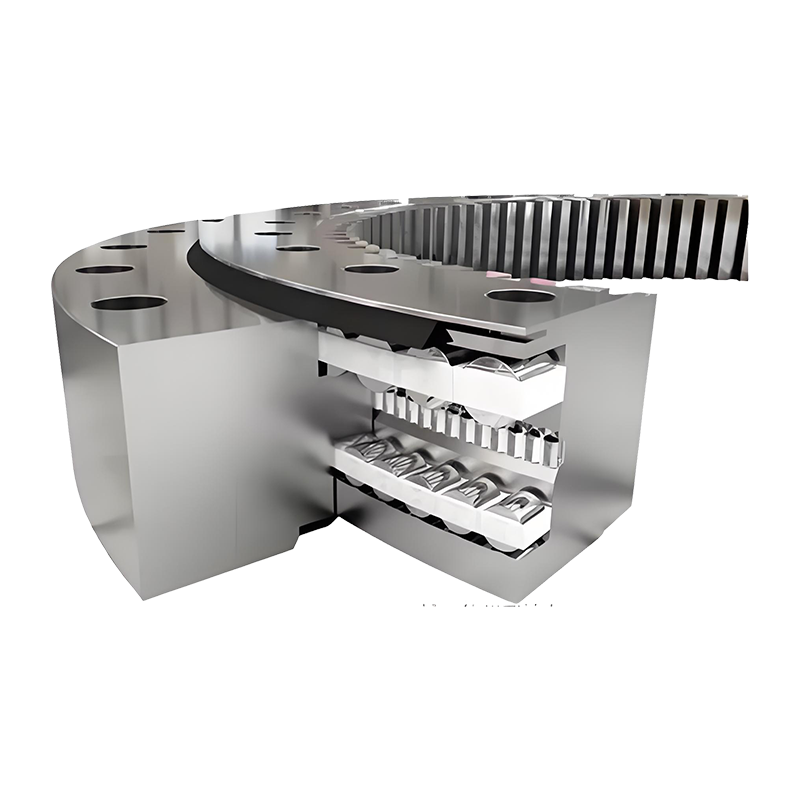
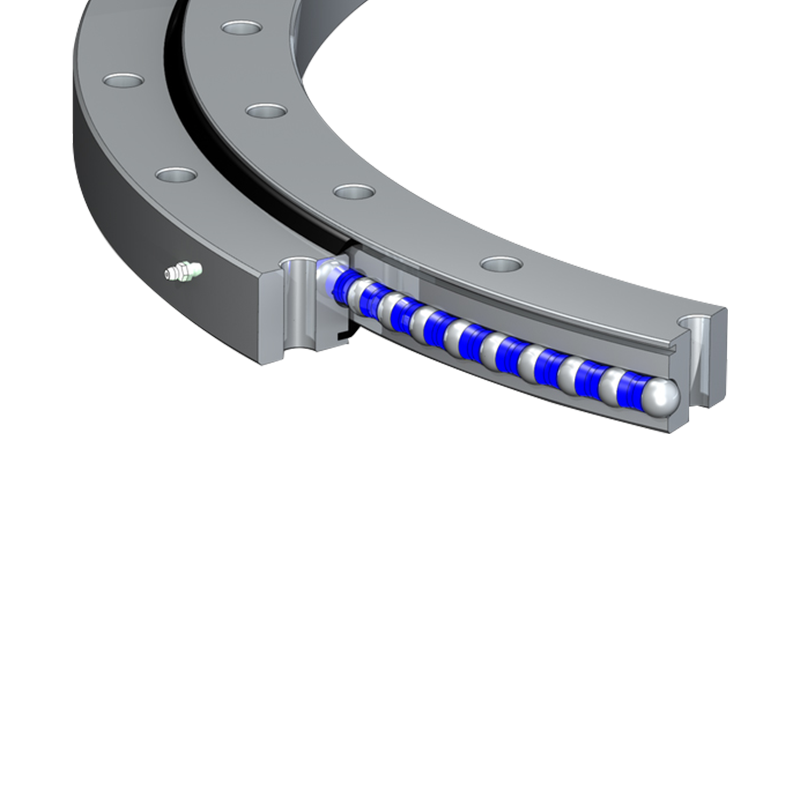
A three-row roller slewing bearing is a large-diameter rotary bearing specifically engineered to handle the simultaneous combination of axial loads, radial loads, and overturning moments — the three fundamental force types encountered in heavy-duty rotating machinery. Unlike single-row or double-row slewing bearings, which use a single raceway or two raceways to distribute loads, the three-row roller design separates each load type into its own dedicated row of cylindrical rollers and its own independent raceway. This structural separation allows each row to be optimized for its specific load direction, resulting in a bearing capable of managing far greater combined loads than any single- or double-row alternative of equivalent diameter.
The physical construction consists of three distinct sets of cylindrical rollers arranged within a segmented ring assembly. The upper and lower axial rows handle vertical forces acting parallel to the bearing's rotational axis, while the central radial row manages horizontal forces acting perpendicular to that axis. The raceways for each row are machined into separate inner and outer ring sections, which are then assembled together with precision-ground spacers to ensure correct preload and alignment. This configuration produces an exceptionally stiff, high-capacity bearing assembly that maintains dimensional accuracy under extreme loading conditions — a characteristic that is critical in applications where even minor deflection could compromise operational safety or equipment performance.
Key Load Characteristics That Call for a Three-Row Roller Design
Understanding when to specify a three-row roller slewing bearing begins with recognizing the specific load profile of the application in question. This bearing type is not the universal choice for every rotating connection — it is the correct choice when load conditions exceed what simpler bearing configurations can reliably sustain. The defining load scenarios that indicate a three-row roller bearing is necessary include the following:
- Very High Axial Loads: Applications where massive downward or upward forces act along the rotational axis — such as the dead weight of a large crane superstructure or the vertical reaction forces generated during heavy lifting — demand the dual-row axial capacity that only a three-row design provides. Single-row bearings under equivalent axial loading experience raceway deformation over time, accelerating wear and reducing service life.
- Significant Radial Loads: When horizontal forces — such as wind loading on a rotating boom, lateral hydraulic forces on an excavator arm, or centrifugal forces in rotating platforms — are sustained and substantial, a dedicated radial roller row provides the precise support that prevents bearing ring deflection and maintains rotational accuracy.
- Large Overturning Moments: Overturning moments are torque forces that attempt to tilt the rotating ring relative to the stationary ring. They are generated whenever a significant load is applied at a horizontal distance from the bearing centerline — for example, when a crane extends its boom while carrying a suspended load. Three-row roller bearings resist overturning moments with exceptional rigidity due to the wide axial separation between the upper and lower roller rows, which creates a large effective moment arm within the bearing itself.
- Combined and Dynamic Loading: In real-world heavy equipment, these three load types rarely act in isolation. They occur simultaneously and fluctuate dynamically as the machine operates. The three-row roller bearing's ability to handle all three load types independently and simultaneously — without load transfer conflicts between raceways — makes it uniquely suited to complex, variable loading environments.
Primary Applications Where Three-Row Roller Slewing Bearings Are Used
The specific combination of high load capacity, rigidity, and multi-directional load handling makes three-row roller slewing bearings the standard specification across a defined group of heavy industrial and construction machinery categories. These are not general-purpose bearings — they are purpose-engineered for machines that operate at the upper limits of structural loading.
Large Crawler and Lattice Boom Cranes
Heavy-lift crawler cranes and lattice boom cranes represent perhaps the most demanding application environment for any slewing bearing. These machines routinely lift loads exceeding several hundred tonnes while the superstructure rotates through full 360-degree arcs. The slewing bearing at the interface between the rotating superstructure and the crawler undercarriage must simultaneously support the dead weight of the entire upper structure, resist the overturning moment created by the extended boom and suspended load, and manage radial forces generated by the dynamic motion of rotation under load. No bearing configuration other than a three-row roller design can reliably sustain these combined forces across decades of service cycles.
Large Hydraulic Excavators and Mining Shovels
Hydraulic excavators in the 50-tonne and above class, as well as electric rope shovels used in open-pit mining operations, subject their center-pin slewing connections to extreme and rapid load reversals as the bucket fills, swings, and dumps in continuous cycles. The impact loading during bucket engagement with hard rock faces generates shock forces that can be multiples of the static load. Three-row roller slewing bearings in these applications are typically manufactured with hardened raceways and high-precision roller sets to absorb these shock loads without brinelling — the permanent surface indentation that occurs when point loads exceed the raceway's elastic limit.
Offshore Cranes and Pedestal Cranes
Cranes mounted on offshore platforms, jack-up vessels, and floating production units face a uniquely challenging load environment. In addition to the standard lifting loads, the crane's slewing bearing must accommodate dynamic forces introduced by vessel motion — pitch, roll, and heave — that impose constantly shifting overturning moments and radial forces on the bearing even when no lift is in progress. Marine-grade three-row roller slewing bearings used in these applications are additionally specified with corrosion-resistant materials, sealed raceways, and specialized lubrication systems to survive saltwater exposure and the limited maintenance access typical of offshore environments.
Tunnel Boring Machines
The main bearing of a tunnel boring machine (TBM) is one of the most critically loaded bearings in any industrial application. The cutterhead, which can measure several meters in diameter and weigh hundreds of tonnes, must rotate continuously while pressing against the tunnel face with enormous thrust force. Simultaneously, the asymmetric resistance of the rock or soil generates significant overturning moments and radial forces on the bearing. Three-row roller slewing bearings for TBMs are precision-manufactured to the tightest available tolerances and are typically custom-designed for each machine to match the exact load profile calculated from ground survey data for the specific tunnel project.
Reach Stackers and Large Container Handlers
Reach stackers used in container terminals lift loaded shipping containers — each weighing up to 30 tonnes — at extended horizontal reach distances that generate high overturning moments on the boom's slewing joint. The rapid operational cycle rates in busy port environments mean that the bearing must sustain millions of load cycles over its service life. Three-row roller slewing bearings in this application are selected for their combination of high moment capacity and fatigue resistance under repetitive loading.
Comparing Three-Row Roller Bearings with Other Slewing Bearing Types
To make the correct specification decision, it is useful to understand how the three-row roller type compares with the other main slewing bearing configurations available on the market. Each type occupies a distinct load capacity and application range:
| Bearing Type | Load Capacity | Moment Resistance | Typical Application |
| Single-Row Ball | Low–Medium | Low | Light cranes, solar trackers, turntables |
| Double-Row Ball | Medium | Medium | Medium cranes, industrial positioners |
| Cross-Roller | Medium–High | High | Robots, precision rotary tables |
| Three-Row Roller | Very High | Very High | Heavy cranes, excavators, TBMs, offshore |
The clear takeaway from this comparison is that three-row roller slewing bearings occupy the top tier of the load capacity spectrum. They are not specified because of their cost efficiency — they are specified because no alternative provides equivalent performance under the load conditions described. When a design review confirms that combined axial, radial, and moment loads exceed what double-row or cross-roller configurations can handle within an acceptable safety margin, the three-row roller bearing becomes the only technically sound choice.
Critical Factors to Evaluate Before Specifying a Three-Row Roller Slewing Bearing
Selecting the correct three-row roller slewing bearing for a specific application involves more than confirming that the load conditions fall within the bearing's rated capacity. A thorough specification process addresses several additional engineering and operational parameters that directly affect bearing performance and service life.
Raceway Hardness and Material Grade
Three-row roller slewing bearings are typically manufactured from medium-carbon alloy steels — commonly 42CrMo4 or 50Mn grade — with raceways surface-hardened to between 55 and 62 HRC by induction hardening. The depth and uniformity of the hardened layer are critical specifications; insufficient case depth allows subsurface fatigue cracks to initiate below the hardened zone under high contact stresses, leading to premature spalling. For shock-loaded applications such as mining shovels, specifying a steel grade with higher toughness and a deeper hardened case depth is advisable even at the cost of additional material expense.
Gear Integration Requirements
Most three-row roller slewing bearings used in crane and excavator applications incorporate an integral gear — either internal, external, or both — machined into one of the ring segments. The gear specification must be matched to the drive system's torque output, gear ratio requirements, and desired rotation speed. Gear tooth profile, module, and hardness must be designed to handle the full dynamic torque transmitted during slewing acceleration and deceleration, including the load reversals that occur during emergency stops.
Sealing and Lubrication System Design
The large diameter and slow rotation speed of three-row roller slewing bearings create specific lubrication challenges. Grease is the predominant lubricant, and the bearing must be designed with sufficient grease reservoir volume and distribution channels to ensure that lubricant reaches all roller contact zones, including the corners of the axial raceways where starvation is most likely. Labyrinth seals or multi-lip contact seals are used to retain grease and exclude contaminants. In environments with high dust, water ingress, or chemical exposure, enhanced sealing arrangements and more frequent re-lubrication intervals must be incorporated into the maintenance schedule from the outset.
Mounting Structure Stiffness
A three-row roller slewing bearing performs as designed only when its mounting flanges are supported by structures with adequate stiffness. Elastic deformation of the support structure under load causes ring deflection that redistributes the load across fewer rollers, dramatically increasing local contact stresses and accelerating raceway wear. Finite element analysis of the support structure is standard practice in precision applications to verify that flange deflection under maximum load remains within the bearing manufacturer's specified limits — typically no more than 0.05 to 0.1 mm across the bolt circle diameter.
Signs That Your Current Bearing May Need Upgrading to a Three-Row Roller Type
In retrofit and upgrade scenarios, recognizing when an existing bearing is underperforming relative to actual load demands is important for preventing catastrophic failure. The following indicators suggest that a machine may benefit from upgrading to a three-row roller slewing bearing:
- Accelerated bearing wear or raceway spalling occurring significantly before the calculated design life, indicating that actual loads exceed the original bearing's rated capacity.
- Measurable increase in rotational play or slewing ring backlash during operation, suggesting raceway deformation under overturning moment loads that the current bearing cannot adequately resist.
- Bolt fatigue or fretting corrosion at the mounting flange, which can indicate cyclic overloading due to inadequate bearing stiffness under combined load conditions.
- Machine capacity upgrades that have increased the working load beyond the original bearing specification, requiring a reassessment of the entire slewing connection design.
- Operational expansion into more demanding duty cycles — such as increasing lift frequency, extending boom reach, or working in more severe environmental conditions — that push actual load profiles beyond the original design envelope.
In all of these scenarios, a thorough load analysis comparing actual operating conditions against the bearing's rated capacities is the essential first step. When that analysis confirms that combined loads consistently approach or exceed the rated limits of the current bearing type, upgrading to a three-row roller slewing bearing provides the most robust and technically defensible solution available.


Jiangsu Manchen Transmission Technology Co., Ltd. excels in creating custom, reliable, and precise slewing bearings for diverse industries, continuously innovating to meet the highest standards and seeking collaborative opportunities. Reliable and steady slewing bearings supplier in China.
Product links
Contact Us
-
Address:No. 8, Nanqiu Road, Huangtu Town, Jiangyin City,China
-
Tel:+86-13646122221
-
Phone:+86-18796936198
-
WhatsApp:+86 18796936198
-
E-mail:hedy@slewingbearingcn.com
-
E-mail:ma@slewingbearingcn.com
-
E-mail:vena@slewingbearingcn.com
